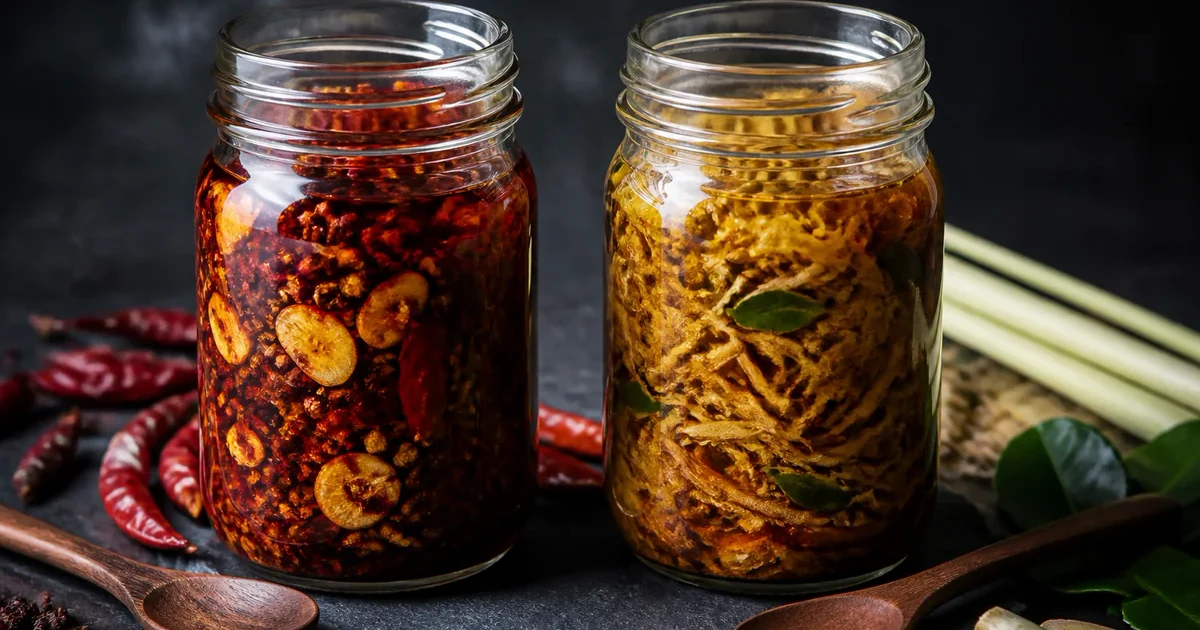
Cambodian vs Sichuan Chili Crisp: Not the Same Jar Tradition
English “Cambodian chili crisp” is a 2020s chili-in-oil format wearing Khmer aromatics. Sichuan chili crisp comes from Chinese chili oil and fried-chili sediment — not a Cambodian twin.
Search treats “Cambodian chili crisp” and “Sichuan chili crisp” as two national versions of one condiment. They are not. Sichuan chili crisp belongs to Chinese chili-oil and fried-chili sediment traditions, sometimes with mala from Sichuan pepper. Jars labeled Cambodian chili crisp usually put Khmer aromatics — lemongrass, galangal, lime leaf — into that same modern chili-in-oil jar format. Cambodia already had kroeung, prahok, and tuk trey. Those are not Lao Gan Ma with a new passport.
What's happening
A small but real search line now asks for Cambodian vs Sichuan chili crisp, as if two countries bottled the same crunchy chili oil and shoppers only need a winner [1]. Grocery and recipe language collapsed chili crisp, chili crunch, and chili oil into one spoonable red jar. Once that English category existed, brands could load it with lemongrass and galangal and call the result Cambodian.
That is a labeling and aroma story. It is not proof that Khmer kitchens historically made the same fried-chili sediment condiment as Sichuan or Guizhou chili-oil traditions.
The history behind it
Chili peppers are New World plants. After the Columbian Exchange they remade both Chinese and mainland Southeast Asian cooking [2]. In China, chili oil and crunchy fried-chili condiments seasoned regional food long before English “chili crisp” became a 2010s pantry word; commercial jars such as Lao Gan Ma carried a fried-chili style into global groceries [1][3]. Sichuan heat often adds mala — the numbing-tingling quality of Sichuan pepper, which is a Zanthoxylum, not a Capsicum [4].
Cambodian cooking already had its own heat and aroma systems: kroeung herb pastes, prahok fermented fish, tuk trey fish sauce, and fresh or dried chilies. Those are not interchangeable with a Chinese chili-crisp jar. What is new is the English product category: chili-in-oil with crunchy solids, then a Khmer-leaning spice blend poured into that format.
Why it matters
The food-history value is the same lesson as salsa macha vs chili crisp: shared chili and oil do not make one tradition. Calling a lemongrass chili jar “Cambodian chili crisp” can be honest marketing about flavor. Treating it as Sichuan chili crisp’s twin erases both Chinese chili-oil craft and Khmer pastes that never needed the word crisp.
If you want mala, look for Sichuan pepper in the ingredient list. If you want Khmer aromatics, look for lemongrass, galangal, or lime leaf — and do not assume that equals an older Cambodian chili-crisp origin.
How to try it
Taste them on plain rice, not on a loaded bowl. Sichuan-style chili crisp should read as fried chili, garlic, and oil, with or without numbing pepper. A Cambodian-labeled jar should smell of citrus-leaf and lemongrass before it tastes like generic chili crunch. Neither jar replaces kroeung in a sour soup, and neither rewrites the chili-pepper migration story. For the condiment map and the Capsicum history, follow the links below.
📖 Read the full history
Trend Desk notes are timely. The durable history behind each trend lives in these articles and collections.
Chili Crisp
The crunchy chili oil that fused Columbian Exchange peppers with Chinese technique — from Guizhou's Lao Gan Ma to a U.S. cult pantry staple

Sichuan Pepper
How dried Zanthoxylum peppercorns built Sichuan mala cuisine long before chili heat arrived
Chili Pepper
The fiery fruit that ignited global cuisine
Crunchy Chili Condiment Map
Explore the full collection →
Comments
Community comments are coming soon. Check back later to join the discussion!