Is the Hot Dog Actually an American Invention?
Cultural and brand storytelling review: Ahmed Baakli — Reviewed against cited public sources for: German-American immigrant food branding, Coney Island myth-making, ballpark identity, and patriotic renaming.
Review lanes show the scope checked for this case file. Active standalone case files present source-led historical context.
Is the hot dog actually an American invention?
Verdict: Not in the simple way people usually mean. The American hot dog assembled older German sausage traditions, bread rolls, New York pushcarts, Coney Island crowd culture, ballpark vending, and national branding into one portable food.
Why it matters: The hot dog shows how a food can move from immigrant street snack to national symbol through repetition, suspicion, comedy, marketing, and memory. The myth is not that Americans ate sausages in buns; the myth is that one person cleanly invented the whole thing.
The German Sausage Layer
The hot dog begins before the American hot dog. Frankfurters, wieners, and related sausages came from Central European meat-processing traditions, then traveled into American cities through German immigration. In New York and other urban centers, sausages fit the economics of street vending: cheap, salty, hot, filling, and easy to sell from carts or stands. That immigrant base is why the hot dog should not be treated as a food that appeared fully formed on an American beach.
The Bun-Origin Problem
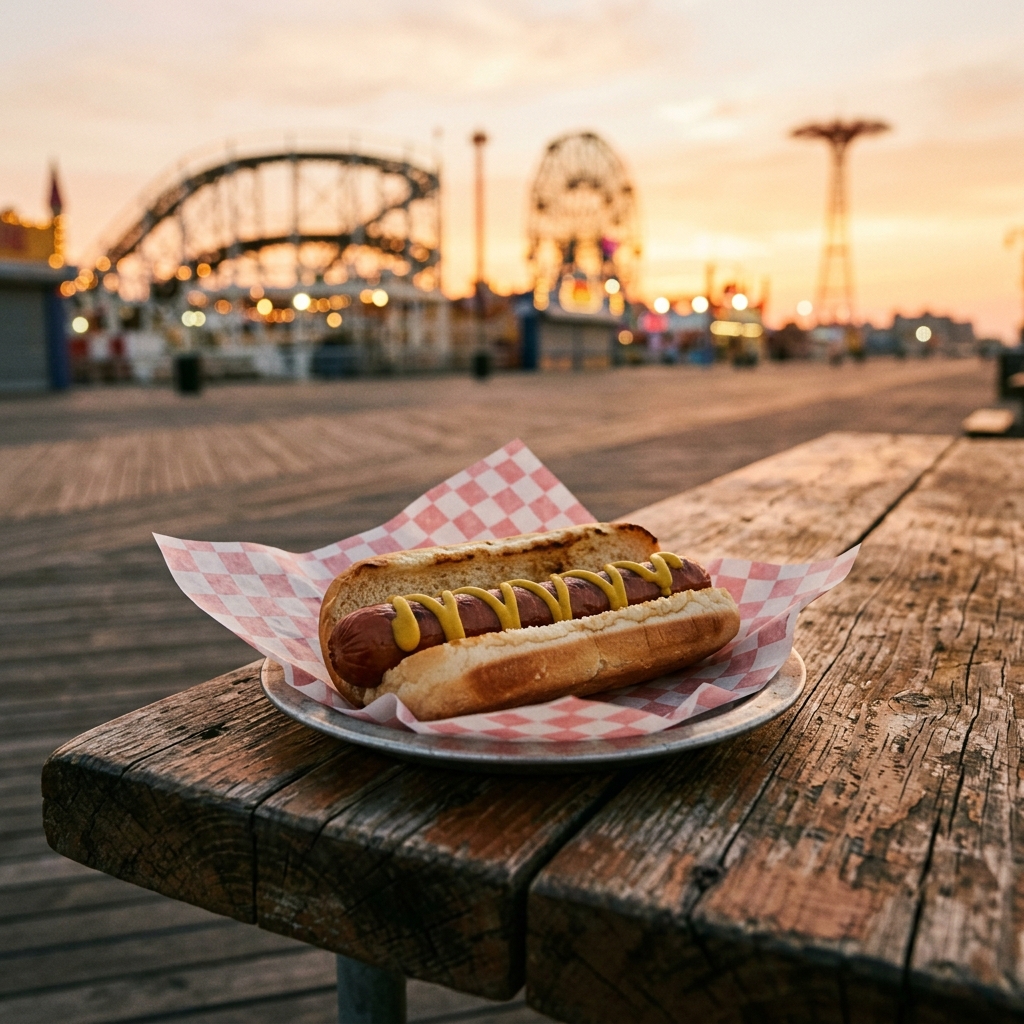
Coney Island histories often credit Charles Feltman with popularizing sausages served in rolls for beach visitors in the late 1860s and 1870s. Other stories point to St. Louis vendors, bakers, or glove-saving legends. The safest conclusion is not that one person invented the entire hot dog, but that bread turned hot sausage into a portable amusement food. The roll solved a practical problem: people could eat while walking, watching, riding, and standing in a crowd.
Nathan's and the Branding Machine
Nathan Handwerker opened a nickel hot dog stand in Coney Island in 1916, and Nathan's Famous eventually became the brand most Americans associate with hot dog spectacle. The company did not invent sausages in buns, but it did something historically important: it made cheapness, location, repetition, and public ritual into a durable food identity. Stories about medical students or doctors reassuring customers belong to that larger trust-building mythology and should be treated as brand lore unless documented in context.
The American Myth
The hot dog became American through repetition: ballparks, beaches, fairs, Fourth of July contests, regional toppings, supermarket franks, and school lunches. Anti-German feeling during World War I also pressured German-associated foods and words, making Americanized naming useful. The result is a perfect food myth. The hot dog is genuinely American, but not because it was born from nothing in America. It became American because the country absorbed, renamed, branded, and ritualized an immigrant sausage tradition until it felt native.