Why Did Canned Fish Become Luxury Again?
Digital culture and storytelling context review: Ahmed Baakli — Reviewed against cited public sources for: Sardinecore, tinned-fish boards, protein culture, and modern conservas branding.
Review lanes show the scope checked for this case file. Active standalone case files present source-led historical context.
Why did canned fish become luxury again?
Verdict: Canned fish became luxury again when conservas craft, protein snacking, illustrated packaging, European pantry aesthetics, and social media reframed old preservation food as taste culture. [1] [2] [3] [4]
Why it matters: The sardine revival shows how a food can move from survival pantry to aesthetic status object without changing its basic preservation logic.
Preservation Before Aesthetics
Sardines became important because small fish spoil fast. [1]
Sardines became important because small fish spoil fast. Salt, smoke, oil, fermentation, and later canning gave coastal communities a way to hold onto abundance. This was practical before it was pretty. A catch that might rot in a day could become food for ships, inland markets, winter pantries, or industrial workers.
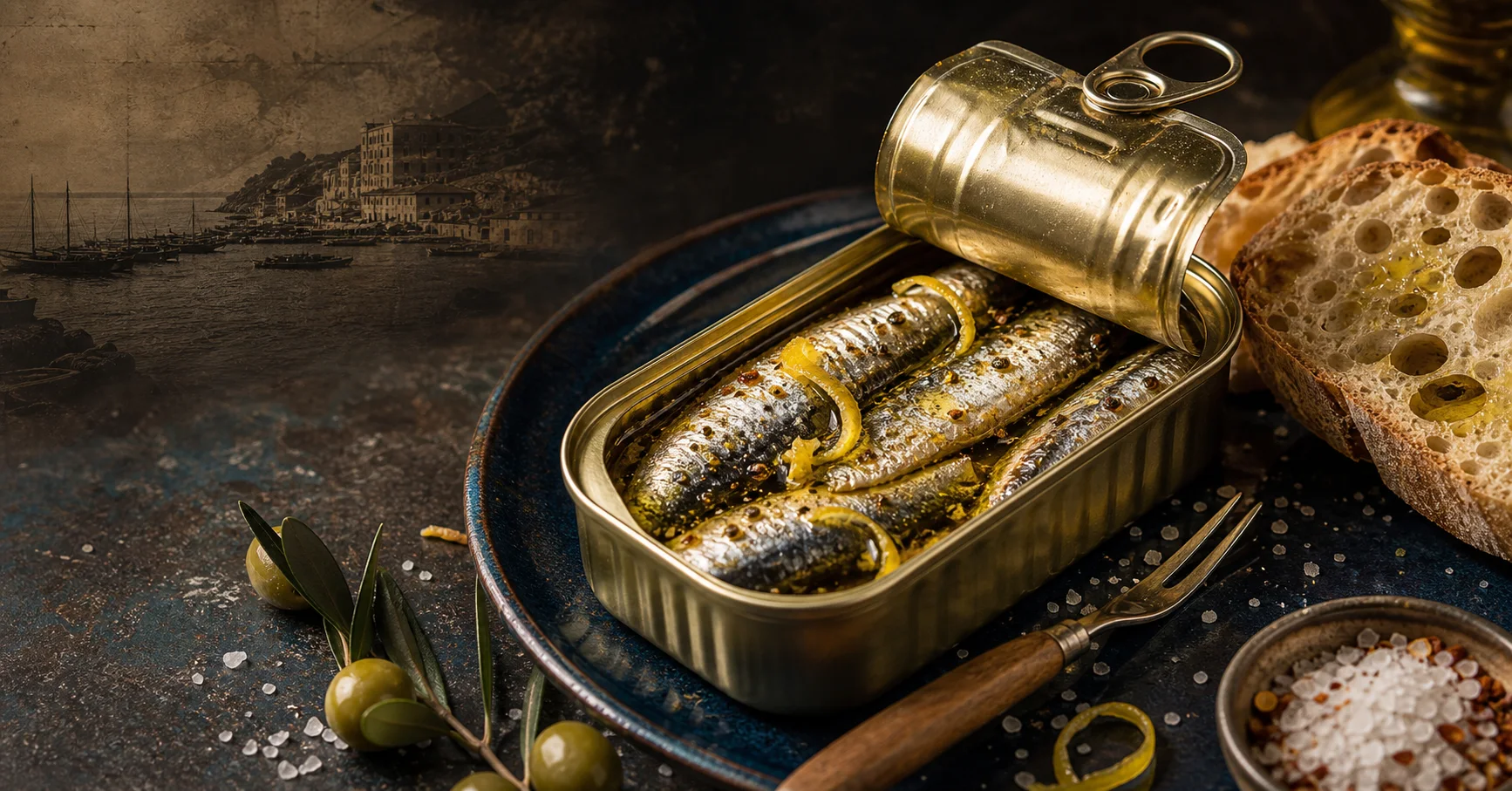
The modern tin still carries that older logic. It is a small preservation machine: fish, fat, salt, heat, metal, and time.
How Cans Made Fish Modern
Canning transformed sardines into a modern food because it made them transportable, stackable, branded, and predictable. [1]
Canning transformed sardines into a modern food because it made them transportable, stackable, branded, and predictable. A tin could travel farther than fresh fish and could be eaten without a full kitchen. That made canned fish useful in cities, armies, ships, factories, and homes.
The tin also gave producers a surface for identity. Labels, illustrations, oil quality, regional names, and premium packaging all helped turn preserved fish into a recognizable object.
The Conservas Upgrade
Conservas culture changed the emotional register of canned fish. [1]
Conservas culture changed the emotional register of canned fish. Instead of emergency pantry food, a tin could mean Spanish or Portuguese craft, olive oil, small plates, wine bars, and European leisure. The food did not need to become new. It needed a new frame.
This is the core of the luxury comeback. The same preservation method that once signaled necessity can signal taste when packaging, context, and storytelling change.
Sardinecore and Protein Culture
In 2026 reporting, sardines sit inside several overlapping trends: protein snacking, tinned-fish boards, beauty discourse, pantry aesthetics, and social-media performance. [1]
In 2026 reporting, sardines sit inside several overlapping trends: protein snacking, tinned-fish boards, beauty discourse, pantry aesthetics, and social-media performance. Some claims around skin or wellness should be treated cautiously, but the cultural pattern is clear. Sardines now let people show thrift, nutrition awareness, design taste, and worldliness at once.
The case file verdict is not that canned fish suddenly became new. It is that old preserved fish found a perfect modern costume.
Claim Graph
Evidence-Backed Claims
Each conclusion below carries a machine-resolvable proof path to the cited sources listed at the bottom of this page.