💡 Key Takeaways
- Century eggs are cured for weeks or months, not one hundred years.
- Their transformation is primarily alkaline curing rather than ordinary lactic fermentation.
- High pH reorganizes egg proteins and changes color, aroma, and texture.
- Older ash-and-clay methods and modern controlled processes pursue the same preservation logic.
What Is a Century Egg?
A century egg, or pidan, is a preserved duck, chicken, or quail egg exposed to an alkaline curing environment. Traditional mixtures combined ash, lime, salt, clay, and plant materials around the shell. Modern processors can use carefully measured alkaline solutions [1][2].
The English name is theatrical. Production takes weeks or months, not a century. “Thousand-year egg” is even less literal.
Alkaline Curing, Not Simple Fermentation
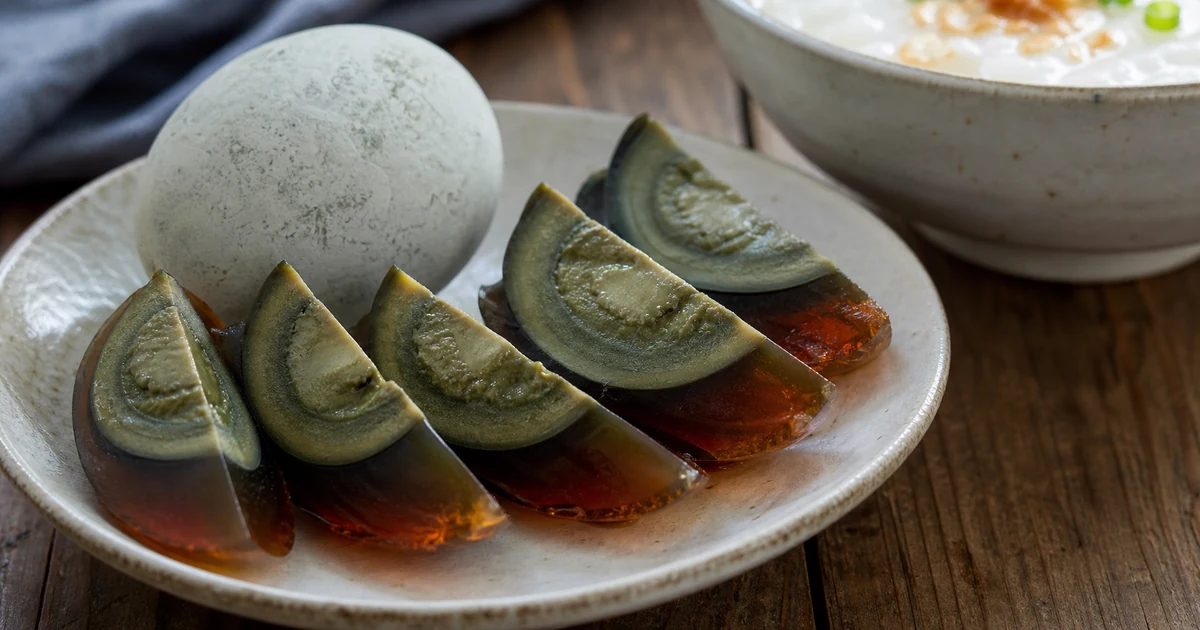
Alkali passes through the shell and raises the egg’s pH. Proteins unfold and reconnect, turning the white into a firm translucent gel and the yolk into a creamy or layered green-gray center. Chemical reactions also create the characteristic sulfurous and ammonia-like aroma [2][3].
Some sources call pidan fermented, but microbes are not the central engine in the same sense as yogurt or sauerkraut. “Alkaline-cured” is the more precise headline.
Where Did the Method Begin?
Origin stories often describe eggs discovered in lime, ash, or construction material. They are memorable but difficult to prove. Late imperial evidence supports established Chinese methods, while regional names and coatings point to gradual technical development rather than one identifiable inventor [1].
The method made practical sense: mineral alkalinity could transform eggs without refrigeration and create a valued food rather than merely delaying decay.
From Clay Coatings to Controlled Production
Traditional coatings insulated the egg and delivered alkali slowly. Industrial systems measure concentration, temperature, and time, reducing variability. Regulation became important when some producers used lead compounds to accelerate curing; responsible modern production uses lead-free methods [2][4].
The episode is a reminder that tradition and safety are not opposites. Controlled manufacturing can preserve a historic food while removing hazardous shortcuts.
How Pidan Is Eaten Today
Century egg is served with congee, tofu, ginger, vinegar, chili, pork, or cold dishes. Its strong flavor is usually balanced rather than eaten as a stunt. Viral “strange food” videos miss that culinary context.
Pidan’s real story is not shock. It is a sophisticated Chinese understanding of eggs, minerals, time, and texture that produced an entirely new food from a fragile ingredient.
Historical Timeline
Written records and regional traditions describe alkali-preserved eggs
Chinese preserved eggs circulate through expanding domestic and overseas trade
Factories replace variable earthen coatings with measured alkaline solutions
Lead-free standards and regulated production address safety problems associated with some accelerants
Evidence Explorer
Review the Source Trail
Inspect the article sources, scoped review credits, and copyable citation details without leaving the page.
Reviewed for Stated Scope
Sources Listed
Comments
Community comments are coming soon. Check back later to join the discussion!