💡 Key Takeaways
- Sufu is preserved tofu matured through controlled microbial and brine stages.
- White, red, and strongly flavored regional forms are not one identical product.
- Red sufu commonly gains color and flavor from red yeast rice.
- Sufu and stinky tofu overlap in popular language but describe different production traditions.
What Is Sufu?
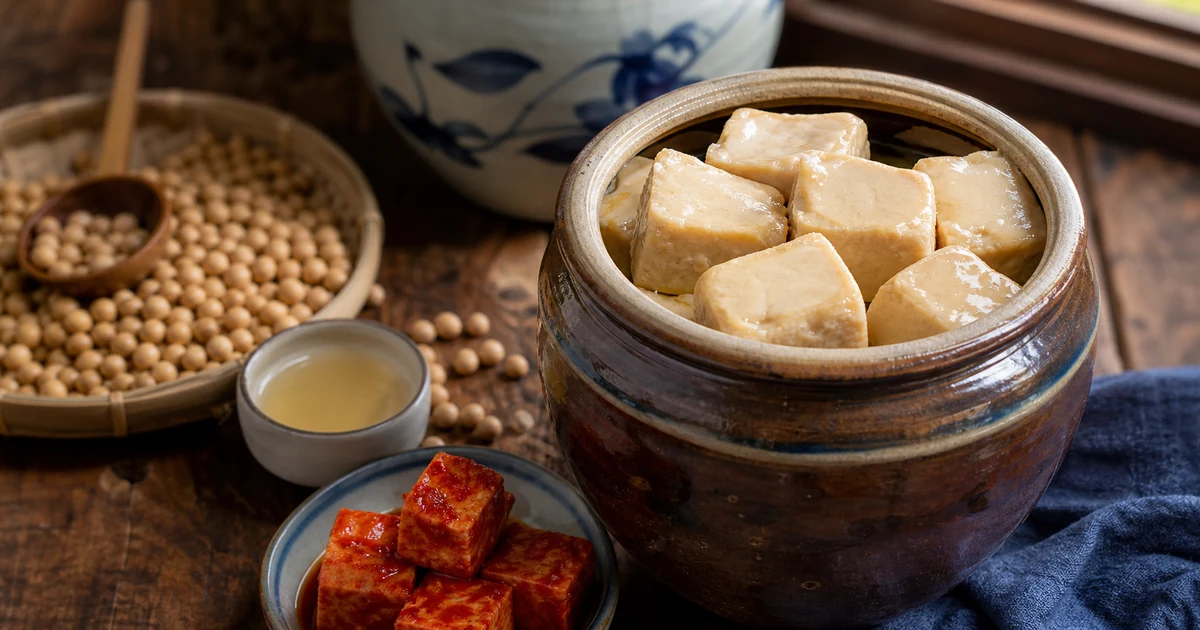
Sufu is Chinese fermented bean curd: small tofu cubes transformed into a soft, salty, aromatic preserve. A typical process allows selected molds to grow on firm tofu before the cubes mature in brine containing salt, rice wine, spices, or other seasonings [1][2]. The finished food is spread on rice or buns, dissolved into sauces, or used to season vegetables and braises.
Calling sufu “Chinese cheese” helps describe texture, but it can obscure an independent soy technology. Milk coagulation is not its origin story; tofu making, mold management, salting, and jar maturation are.
Tofu Became a Preservation Platform
Fresh tofu is moist and perishable. Chinese cooks developed many ways to extend it, including drying, freezing, smoking, salting, and fermentation. Sufu belongs to this larger preservation system rather than to one legendary accident [1][3].
The historical evidence is stronger for late imperial production and trade than for exact invention dates. Recipes and names varied, and household practices rarely entered official archives in the same detail as court dishes.
Mold, Brine, and Maturation
During the first stage, molds grow on prepared tofu and release enzymes that begin breaking proteins and fats into smaller flavor-active compounds. Salted maturation then controls the environment while alcohol, spices, and time develop aroma and texture [2][4].
This is controlled food manufacture, not uncontrolled spoilage. Modern producers monitor culture, salt, temperature, sanitation, and maturation because a familiar smell alone cannot prove safety.
White, Red, and Regional Sufu
White sufu foregrounds pale curd and brine. Red forms often include red yeast rice, which colors the cubes and contributes fermented aroma. Chili, sesame oil, sweet rice wine, and regional spice blends create further variation [1].
“Stinky tofu” usually refers to other brining and cooking traditions, often sold fried or steamed. Treating every pungent fermented tofu as the same food erases meaningful differences in microbes, maturation, and use.
From Workshop Jar to Global Pantry
Urban factories made sealed jars consistent enough for supermarkets and export. Chinese migration then carried familiar brands and regional preferences abroad. In diaspora kitchens, a jar can season congee, water spinach, meat marinades, hot pot sauces, or plain rice.
Sufu’s history shows how preservation creates more than shelf life. It turns a fragile bean curd into a compact flavor technology whose smallest portion can reshape an entire dish.
Historical Timeline
Tofu makers develop multiple methods for salting, drying, fermenting, and storing bean curd
Written food and medical works describe preserved and fermented tofu preparations
Regional workshops and urban manufacturers standardize jarred sufu
Factory cultures and export jars spread sufu while preserving white, red, and chili-seasoned styles
Evidence Explorer
Review the Source Trail
Inspect the article sources, scoped review credits, and copyable citation details without leaving the page.
Reviewed for Stated Scope
Sources Listed
Comments
Community comments are coming soon. Check back later to join the discussion!