💡 Key Takeaways
- Salted eggs are cured with brine or salted coatings rather than necessarily fermented.
- Duck eggs are favored for their large, fatty yolks.
- Salt moves through the shell, firming the white and changing yolk texture.
- Modern salted-egg seasoning builds on older congee, pastry, and festival uses.
What Is a Salted Egg?
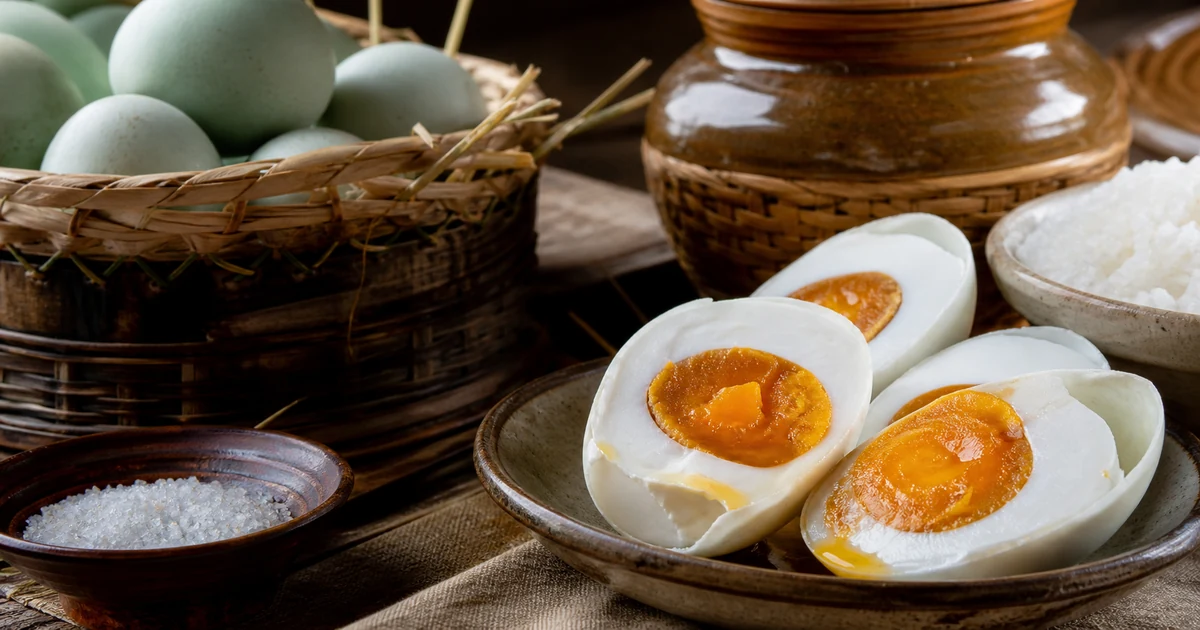
Salted eggs are usually duck eggs preserved in concentrated brine or packed in a salted clay-like coating. Salt crosses the porous shell over time. The white becomes firm and very salty, while the fatty yolk develops a dense, rich, sometimes crumbly texture [1][2].
This is curing. Microbes may be present in traditional environments, but the defining mechanism is salt movement and water control, not a required fermentation culture.
Why Duck Eggs Became the Favorite
Ducks fit wet rice landscapes, ponds, canals, and mixed farms. Their eggs have comparatively large, fatty yolks that respond dramatically to curing. Salt therefore connected egg preservation to rice agriculture, water management, and market duck farming [3].
Chicken eggs can be salted, but the orange duck yolk became the prestige center of the category.
Brine, Clay, and the Science of the Yolk
Brining immerses eggs in salty water; coating methods hold a measured salt mixture against each shell. As salt and water redistribute, proteins firm and yolk lipids separate into the glossy or “sandy” texture prized in cooked yolks [2][4].
Time and concentration must be balanced. Too little cure shortens keeping quality; too much can make the white unusably salty.
From Congee to Festival Pastry
Salted eggs accompany congee, rice, vegetables, and steamed dishes. Yolks also became symbolic centers in mooncakes and other pastries, where their round shape can evoke the moon. Chinese migration carried preserved eggs into Filipino, Malaysian, Singaporean, Vietnamese, and other cuisines.
Those movements created local names and pairings rather than one unchanged pan-Asian recipe.
The Modern Salted-Egg Flavor Boom
Restaurants and snack companies turned cooked yolks into powders and sauces for chips, seafood, fried chicken, buns, and pasta. The trend can look new because packaging isolates “salted egg” as a flavor.
Its sensory logic is old: salt, fat, concentrated yolk, and grain. Modern branding scaled a preservation food that Asian households and bakeries had valued for generations.
Historical Timeline
Households salt eggs to extend seasonal abundance without refrigeration
Regional duck-egg centers and pastry traditions develop distinctive cured yolks
Migration carries salted eggs across Southeast Asian markets and cuisines
Salted egg yolk becomes a global snack, sauce, and restaurant flavor
Evidence Explorer
Review the Source Trail
Inspect the article sources, scoped review credits, and copyable citation details without leaving the page.
Reviewed for Stated Scope
Sources Listed
Comments
Community comments are coming soon. Check back later to join the discussion!