💡 Key Takeaways
- Cloves are flower buds from a tree native to the Maluku Islands.
- Asian and Indian Ocean trade moved cloves long before Portuguese ships reached the region.
- The Dutch East India Company tried to restrict production through coercion and tree destruction.
- Clove trees later spread to Zanzibar, Madagascar, and other tropical regions, weakening monopoly.
What Are Cloves?
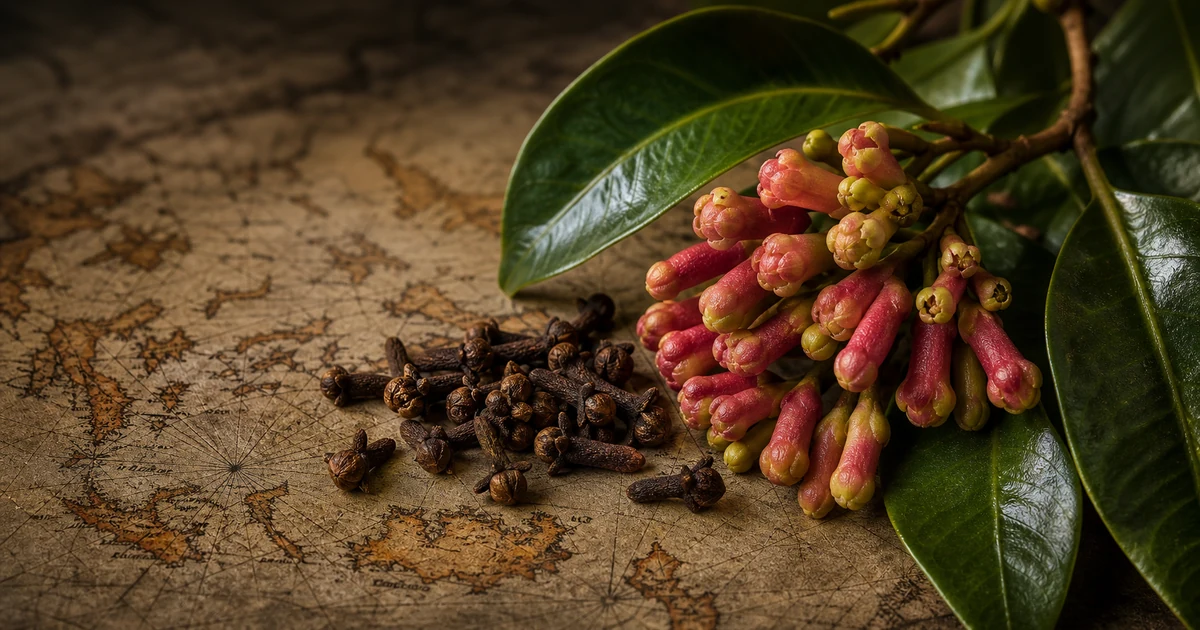
Cloves are unopened flower buds harvested from Syzygium aromaticum, an evergreen tree native to a small part of the Maluku archipelago. Pickers gather the buds as they turn from green to pink, then dry them until they darken into the hard spice recognized worldwide [1][4].
That botanical specificity shaped history. For centuries, the tree’s narrow homeland gave Malukan growers and merchants access to a product consumers could not easily reproduce elsewhere.
Trade Before European Arrival
Cloves traveled far beyond Maluku long before European oceanic empires. Archaeological and textual evidence places them in Asian and Indian Ocean exchange, reaching South Asia, the Middle East, and the Mediterranean through layered merchant networks [2].
The usual “European discovery” narrative begins too late. Portuguese ships entered a trade world with established producers, languages, brokers, ports, and prices.
Portuguese Ambition and Dutch Monopoly
Portugal attempted to redirect spice commerce after entering the Indian Ocean. In the seventeenth century, the Dutch VOC pursued tighter control, concentrating approved production, uprooting trees outside controlled zones, and using armed patrols and coercive agreements [1][3].
The monopoly was not an abstract business strategy. It disrupted communities and used violence to turn a living tree into a restricted corporate asset.
How the Monopoly Broke
Clove seedlings were eventually transferred beyond Dutch control. New plantations in the Indian Ocean, especially Zanzibar and Madagascar, expanded supply and changed prices. Colonial labor systems followed the trees into these new geographies [2][3].
Breaking one monopoly did not make the trade free of exploitation. It redistributed production and power.
Cloves in Modern Food and Industry
Cloves season rice, stews, spice blends, baked goods, pickles, drinks, and preserved meats. Eugenol also made clove oil important in dentistry, fragrance, and industrial flavoring. In Indonesia, kretek cigarettes consume a large share of production.
The spice’s tiny form conceals a vast history: botanical rarity, Indigenous cultivation, global desire, corporate violence, plantation transfer, and ordinary culinary use all meet in one dried bud.
Historical Timeline
Cloves move westward through Austronesian and Indian Ocean exchange networks
Portuguese traders enter Maluku and seek control over spice supply
The Dutch VOC enforces a violent clove monopoly through treaties, patrols, and tree destruction
Transferred trees establish major production outside Maluku, including Zanzibar and Madagascar
Evidence Explorer
Review the Source Trail
Inspect the article sources, scoped review credits, and copyable citation details without leaving the page.
Reviewed for Stated Scope
Sources Listed
Comments
Community comments are coming soon. Check back later to join the discussion!