💡 Key Takeaways
- Tarhana is fermented and dried grain-and-dairy food, not one fixed tomato soup.
- Regional recipes vary in grain, yogurt, vegetables, herbs, and form.
- Fermentation and drying turned summer ingredients into quick winter meals.
- Related names across Anatolia and the Balkans reflect movement and shared technique, not one simple ownership claim.
What Is Tarhana?
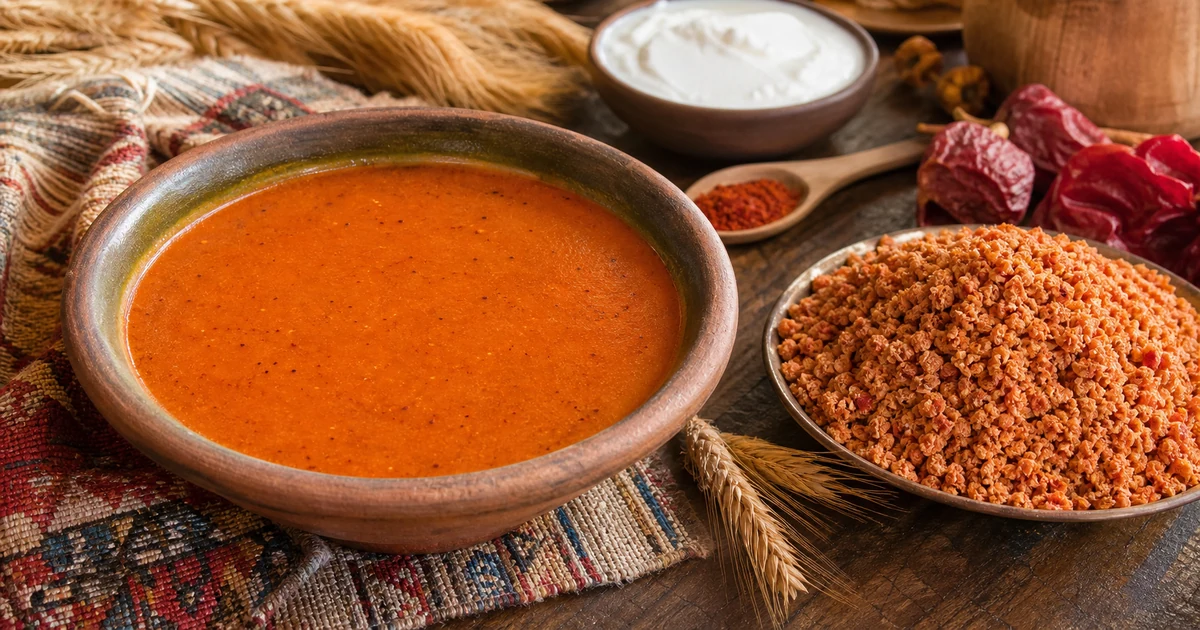
Tarhana is a fermented mixture of grain or flour with yogurt or sour milk, often joined by vegetables, herbs, salt, or spices, then dried for storage. It is later crumbled into water or stock to make soup [1].
The familiar red Turkish powder is only one form. Pale, lumpy, sheet-dried, vegetable-rich, and grain-specific versions belong to different local traditions.
Preservation Work Before Winter
Tarhana concentrates labor in the harvest season. Grain supplies starch, dairy contributes acidity and protein, fermentation develops flavor, and drying removes enough moisture for storage [1][4].
Calling it an ancient instant soup is playful but revealing: the winter meal cooks quickly because grinding, souring, mixing, and drying were completed months earlier.
Anatolia, the Balkans, and Shared Names
Tarhana, trahana, kishk, and related foods occupy overlapping but non-identical regions. Ottoman movement, pastoral dairying, grain agriculture, marriage, trade, and migration connected techniques across Anatolia, the Balkans, the Levant, and beyond [2][3].
The linguistic resemblance does not authorize one universal origin story. Ingredients and desired textures differ sharply by place.
Fermentation and Drying
Lactic-acid bacteria and yeasts acidify the wet mixture during one or more days of fermentation. Makers then spread, crumble, or shape it for sun or controlled drying. Acid and low moisture together improve stability [1][4].
Tomato and peppers are later New World additions to some regional styles; they cannot define the oldest layers of the food.
Tarhana Today
Commercial packets made tarhana an urban convenience, while village and household production remains seasonal and social. Diaspora markets now sell Turkish, Greek, Balkan, and Cypriot forms beside modern soup mixes.
Its durable achievement is culinary compression: grain, dairy, microbes, summer labor, and sunlight become a portable base that restores into a warming meal.
Historical Timeline
Households combine grain and soured dairy into dried stores for winter
Regional tarhana and trahana traditions circulate through villages, towns, and military provisioning
Migration carries named local forms across new borders and cities
Packaged powders industrialize a food still made seasonally at home
Evidence Explorer
Review the Source Trail
Inspect the article sources, scoped review credits, and copyable citation details without leaving the page.
Reviewed for Stated Scope
Sources Listed
Comments
Community comments are coming soon. Check back later to join the discussion!