💡 Key Takeaways
- Dosa is a South Indian griddle food made in many fermented and unfermented forms.
- Medieval references show a long history, but Karnataka and Tamil Nadu origin debates resist one simple answer.
- Masala dosa is a later potato-filled restaurant form.
- Fermentation, batter ratio, and griddle technique shape crispness.
What Is Dosa?
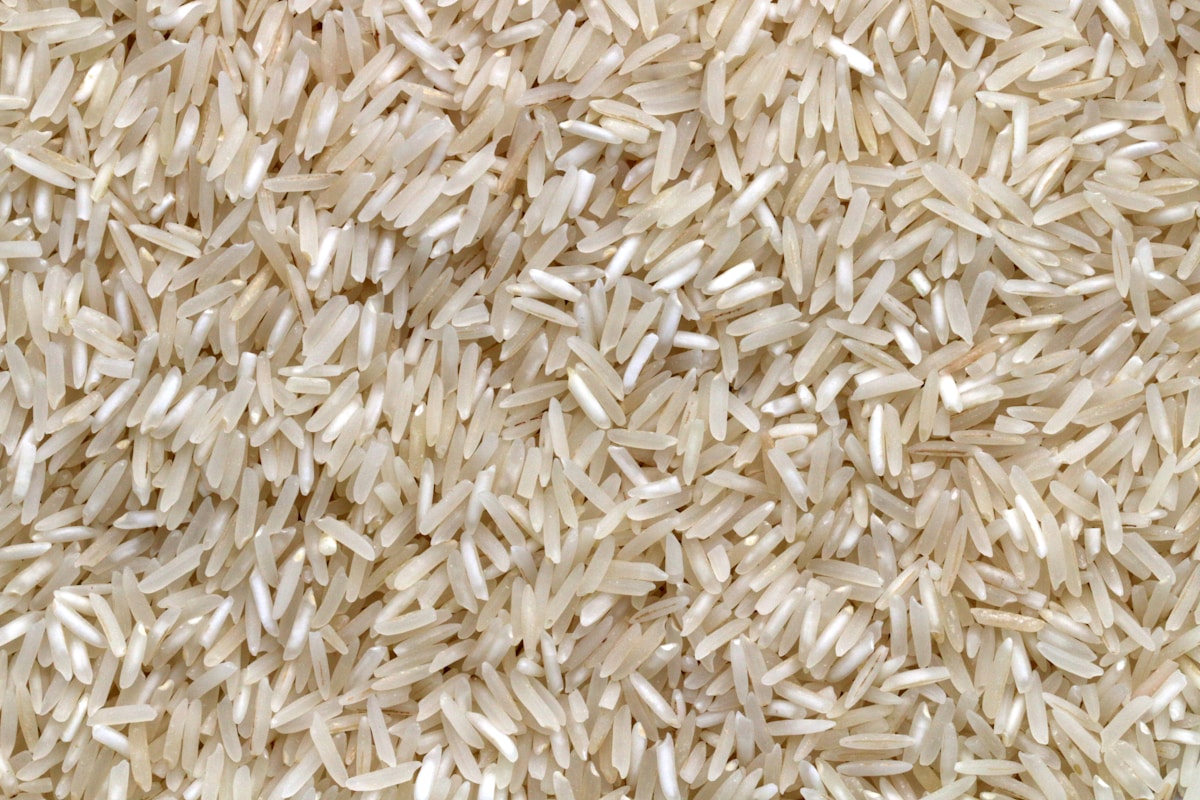
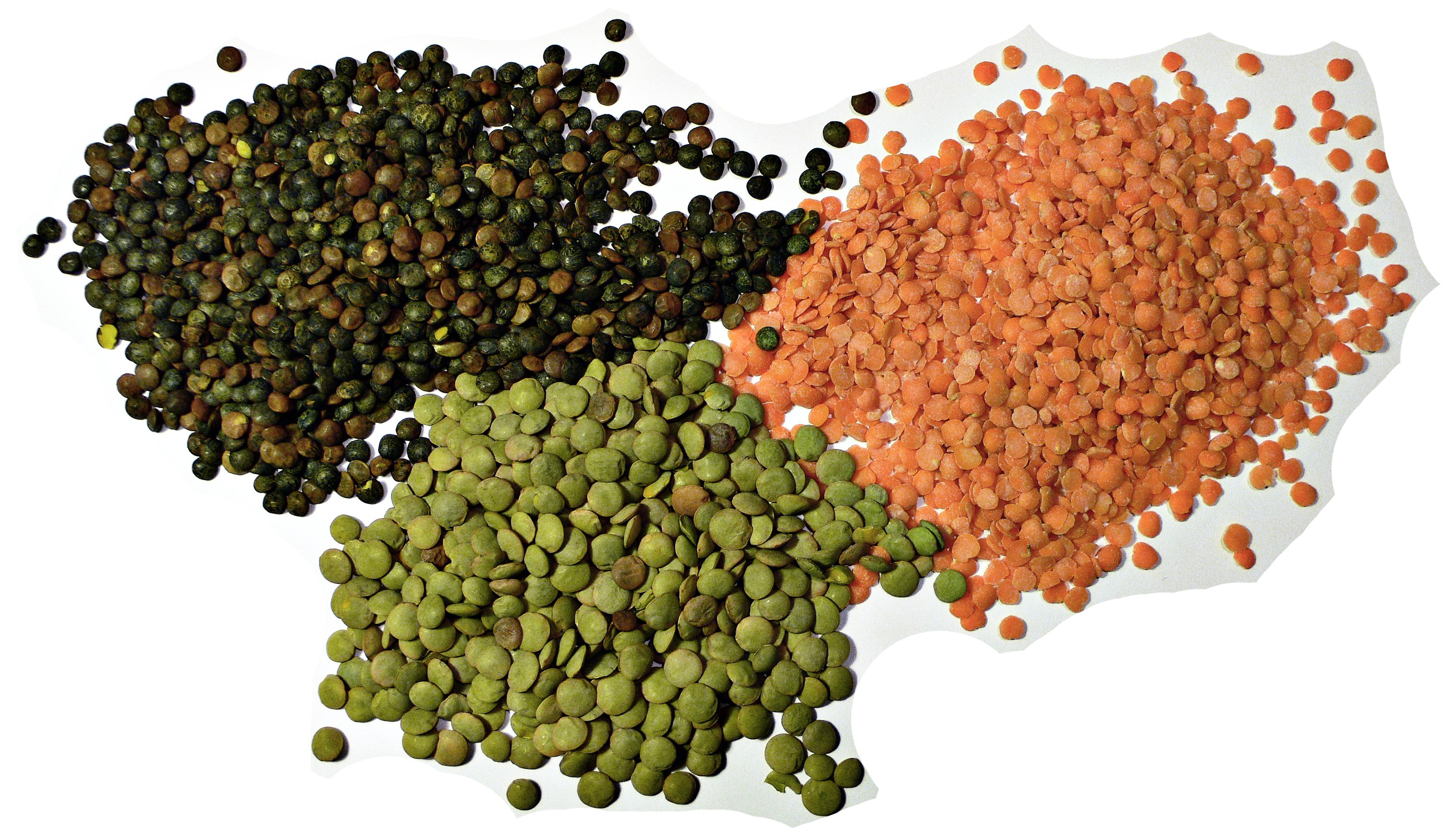
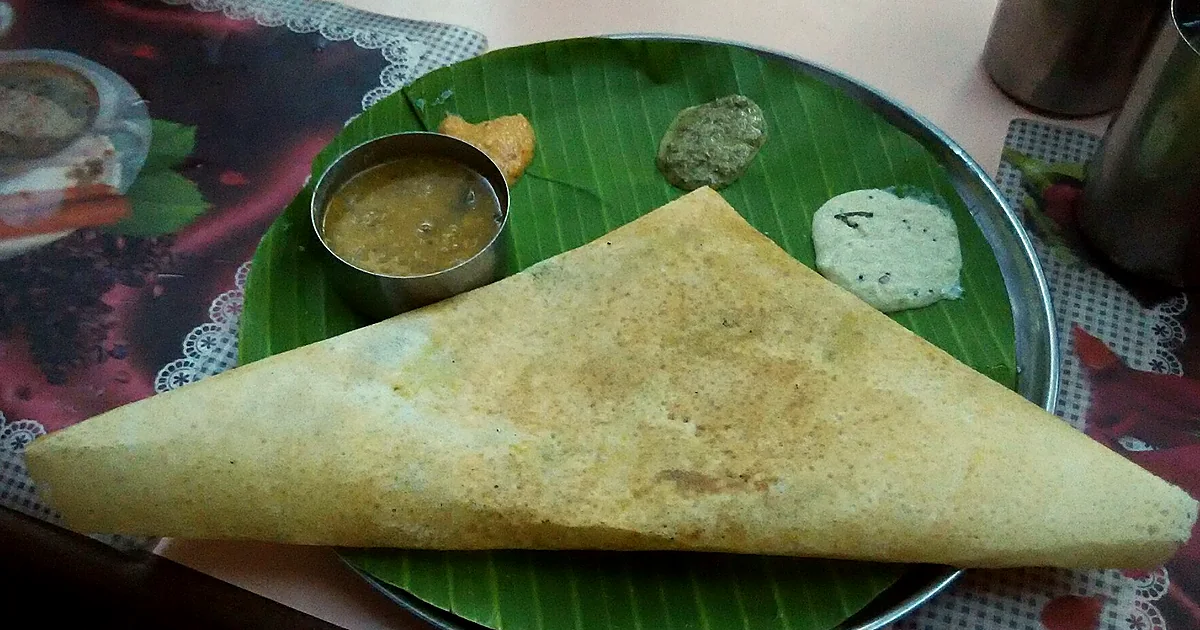
Dosa is a broad family of South Indian griddle foods. The internationally familiar version uses fermented rice-and-urad batter spread thinly on a hot iron surface, producing a crisp edge and softer center. Other dosas use semolina, millet, lentils, or unfermented batters [1].
The word therefore names a format and tradition, not one universal recipe.
Where Did Dosa Come From?
Medieval Kannada and Tamil sources contain early references to dosa-like foods, leading to modern arguments between Karnataka and Tamil Nadu. The evidence supports a long South Indian history but not a clean national-style patent [1][2].
Regional exchange matters more than a single border. Grains, pulses, iron griddles, temple towns, and itinerant cooks allowed forms to evolve across the south.
Fermentation and Griddle Skill
Fermentation acidifies batter and creates gas, but crispness depends just as much on water, grind, spreading, heat, and oil. A cook moves the ladle in widening circles, judging when the surface will release without tearing [4].
Dosa is therefore both microbial and manual technology. The batter can be shared with idli, but the final method creates a different food.
The Masala Dosa Is Modern
Filling dosa with seasoned potato created one of the best-known restaurant forms. Because potato reached India after the Columbian exchange, masala dosa cannot share the full antiquity of older griddle cakes. Its rise belongs to modern restaurant culture, especially Udupi networks [3].
That later history is not a weakness. It shows how an old format absorbed a global crop and became a national comfort food.
Dosa Goes Global
Restaurants, refrigerated batter, electric grinders, and diaspora migration made dosa practical far from South India. Chefs now fill it with cheese, meat, vegetables, and fusion ingredients.
The strongest global story keeps the South Indian structure visible: fermented or carefully mixed batter, a hot griddle, and the skill to turn grain and pulse into an edible sheet.
Historical Timeline
Texts describe dosai and related griddle foods
Regional batter ratios and griddle techniques diversify
Udupi restaurants and masala dosa spread through Indian cities
Diaspora restaurants and instant batter make dosa globally familiar
Evidence Explorer
Review the Source Trail
Inspect the article sources, scoped review credits, and copyable citation details without leaving the page.
Reviewed for Stated Scope
Sources Listed
Comments
Community comments are coming soon. Check back later to join the discussion!