💡 Key Takeaways
- Laksa is a family of Southeast Asian noodle dishes rather than one standardized soup.
- Its history is connected to port cities, Peranakan communities, migration, and maritime trade.
- Curry laksa and asam laksa differ fundamentally in broth, acidity, and regional identity.
- The word’s etymology and one exact birthplace remain debated.
What Is Laksa?
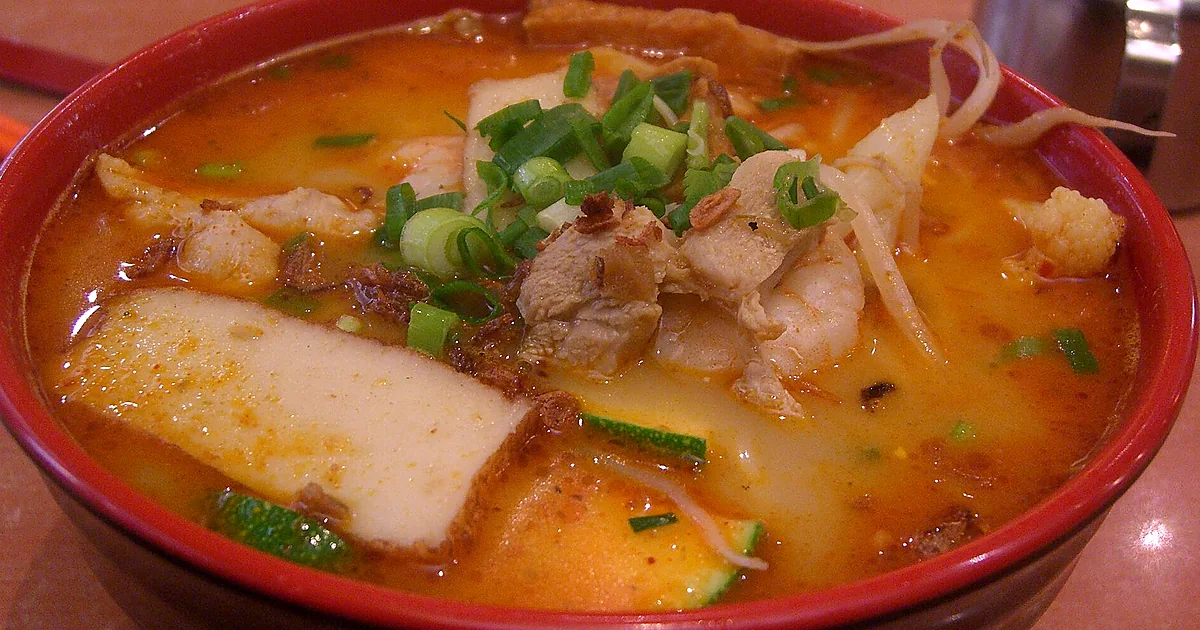
Laksa is a family of noodle dishes found across maritime Southeast Asia. Some versions use coconut-rich curry broth; others use sour fish broth sharpened with tamarind or related acids. Rice noodles, wheat noodles, shrimp, fish, tofu, eggs, herbs, and sambal vary by city and cook [1][2].
That range is not evidence that one version is authentic and the rest are copies. Laksa became durable precisely because it could express different coastal ingredients and communities while remaining recognizable as a strongly seasoned noodle meal.
Where Did Laksa Originate?
Malaysia, Singapore, and Indonesia all contain important laksa traditions. One exact birthplace is difficult to prove because the dish developed within a connected maritime world rather than behind modern borders. Port cities brought Chinese migrants into long contact with Malay, Indonesian, and other local communities [3].
Peranakan food culture is central to many explanations, but even Peranakan communities differ by place. The safest origin answer is regional: laksa grew through migration and adaptation around the Straits of Malacca and wider island Southeast Asia.
Curry Laksa and Asam Laksa
Curry laksa typically uses spice paste and coconut milk, creating a rich broth that may carry shrimp, tofu puffs, egg, or chicken. Penang asam laksa uses fish and a sour broth, with herbs and aromatics producing a very different balance [1].
These are not minor topping variations. They demonstrate two culinary logics under one name: fatty-spiced and sour-herbal. Other places, from Sarawak to Johor and Singapore, add still more local structures.
How Laksa Became a Global Comfort Food
Migration and tourism carried laksa into restaurants abroad, while packaged pastes made its spice base easier to reproduce. Global menus often standardize the coconut version because it is visually legible as curry noodle soup, but that commercial choice represents only part of the family.
The historical value of laksa lies in its refusal to fit one national origin box. Noodles, shrimp, coconut, chili, fish, and herbs meet in a dish shaped by people who moved through port cities and made home from exchange.
Historical Timeline
Maritime Southeast Asian ports connect Chinese migrants, local communities, spices, noodles, and coconut foodways
Peranakan communities develop distinctive household and port-city cuisines
Named regional laksa styles become associated with Penang, Malacca, Singapore, Sarawak, and other places
Migration, tourism, packaged pastes, and restaurants make laksa globally legible
Evidence Explorer
Review the Source Trail
Inspect the article sources, scoped review credits, and copyable citation details without leaving the page.
Sources Listed
Comments
Community comments are coming soon. Check back later to join the discussion!