💡 Key Takeaways
- Mango pickle is a family of regional preparations rather than one national recipe.
- Unripe mango supplies acidity and firm texture, while salt, oil, drying, fermentation, and spices provide different preservation barriers.
- Not every mango pickle is fermented, and not every version relies on vinegar.
- Migration made commercial jars globally visible while households maintained distinct seasonal methods.
What Is Mango Pickle?
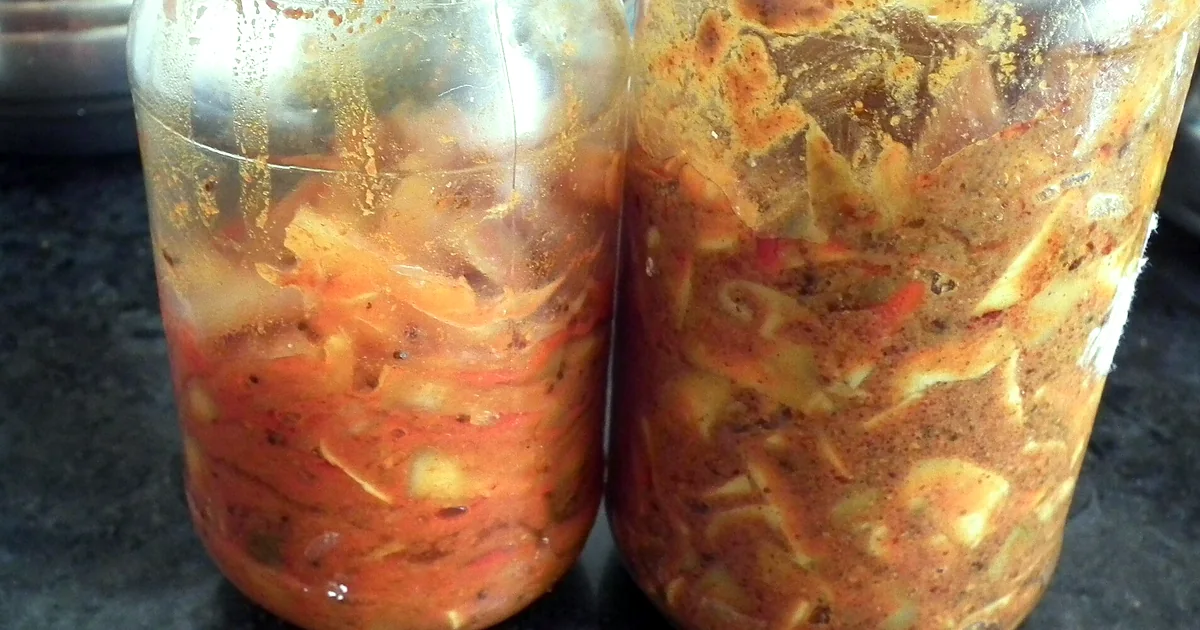
Mango pickle is a large family of South Asian achars made most often from firm, unripe mango. Pieces may be salted, dried, fermented, covered in oil, cooked, sweetened, or mixed with chili, mustard, fenugreek, turmeric, and other regional spices [1][2].
Calling all of these products Indian mango pickle is convenient but incomplete. Methods shift across India, Pakistan, Bangladesh, Sri Lanka, Nepal, and diaspora communities, and households can preserve their own ratios for generations.
Why Unripe Mango Works for Pickling
Unripe mango has firm flesh and strong acidity, allowing pieces to keep structure while salt pulls out moisture. Depending on the method, drying reduces available water, fermentation produces more acid, and oil limits oxygen exposure. Spices add flavor and can support the preservation system without replacing hygiene [3][4].
Not every achar is fermented. Some are cooked or acidified; others mature under salt and oil. Food history becomes safer when it names the actual process rather than using fermentation as a fashionable label for every jar.
Achar as Regional Knowledge
Pickling turns a seasonal glut into concentrated flavor that can last beyond harvest. The work historically relied on selecting fruit, cutting, salting, sun exposure, vessels, and observing weather. These skills often belonged to household labor that written histories undervalued [1].
Regional fats and crops shape the result. Mustard oil anchors many northern and eastern styles; sesame or other oils may appear elsewhere. Sweet mango pickles, grated forms, whole-fruit pickles, and chili-heavy jars all reflect different food environments.
How Mango Pickle Entered the Global Pantry
Colonial trade and later migration carried the word achar and related pickles into Southeast Asia, the Caribbean, East Africa, Britain, and beyond. Commercial jars made mango pickle shelf-stable and standardized, but they did not replace household versions.
Today a spoonful beside rice, flatbread, lentils, or curry carries several histories at once: salt, spice, seasonal fruit, women’s labor, migration, and the practical refusal to let a harvest disappear.
Historical Timeline
Mango cultivation and multiple preservation traditions develop across varied regional food systems
Spice, salt, oil, and fruit-preservation practices circulate through courts, markets, and households
Industrial oil, glass jars, rail, and brands change pickle production and distribution
Diaspora groceries make regional mango pickles accessible in global markets
Evidence Explorer
Review the Source Trail
Inspect the article sources, scoped review credits, and copyable citation details without leaving the page.
Sources Listed
Comments
Community comments are coming soon. Check back later to join the discussion!