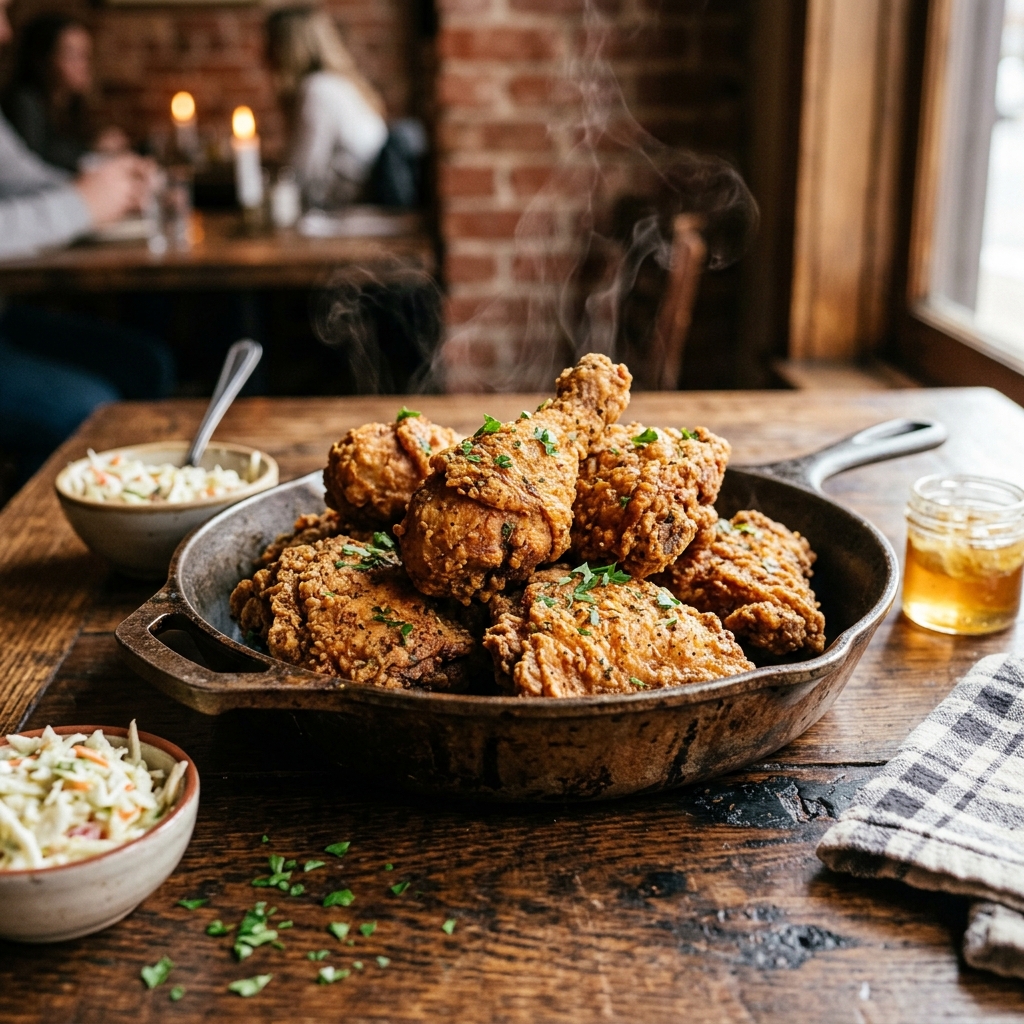
Lemon pepper seasoning beside lemon zest, black peppercorns, and fried chicken wings

Lemon Pepper History: Atlanta Wings and a Modern American Spice Blend

How dried lemon zest, black pepper, and Southern wing culture turned a seasoning blend into a national flavor

📍 United States (blend culture); strong Atlanta wing association📅 20th-century commercial spice blends; late-20th-century wing boom7 min read
Published: ·Updated: ·
Digital culture and storytelling context review: Ahmed BaakliAtlanta wing branding, modern spice-blend marketing, and Southern restaurant storytelling.
Lemon pepper is a modern American blend of dried lemon and black pepper, famous on Atlanta-style wings. Image: The Foods That Shaped Us Research Desk. Image terms. Request permission.
Lemon Pepper Origin: Atlanta Wings and Seasoning History

💡 Key Takeaways

  • Lemon pepper is a dried seasoning blend, typically lemon zest or lemon oil with black pepper and salt.
  • It is modern American spice-aisle food, not an ancient Mediterranean mix with one inventor date.
  • Atlanta wing culture made lemon pepper a regional prestige flavor that later went national.
  • Menu growth reflects restaurant branding as much as pantry chemistry.

What Is Lemon Pepper?

Lemon pepper is a seasoning blend built on dried lemon zest or lemon flavoring plus black pepper, usually with salt and sometimes garlic or onion powder [1][2]. It is a modern American pantry product, not a classical French spice mix with a medieval charter.

Searches for lemon pepper origin should expect a blend history and a regional restaurant story, not a single 18th-century inventor.

Spice Aisle Meets Wing Culture

Commercial spice companies made lemon pepper widely available in the late twentieth century. Southern restaurants — especially in Atlanta — turned it into a wing identity: bright citrus heat without relying only on cayenne. Wet finishes and dry tosses both claim the name.

That restaurant branding is why lemon pepper behaves like a “new classic” on menus even though the jar ingredients look simple. Prestige attached to a city’s wing culture, then scaled.

Why It Is Not an Ancient Blend

Lemons and peppercorns each have deep separate histories. Their industrial co-packaging as “lemon pepper” is new. Food history should celebrate the citrus-pepper idea without inventing a false antiquity.

The honest angle is American convenience seasoning meeting Black Southern and Atlanta restaurant creativity — a twentieth-century taste grammar.

National Flavor After Atlanta

Once lemon pepper wings were a regional signal, snack brands, seafood shacks, and national chains borrowed the name. Datassential’s 2026 “new classics” list reflects that menu momentum [menu trend reporting]. For this site, the durable page is the origin of the blend-plus-wings complex, not a recipe dump.

Readers wanting lemon pepper history deserve Atlanta, zest, black pepper, and the modern spice aisle — in that order.

Historical Timeline

Mid-late 20th century

Commercial lemon-pepper blends appear in U.S. spice aisles

1980s-2000s

Atlanta and Southern restaurants popularize lemon-pepper wings

2010s-2020s

National chains and snack brands adopt lemon pepper as a named flavor

2020s

Datassential and menu trackers list lemon pepper among rising “new classics”

🎉 Fun Historical Facts

  • Dried zest and pepper are the structural pair; garlic or onion powders are common extras.
  • Wet lemon-pepper wing finishes differ from dry rubs.
  • Regional pride in Atlanta is part of the cultural story.

📚 Sources & References

  1. [1]Alan Davidson. The Oxford Companion to Food. Oxford University Press (2014).
    Find Book
  2. [2]Harold McGee. On Food and Cooking: The Science and Lore of the Kitchen. Scribner (2004).
    Find Book
  3. [3]Andrew F. Smith, ed.. The Oxford Companion to American Food and Drink. Oxford University Press (2007).
    Find Book
  4. [4]Pepper. Encyclopaedia Britannica (2024).
    Search Source

Articles are reviewed internally for source quality, historical context, clarity, and relevance. Our references may include academic books, university-press publications, museum records, archaeological studies, peer-reviewed journals, historical archives, official cultural institutions, and established food-history works. Case file links point to supporting evidence.

Evidence Explorer

Review the Source Trail

Inspect the article sources, scoped review credits, and copyable citation details without leaving the page.

Reviewed for Stated Scope

Digital culture and storytelling context review: Ahmed BaakliAtlanta wing branding, modern spice-blend marketing, and Southern restaurant storytelling.

Sources Listed

[1] Alan Davidson. The Oxford Companion to FoodOxford University Press (2014)

[2] Harold McGee. On Food and Cooking: The Science and Lore of the KitchenScribner (2004)

[3] Andrew F. Smith, ed.. The Oxford Companion to American Food and DrinkOxford University Press (2007)

[4] PepperEncyclopaedia Britannica (2024)

🏛️

Written by The Foods That Shaped Us Research Desk

The Foods That Shaped Us Research Desk is the publication byline for legacy and collaboratively maintained food-history articles. Articles are researched and edited through a publication-led process, grounded in cited sources, and reviewed for historical context, source quality, and clarity.

Source-led editorial process·Read our Editorial Standards

Comments

Community comments are coming soon. Check back later to join the discussion!
Related Foods