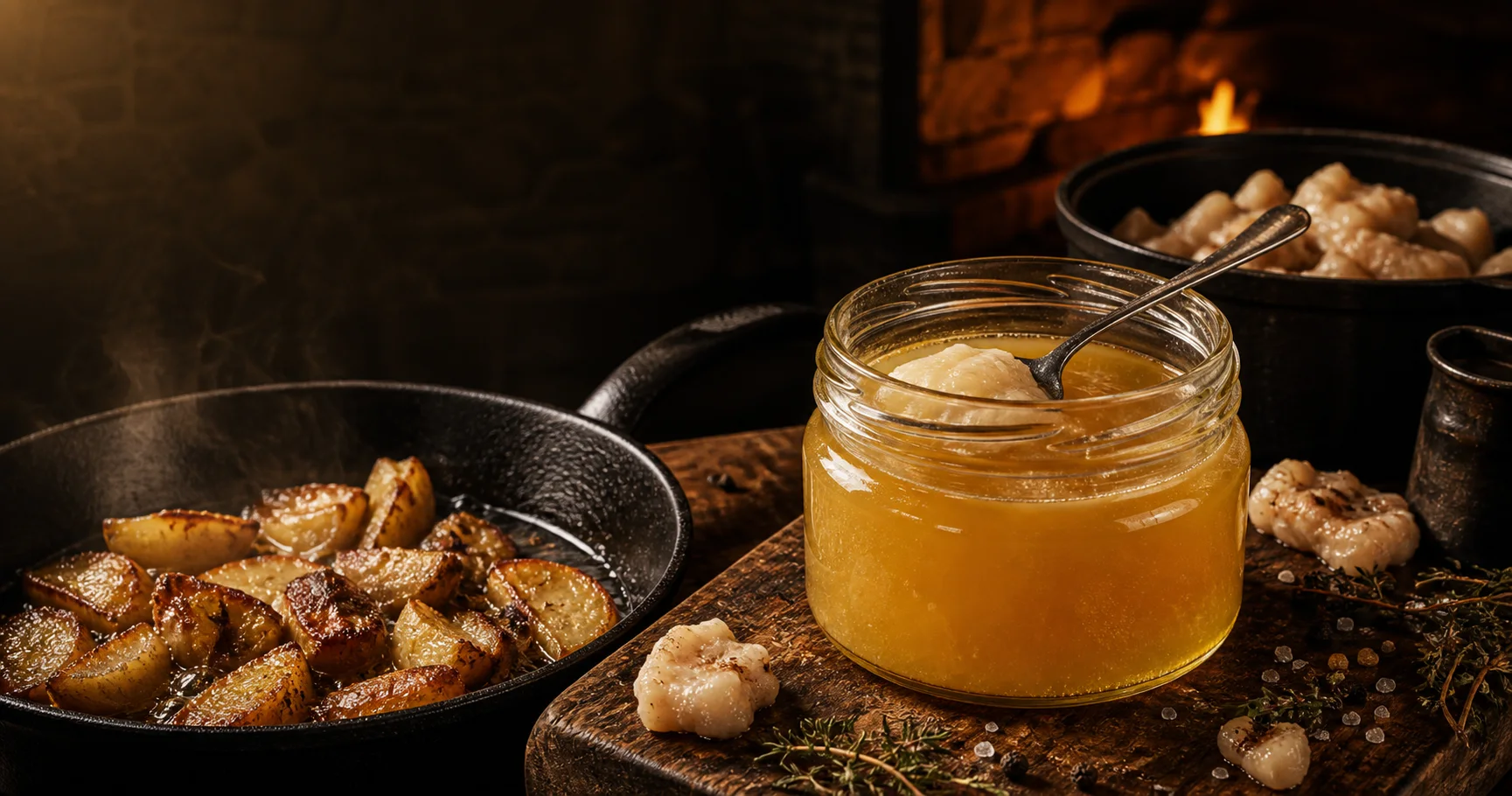
Jar of golden schmaltz with gribenes and fried onions

Schmaltz History: Ashkenazi Chicken Fat and a Kitchen Staple

How rendered poultry fat seasoned Ashkenazi cooking, fried onions, and later “ancestral fat” nostalgia

📍 Ashkenazi Jewish kitchens of Central and Eastern Europe📅 Long vernacular practice; documented strongly in modern cookbooks and memoirs7 min read
Published: ·Updated: ·
#Ashkenazi Food#Jewish Food#Chicken
Source and factual review: Mehdi IarabAshkenazi rendered-fat terminology, kosher meat-dairy constraints, and gribenes context.
Schmaltz is rendered poultry fat, central to Ashkenazi cooking where butter and lard were not options. Image: The Foods That Shaped Us Research Desk. Image terms. Request permission.
Schmaltz Origin and History: Ashkenazi Chicken Fat

💡 Key Takeaways

  • Schmaltz is rendered chicken or goose fat used as a cooking and spreading fat in Ashkenazi kitchens.
  • Kosher rules separating meat and dairy made poultry fat a structural substitute for butter on meat meals.
  • Gribenes — crispy cracklings — are part of the same rendering practice.
  • Modern “ancestral fat” trends rediscovered schmaltz after decades of industrial oil dominance.

What Is Schmaltz?

Schmaltz is rendered poultry fat — most often chicken, sometimes goose — used for frying, spreading, and flavoring in Ashkenazi Jewish cooking [1][2]. Searches for schmaltz origin should land on Central and Eastern European Jewish kitchens, not on a single factory invention date.

Rendering melts fat from skin and trimmings; crispy bits left behind are gribenes. Onion cooked in the fat is part of the sensory signature.

Kosher Logic and Everyday Cooking

Because kosher law separates meat and dairy, butter could not dress a meat meal. Poultry fat filled that structural gap: latkes, chopped liver, matzo dishes, and skillets all leaned on schmaltz where lard was forbidden and butter was unavailable [2][3].

That makes schmaltz a legal-culinary technology as much as a flavor preference. Food history without the kosher constraint misses why the fat mattered so much.

Migration and Mid-Century Decline

Immigrant cookbooks and delis carried schmaltz into North America. Later decades favored vegetable oils and leaner fashion; schmaltz smelled “old country” to some families and disappeared from weekday pantries.

The fat never fully vanished in serious Ashkenazi cooking, but supermarket culture marginalized it — creating the conditions for today’s nostalgia revival.

Ancestral Fat Revival

Alongside beef tallow and butter, schmaltz reappears in heritage recipes and fat-curious food media. The food-history frame stays non-medical: this is about kosher kitchens, onion, gribenes, and a rendered-fat craft — not a health verdict.

For related animal fats, see duck fat and lard pages in the ancestral-fats map.

📜 Informational & Historical Context NoteHistorical systems of medicine, traditional remedies, and herbal applications discussed on this page (such as ancient Ayurvedic, Greek, or Egyptian practices) are presented purely for historical interest and cultural context. They are not intended as, and must not be taken as, modern medical or dietary advice. Always consult a qualified healthcare professional before making any wellness or nutritional decisions. Read our full Disclaimer.

Historical Timeline

Ashkenazi vernacular centuries

Rendered poultry fat becomes a everyday cooking medium in meat kitchens

19th-20th centuries

Cookbooks and immigrant kitchens carry schmaltz to North America

Mid-late 20th century

Vegetable oils and health fashions push schmaltz to the margins

2010s-2020s

Heritage cooking and fat revival bring schmaltz back into food media

🎉 Fun Historical Facts

  • Goose schmaltz appears in some older European Jewish foodways alongside chicken.
  • Onion is often cooked in the fat and defines the aroma.
  • Schmaltz is not the same product as beef tallow or leaf lard.

📚 Sources & References

  1. [1]Alan Davidson. The Oxford Companion to Food. Oxford University Press (2014).
    Find Book
  2. [2]Claudia Roden. The Book of Jewish Food. Knopf (1996).
    Find Book
  3. [3]Gil Marks. Encyclopedia of Jewish Food. Wiley (2010).
    Find Book
  4. [4]Harold McGee. On Food and Cooking: The Science and Lore of the Kitchen. Scribner (2004).
    Find Book

Articles are reviewed internally for source quality, historical context, clarity, and relevance. Our references may include academic books, university-press publications, museum records, archaeological studies, peer-reviewed journals, historical archives, official cultural institutions, and established food-history works. Case file links point to supporting evidence.

Evidence Explorer

Review the Source Trail

Inspect the article sources, scoped review credits, and copyable citation details without leaving the page.

Reviewed for Stated Scope

Source and factual review: Mehdi IarabAshkenazi rendered-fat terminology, kosher meat-dairy constraints, and gribenes context.

Sources Listed

[1] Alan Davidson. The Oxford Companion to FoodOxford University Press (2014)

[2] Claudia Roden. The Book of Jewish FoodKnopf (1996)

[3] Gil Marks. Encyclopedia of Jewish FoodWiley (2010)

[4] Harold McGee. On Food and Cooking: The Science and Lore of the KitchenScribner (2004)

🏛️

Written by The Foods That Shaped Us Research Desk

The Foods That Shaped Us Research Desk is the publication byline for legacy and collaboratively maintained food-history articles. Articles are researched and edited through a publication-led process, grounded in cited sources, and reviewed for historical context, source quality, and clarity.

Source-led editorial process·Read our Editorial Standards

Comments

Community comments are coming soon. Check back later to join the discussion!
Related Foods