💡 Key Takeaways
- The pistachio latte is a 2020s–2026 cafe drink of espresso with pistachio cream, pistachio milk, or pistachio syrup — a format invented in coffee chains, not in any pistachio-growing culture.
- The nut underneath is ancient: pistachios (Pistacia vera) were a Persian and Levantine luxury crop for thousands of years before reaching Sicily and the modern cafe.
- The 2026 pistachio-latte wave rides both the broader matcha-to-pistachio cafe trend and a real Sicilian (Bronte) pistachio renaissance — but most cafe pistachio "cream" is sweetened almond-pistachio paste, not pure Bronte pistachio.
What Is a Pistachio Latte?
A pistachio latte is espresso combined with pistachio in some form — sweetened pistachio cream, pistachio milk, or pistachio syrup — usually with steamed milk and sometimes a salted-butter topping or crushed pistachio garnish. The format is a 2020s cafe invention, popularized by major US coffee chains and now globally imitated [6].
The important food-history caveat is that "pistachio" in a mass-market latte is rarely pure pistachio. Sweetened pistachio paste is expensive, so most cafe pistachio creams blend pistachio with almond, sugar, and sometimes condensed milk. The drink is a pistachio-flavored latte, not a glass of liquid Bronte pistachio — and that distinction matters for any honest history of it.
The Nut Underneath: Persian and Levantine Roots
The pistachio itself (*Pistacia vera*) is one of the oldest documented luxury nuts. It was domesticated in Persia and the Levant, and Assyrian, Babylonian, and Persian court records treat pistachios as premium imports alongside other rare foods of the ancient Near East [1][2][5]. The Hanging Gardens of Babylon legend famously lists pistachios among its storied plants.
So the nut that 2026 cafe culture treats as a novelty is actually thousands of years old, with a Persian and Levantine culinary tradition behind it — in baklava, halva, nougat, and as a finishing nut over rice and sweets. None of those traditions produced a "pistachio latte"; the latte format is a Western cafe invention laid on top of an ancient nut.
Sicily and the Bronte Pistachio
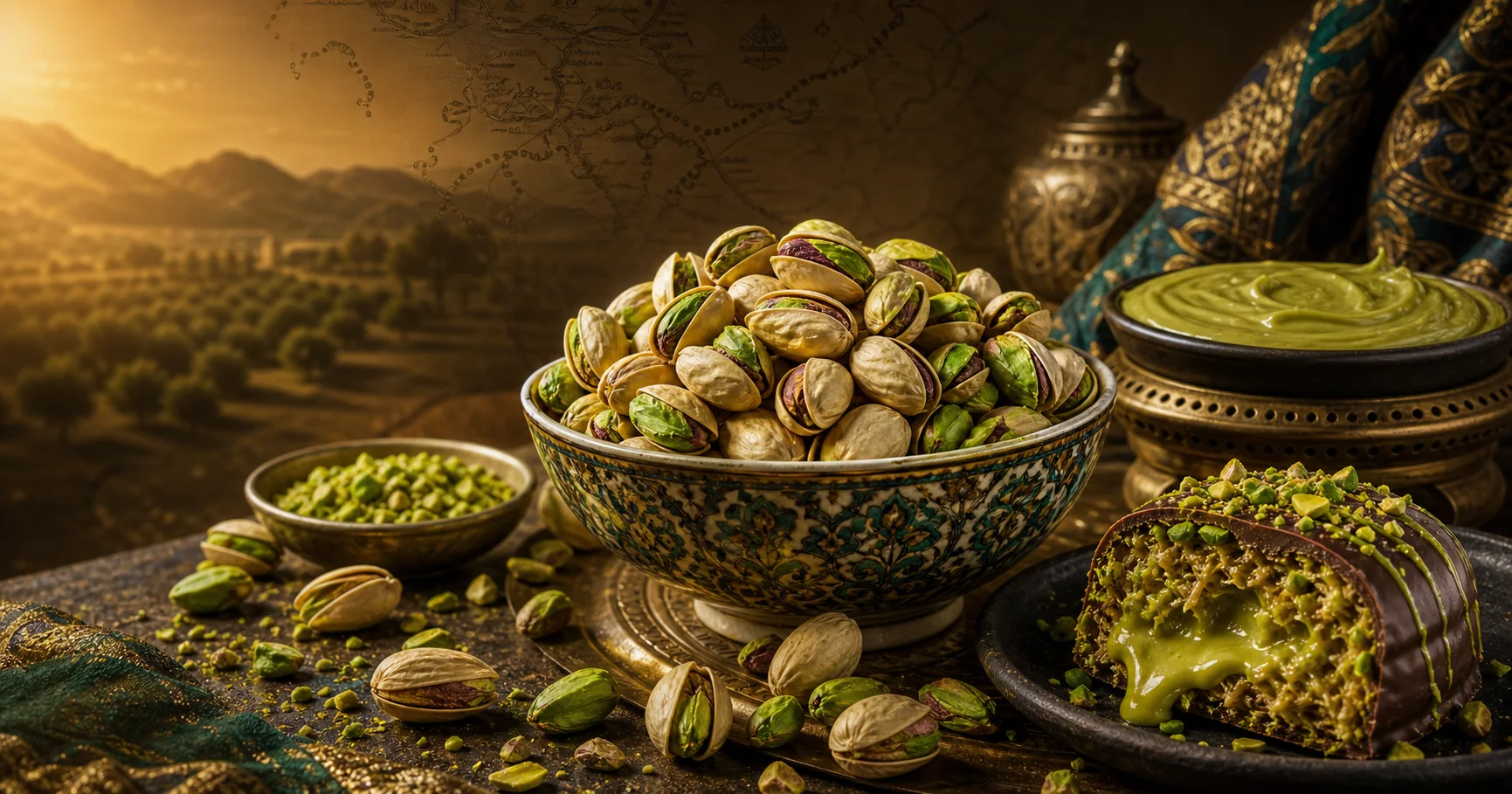
Pistachios reached the Mediterranean through Arab influence, and Sicily — especially the Bronte area on the slopes of Mount Etna — became one of the world's premier pistachio regions [3][4]. Bronte pistachio carries a protected designation (DOP) and is the green, resinous, intensely flavored pistachio behind much of Italian pastry and gelato.
The 2026 pistachio-latte wave occasionally markets itself with Sicilian imagery, but the volumes involved make Bronte pistachio impossible as the base ingredient. Bronte pistachio is a small, premium crop; cafe pistachio cream at global scale is almost always Californian or Iranian pistachio blended with other nuts and sugar. Treating the latte as "Sicilian" is a marketing flourish, not a sourcing claim.
The 2026 Cafe Wave
By 2026 the pistachio latte has joined matcha, brown-sugar-oat, and lavender as a default cafe flavor [6]. The wave is partly downstream of the post-matcha "named cafe flavor" culture — a market trained to accept a colored, aromatic latte as a menu category — and partly downstream of social-media aesthetics: pistachio lattes photograph green-tan and read as premium.
For The Foods That Shaped Us, the pistachio latte links coffee, pistachio, milk, and matcha — the broader cafe-named-flavor cluster. The honest story is an ancient Persian-Levantine nut, a Sicilian premium region, and a 2020s American cafe format that blended them into a drink none of those cultures invented.
Historical Timeline
Pistacia vera is domesticated in Persia and the Levant; the nut becomes a documented luxury in Assyrian, Babylonian, and Persian courts.
Pistachios spread through the Mediterranean via trade; they reach Sicily and southern Italy under Arab influence.
Sicilian pistachio — especially around Bronte, on the slopes of Etna — becomes a protected, premium pistachio for pastry and gelato.
A major US coffee chain launches a pistachio latte, introducing the format to a mass American cafe audience.
Pistachio lattes, pistachio cream cold foam, and pistachio milk spread across global cafe menus, riding the post-matchca cafe-nut wave.
Evidence Explorer
Review the Source Trail
Inspect the article sources, scoped review credits, and copyable citation details without leaving the page.
Sources Listed
Comments
Community comments are coming soon. Check back later to join the discussion!