💡 Key Takeaways
- Shiso is a culinary form of perilla, an East Asian plant in the mint family, with green and red varieties used differently.
- Its history includes aroma, pickling, color, wrapping, and traditional herb use rather than one single garnish function.
- Red shiso is closely associated with coloring and seasoning umeboshi, while green shiso is common with sushi, sashimi, and other fresh foods.
- Calling shiso Japanese basil is a rough comparison, not a botanical identity; the two plants have different flavors and histories.
What Is Shiso?
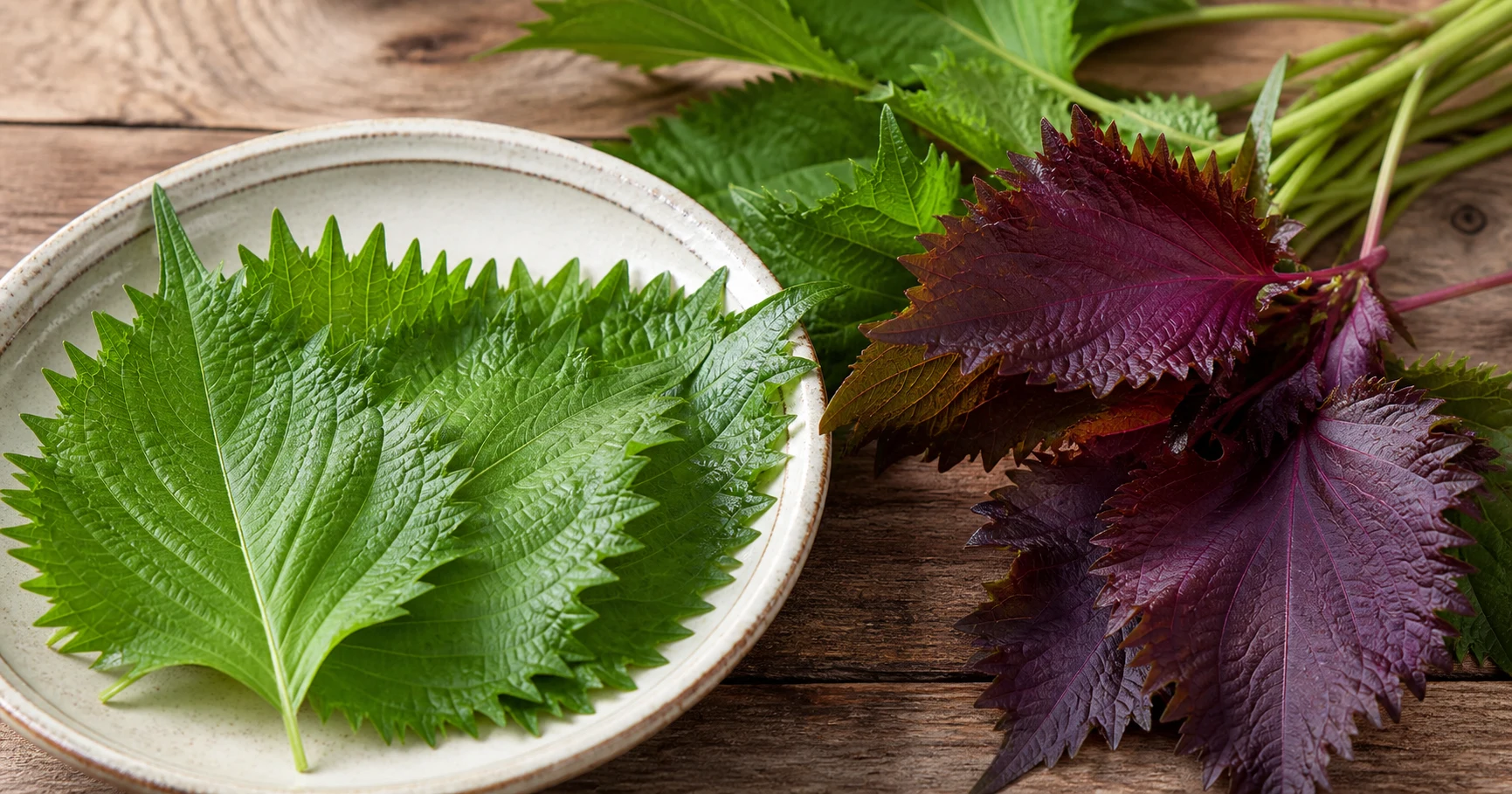
Shiso is the Japanese name commonly used for culinary forms of perilla. It belongs to the mint family, but it does not taste like ordinary mint. Depending on the variety and growing conditions, shiso can be fresh, green, citrusy, spicy, camphor-like, or slightly aniseed. Green shiso, often called ao-jiso, is served fresh with sushi, sashimi, noodles, and other foods. Red shiso, or aka-jiso, is strongly associated with coloring and seasoning pickled plums. The plant is often translated as Japanese basil, but that label is only a rough bridge for unfamiliar readers. Shiso has its own botanical and culinary history.
Perilla Across East Asia
Perilla has a wider East Asian history than the Japanese name suggests. The plant has been used in food and traditional herb practices in several regions, while local varieties and preparations differ. The Government of Japan describes shiso alongside other Japanese wa-herbs and places it within a culture of using plants for aroma, food, and traditional practice [1]. A responsible shiso history therefore distinguishes the species and the culinary forms from the national label. Japanese shiso is part of Japanese food culture, but perilla itself belongs to a broader East Asian botanical and agricultural story. Migration, cultivation, seed selection, and regional taste all matter.
Red Shiso and the Technology of Pickling
Red shiso is one of the clearest examples of a garnish becoming a preservation tool. In umeboshi production, red leaves contribute color and herbal flavor to salted plums. The result is not only visual. The leaves join salt, acid, time, and pressure in a food system designed to transform a seasonal fruit into a durable pantry product. This is why shiso history should not be reduced to decorative leaves on a plate. A plant can be an herb, a dye, a pickle ingredient, a wrapper, and a marker of season at once.
Green Shiso at the Table
Green shiso is commonly used fresh. Its leaves can sit beside sashimi, wrap small foods, carry aroma into a bowl, or be sliced into noodles and rice. The leaf provides a cool, high note against oily fish, salty sauces, or rich fillings. It also gives cooks a way to add fragrance without relying on a large quantity of spice. Fresh shiso is fragile, which affects how it travels. Commercial cultivation and specialty distribution allow it to appear far beyond its traditional growing areas, but storage and handling still shape the eating experience.
Shiso in Contemporary Food Culture
Shiso now appears in restaurants, cocktail programs, specialty farms, and global home kitchens. Its novelty can attract diners who know it from sushi, while growers and chefs continue to work with red, green, and regional forms. That movement is useful when it introduces the plant accurately; it becomes flattening when shiso is treated as a mysterious garnish without agricultural or preservation history. The strongest modern description is simple: shiso is perilla used through Japanese and wider East Asian foodways, with distinct green and red culinary roles.
Historical Timeline
Perilla is cultivated and used in food and traditional herb practices across East Asia
Red and green shiso become embedded in Japanese pickling, serving, and seasonal food culture
Shiso varieties gain protected regional identities and wider commercial distribution
Fresh shiso travels through Japanese restaurants, specialty growers, and culinary experimentation
Evidence Explorer
Review the Source Trail
Inspect the article sources, scoped review credits, and copyable citation details without leaving the page.
Reviewed for Stated Scope
Sources Listed
Comments
Community comments are coming soon. Check back later to join the discussion!