💡 Key Takeaways
- Dashi is a family of Japanese stocks made by steeping or simmering ingredients rich in soluble savory compounds.
- Kombu, katsuobushi, dried sardines, and shiitake each create different versions rather than one universal recipe.
- Maritime trade, especially the movement of Hokkaido kombu toward Osaka, helped make dashi ingredients widely available.
- Dashi is a culinary technology built around extraction, drying, fermentation, and careful control of heat and time.
What Is Dashi?
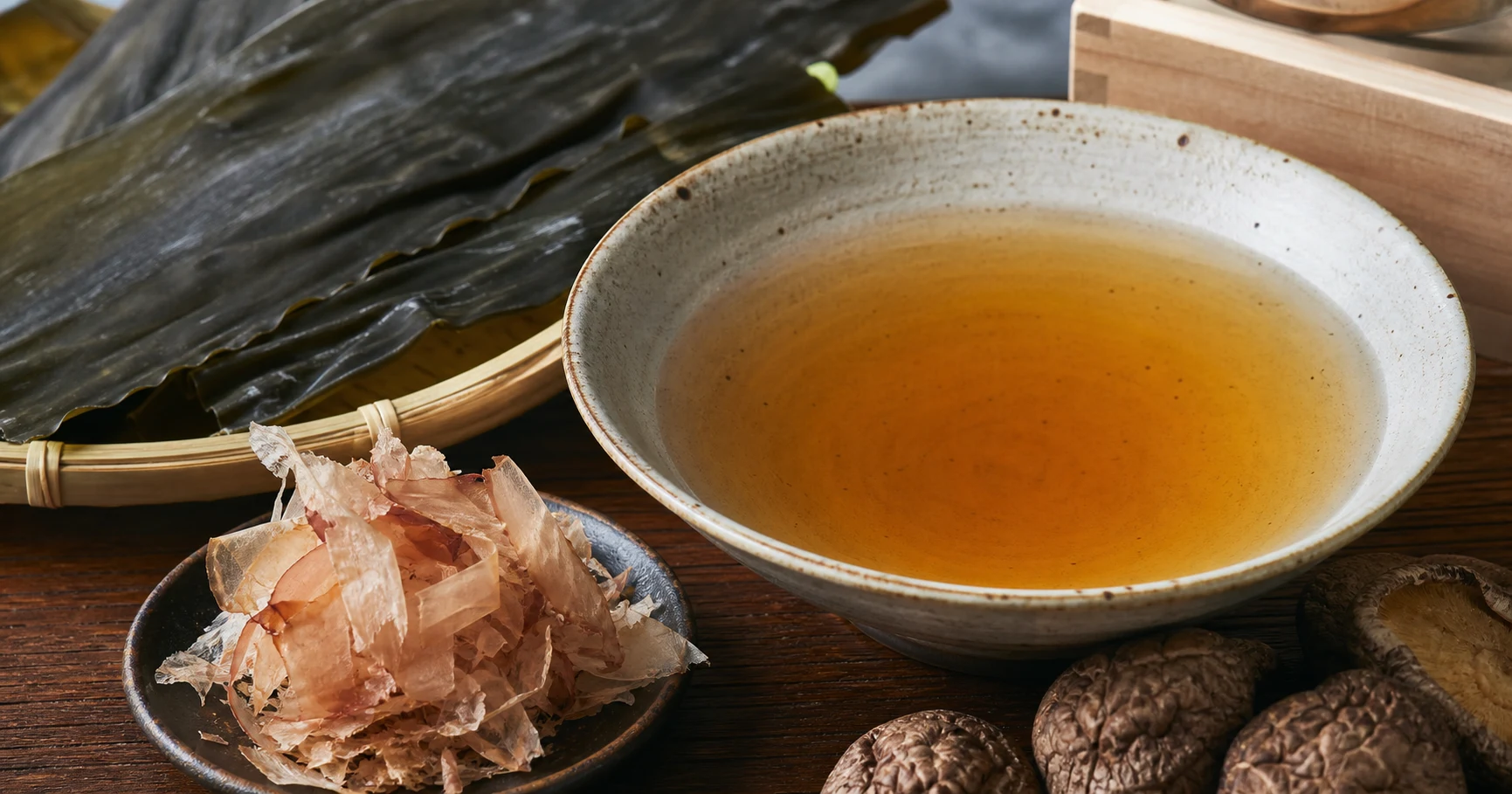
Dashi is a family of Japanese stocks made by extracting flavor from dried, fermented, or otherwise concentrated ingredients. The most familiar combination uses kombu kelp and katsuobushi, the dried and fermented skipjack product shaved into thin flakes. Other dashi uses dried sardines, mushrooms, flying fish, or a single ingredient rather than a blend. The word is often translated as stock, but dashi has its own culinary logic. It is usually clearer and lighter than a long-simmered meat broth, and its purpose is to give soups, sauces, noodles, steamed dishes, and simmered foods a deep savory base without dominating them [1].
Kombu and Katsuobushi
Kombu contributes glutamate-rich savoriness, while katsuobushi contributes a dried, smoked, fermented fish character. The ingredients are not interchangeable, and the method matters. Kombu is often steeped before the water reaches a full boil, while katsuobushi is added later and strained after a short infusion. The result is a broth that tastes clear but layered. Katsuobushi also shows how preservation creates flavor. Skipjack tuna is cooked, dried, smoked, and in some traditional processes inoculated so that mold-assisted drying continues the transformation. Calling it simply dried fish misses the controlled labor that gives the ingredient its aroma, hardness, and extractable taste.
Trade Routes Built the Dashi Pantry
Dashi history is inseparable from coastal geography. Government of Japan material describes how kombu harvested in Hokkaido moved toward Osaka in the Edo period on Kitamae-bune ships [1]. Osaka became a major commercial center, and the movement of kelp helped connect northern waters, maritime shipping, wholesalers, and urban kitchens. The stock in a bowl therefore contains more than a flavor molecule. It records a chain of harvesting, drying, packing, shipping, and retail. A cook in an inland city could build a broth from marine ingredients because preservation and trade made the sea portable.
The Science of Umami
Modern food science gave the taste of dashi a new vocabulary through the study of umami. Glutamate in kombu and related compounds in dried fish help explain why the broth tastes savory even when it is not fatty or heavily spiced. Research on dashi materials has examined the compounds and buffering behavior that contribute to the stock [3]. That science should clarify rather than replace culinary knowledge. Japanese cooks had already learned how to select, cut, steep, heat, and strain ingredients long before umami became an international term. Laboratory language explains part of the mechanism; the history of dashi explains the accumulated practice.
Dashi in Modern Kitchens
Dashi today exists on a spectrum. A cook may use a carefully graded kombu and katsuobushi, a packet of dried ingredients, a vegetarian stock made from kombu and shiitake, or an instant granule designed for speed. These forms are not identical, but they share an idea: a small amount of concentrated pantry material can build a large volume of useful flavor. The global spread of dashi has also produced category mistakes. Dashi is not just Japanese bouillon, and umami is not a synonym for every savory taste. A source-led history keeps the ingredients visible and acknowledges regional variation.
In the news
Recent 2026 food-culture notes that reference this article.
Historical Timeline
Dried kelp, fish, and other preserved ingredients become tools for building savory broths
Kombu from Hokkaido travels through maritime routes to Osaka, strengthening the geography of dashi
Umami research gives scientific language to long-standing culinary practice
Instant granules, liquid concentrates, and plant-based dashi sit beside traditional ingredients
Evidence Explorer
Review the Source Trail
Inspect the article sources, scoped review credits, and copyable citation details without leaving the page.
Reviewed for Stated Scope
Sources Listed
Comments
Community comments are coming soon. Check back later to join the discussion!