💡 Key Takeaways
- Shotis puri is a traditional Georgian bread associated with the tone, a deep clay oven whose walls receive the dough directly.
- Its distinctive long, pointed shape comes from the interaction between dough, gravity, and the curved oven wall.
- Georgia has a diverse bread culture; shotis puri should not be treated as the only Georgian bread or given an unsupported single invention date.
- The bread's modern visibility reflects tourism, diaspora, bakeries, and social media, but its meaning remains tied to warm bread and place.
What Is Shotis Puri?
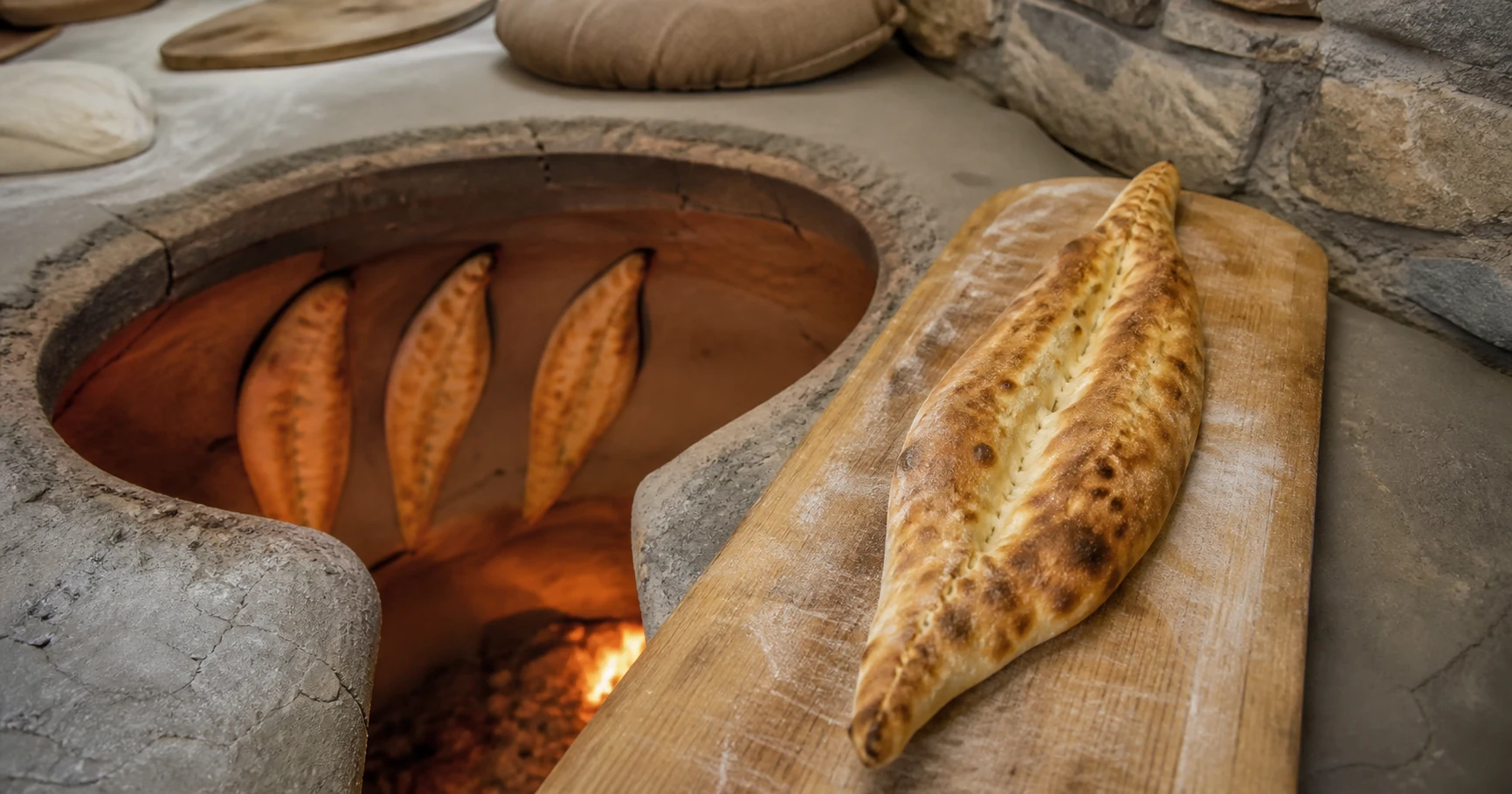
Shotis puri, often called shoti bread in English, is a traditional Georgian bread recognized by its long, pointed, canoe-like shape. It is associated with the tone, a deep clay oven in which dough is attached directly to the hot inner wall. The result is a bread with a crisp, browned surface and a softer interior, usually eaten warm and shared with meals.
The name sits within Georgia's wider bread vocabulary. Georgian food culture includes many regional breads and shapes, including round tonis puri and other breads made from wheat, corn, cheese, beans, or different regional doughs. Shotis puri is important, but it is not a synonym for every Georgian bread.
The most accurate short answer to "what is shotis puri?" is therefore technical and cultural at once: it is a Georgian bread whose identity comes from dough, tone-oven baking, regional practice, and the social meaning of fresh bread [1][2].
The Tone Oven and the Shape of the Bread
The tone is the technology that gives shotis puri its character. Instead of placing shaped dough on a flat baking surface, the baker presses it against the curved inner wall of a heated clay chamber. The dough adheres to the wall, cooks quickly, and develops the uneven browning and pointed silhouette associated with shoti. When the bread is ready, the baker removes it with a hook or tool.
This method makes the oven part of the recipe. Heat is stored in the clay; the wall supplies radiant heat; the dough stretches and sets against a curved surface. The shape is not only a symbol of Georgian food. It is a practical response to the oven. The same broad principle appears in other wall-baked breads across the Caucasus, West Asia, and South Asia, but shared technology does not mean that the foods are identical or that one community simply copied another.
Tone baking also creates a performance of labor. The baker must judge heat, dough strength, placement, timing, and removal. A loaf that looks simple is the visible result of repeated practical knowledge.
Georgia's Bread Culture and the Limits of an Ancient Date
Georgia is often described as an ancient cradle of agriculture and wheat diversity, and bread holds a prominent place in the country's food identity. That deep agricultural background helps explain why bread can carry such emotional and symbolic weight. It does not, however, give us a secure date for the first shotis puri in its present shape.
Official Georgian cultural writing connects shoti with family, memory, hospitality, and the tone oven. Georgia Travel calls it "mother's bread" and describes origins in Kakheti, while UNESCO materials emphasize the country's regional bread and wheat traditions [1][2]. These sources support cultural importance and technique. They should not be stretched into a claim that a specific loaf form has existed unchanged since prehistory.
A good history distinguishes layers: ancient grain cultivation, long-lived oven traditions, regional bread varieties, urban bakery practice, and the later naming or standardization of a particular shape. Shotis puri belongs to that layered history. Its antiquity is real as food culture, while the precise chronology of the modern form remains more difficult to document.
Bakers, Cities, and Everyday Food
Bread becomes history through labor. Someone grows or buys wheat, mills flour, manages a starter or yeast, mixes dough, heats the oven, shapes loaves, and sells or shares them. Tone bakeries turned this work into a visible urban rhythm: customers could recognize the smell of fresh bread, watch loaves emerge, and carry warm shoti home.
Urban baking also creates migration histories. Accounts of Georgian bread often mention regional specialists and the movement of bakers toward cities. Tbilisi, with its bakeries and diverse neighborhoods, became an important setting for the public life of tone bread. The loaf was cheap enough to be everyday food, but skilled baking could still carry reputation and status.
This is why shotis puri should not be treated as a decorative object for travelers. Its historical meaning comes from repetition: the baker who knows the oven, the household that buys warm bread, the table where it is torn, and the regional memory that makes a specific shape feel like home.
Shotis Puri, Identity, and Global Visibility
Shotis puri has become more visible outside Georgia through tourism, diaspora restaurants, food media, and the current appetite for regional breads. That visibility can be valuable when it names Georgia, the tone oven, local bakeries, and the people who maintain the practice. It becomes weaker when the bread is detached from place and presented as a generic "ancient flatbread."
The distinction matters because global food culture often rewards a simplified origin story. A loaf is described as ancient, artisanal, or traditional, and the words do the marketing work without explaining who baked it or how the tradition changed. A source-led page can keep the pleasure while adding precision: shotis puri is Georgian; its tone technique has regional relatives; its present shape should not be assigned an invented prehistoric date; and its modern spread is a story of travel, migration, and bakery culture.
The bread also belongs in conversation with sourdough, wheat, lavash, and other wall-baked breads. Comparison widens the history without dissolving local identity.
How Shotis Puri Is Eaten Today
Fresh shotis puri is commonly torn and eaten with cheese, herbs, beans, stews, grilled foods, or other Georgian dishes. Its texture changes quickly after baking, which makes the moment of purchase part of the food experience. Warmth, crisp edges, and the aroma of the tone oven are not incidental details; they are part of why the bread remains culturally compelling.
Outside Georgia, bakers may adapt the dough or use a very hot conventional oven, baking stone, or other equipment. Those versions can be delicious without being identical to a loaf baked on the wall of a traditional tone. The distinction is useful rather than hostile: adaptation is part of food history, while naming the difference respects the original technique.
Shotis puri history ends with a simple lesson. The loaf is not only flour and fire. It is a Georgian food technology, a bakery economy, a regional identity, and a shared meal. Its modern reach becomes more interesting when the old oven stays visible.
Historical Timeline
Regional wheat cultivation, household baking, and clay-oven traditions shape Georgian bread diversity
Urban tone bakeries and migrant bakers help make shoti bread a familiar everyday food in cities
Georgian national and diaspora food culture preserve tone baking through changing political and economic conditions
Travel, restaurants, and global food media bring shotis puri to new audiences without making its history newly invented
Evidence Explorer
Review the Source Trail
Inspect the article sources, scoped review credits, and copyable citation details without leaving the page.
Reviewed for Stated Scope
Sources Listed
Comments
Community comments are coming soon. Check back later to join the discussion!