💡 Key Takeaways
- Fish sauce is a liquid seasoning made by salting and fermenting fish or fish parts until enzymes and microbes transform the mixture.
- East and Southeast Asian fish sauces belong to diverse regional traditions; they should not be collapsed into one origin story or treated as proven descendants of Roman garum.
- Salt, seasonal fish, vessels, coastal labor, and long fermentation made fish sauce both a preservation technology and a trade product.
- Modern industrial bottles sit alongside family producers and regional styles whose differences matter to food history.
What Is Fish Sauce?
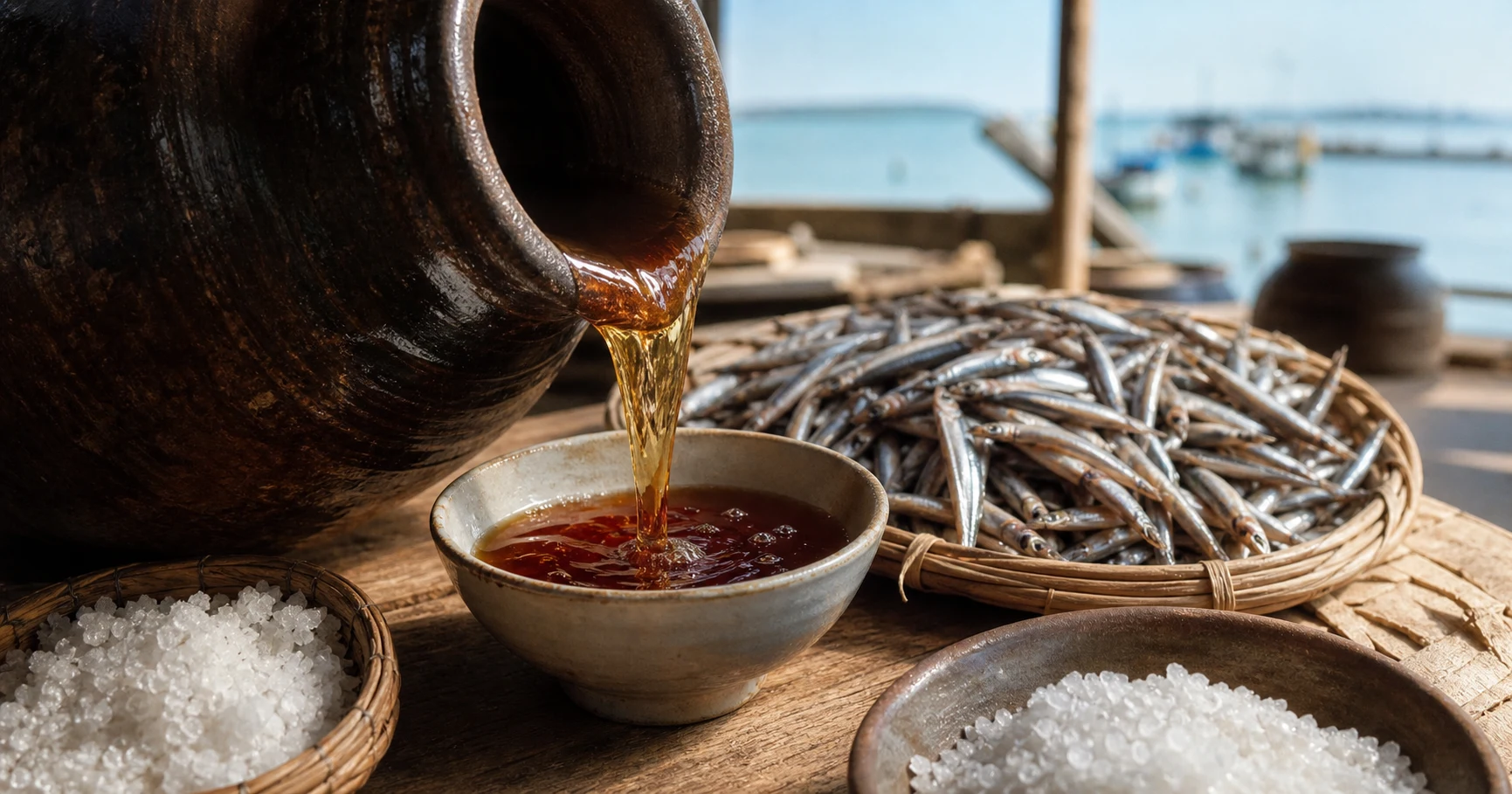
Fish sauce is a liquid seasoning produced by salting and fermenting fish or fish parts. In a typical process, small fish such as anchovies are mixed with salt and packed into vessels for months or longer. Enzymes and microorganisms break down proteins, creating a concentrated liquid with salt, aroma, and savory depth. The process is not simply "fish juice." It is a controlled transformation in which salt slows unwanted spoilage while the mixture develops into a usable condiment [1][2].
The English phrase fish sauce covers many products. Vietnamese nuoc mam, Thai nam pla, Filipino patis, Cambodian tuk trey, and other regional sauces have their own histories, ingredients, standards, and flavor expectations. Some are made with particular fish, some are blended after fermentation, and some sit beside thicker fermented fish pastes rather than matching the clear bottled sauces familiar in global supermarkets.
A fish sauce history therefore starts with definition and variation. It is a family of coastal fermentation technologies, not a single bottle and not a single inventor.
Salt, Fish, and the Logic of Coastal Fermentation
Before refrigeration, coastal food systems had to solve a recurring problem: fish could be abundant for a short season, but the catch could not be eaten immediately. Salting, drying, smoking, and fermentation each offered different answers. Fish sauce used salt not merely to preserve whole fish, but to create a new seasoning from the fish itself [1].
The vessel mattered. Barrels, jars, tanks, and other containers created a place where fish, salt, heat, moisture, and time could interact. The maker had to judge the raw material, measure salt, protect the mixture, and wait. In some places, the final liquid was separated and bottled while solids were used in other foods. In others, the fermented mass remained a paste or relish.
The process also made the sea portable. A fishing village could turn a seasonal catch into a product that moved inland, crossed borders, or became part of an everyday meal far from the coast. Salt was the enabling commodity, while local fishers, salters, barrel makers, carriers, and traders formed the human infrastructure behind the bottle.
Many Regional Histories, Not One Origin Myth
Food writing often tries to find one ancient origin for fish sauce. That is tempting because salted fish products appear across many historical regions, including the Mediterranean, East Asia, and Southeast Asia. But similarity does not automatically prove direct descent. Similar materials and problems can produce similar technologies, and the evidence for connections between Roman garum and later Southeast Asian fish sauces is not strong enough to make a simple universal lineage claim [1][3].
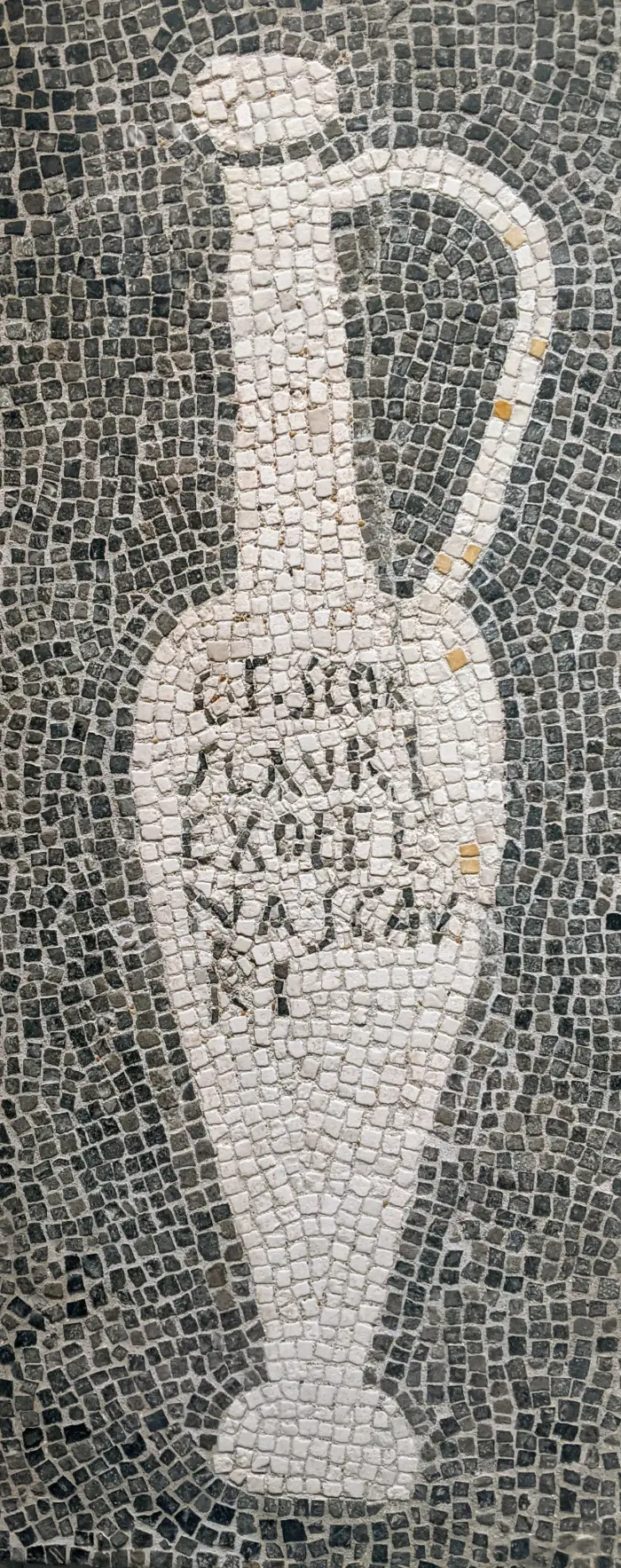
Roman garum is important in its own right. It shows that fish fermentation could become a branded, traded, and socially differentiated commodity in the Mediterranean. Southeast Asian sauces have their own regional histories shaped by local fisheries, salt production, climate, languages, and cuisines. The right comparison is one of food technology, not a shortcut that makes Rome the source of every fish sauce.
This distinction protects the history from a familiar imperial pattern: treating a European or Mediterranean record as the origin, then describing Asian foodways as later copies. A source-led account can compare techniques while allowing multiple communities to have developed fish fermentation independently or through complex, poorly documented exchange.
Nuoc Mam, Nam Pla, and the Cultural Work of a Condiment
In Vietnam, nuoc mam is closely tied to meals, regional identity, family production, and coastal economies. In Thailand, nam pla is a basic seasoning whose aroma and saltiness are part of the flavor architecture of soups, salads, curries, and dipping sauces. Filipino patis has a different culinary context, while Cambodian and other regional products add further variation. Names are not decorative. They carry place, process, expectations, and memory.
Traditional production can be both household knowledge and commercial work. The maker chooses fish and salt, controls the fermentation, and decides when the liquid is ready. A long fermentation may produce a different color, aroma, and depth from a cheaper blended product. Industrial bottling can create consistency and wider distribution, but it can also make regional differences harder for consumers to see.
Fish sauce also reveals environmental dependence. A product marketed as a pantry staple still depends on fish stocks, seasonal catches, marine management, salt, containers, labor, and transport. Recent reporting on Vietnamese producers has connected fish-sauce heritage to pressure from overfishing and changing coastal conditions. The condiment is therefore a flavor, a livelihood, and an ecological relationship at the same time.
From Ancient Preservation to Global Pantry
Fish sauce traveled because it solved several culinary problems at once. It supplied salt, aroma, and savoriness in a compact form. It could season rice, vegetables, meat, fish, broths, noodles, and dipping mixtures without requiring fresh ingredients at every meal. Traders and migrants carried tastes across ports and cities, while restaurants introduced regional sauces to new audiences.
Global food culture sometimes strips away that history. A bottle becomes an "umami bomb" or a chef's secret, while the fishers, salt workers, fermenters, and local cooks disappear. The older story is richer. It connects preservation with trade, household labor with restaurant culture, and regional ecology with global demand.
The same approach helps separate fish sauce from soy sauce, vinegar, and garum. They may overlap as salty or fermented seasonings, but their raw materials and processes differ. Soy sauce depends on beans and grains; vinegar depends on alcohol becoming acetic acid; garum belongs to ancient Mediterranean fish-sauce vocabulary; fish sauce in Southeast Asia has its own regional names and standards. Comparison clarifies rather than erases.
How Fish Sauce Is Used Today
Today fish sauce is used in home kitchens, street food, fine dining, packaged sauces, marinades, noodle dishes, salads, broths, and fermented-food projects. A few drops can add salt and depth, but the correct amount depends on the product: some sauces are intense and clear, while others are sweeter, darker, or blended.
For readers, the most useful question is not whether one brand is universally best. It is what style the dish expects, how the sauce was made, and what regional tradition the label represents. A Vietnamese nuoc mam, Thai nam pla, and Filipino patis may all be called fish sauce in English without being identical.
Fish sauce history ends where it began: at the coast, where preservation turned a perishable catch into a durable flavor. The modern bottle belongs to global commerce, but the underlying knowledge is older and more local than the supermarket shelf suggests.
Historical Timeline
Different coastal societies develop salted and fermented fish products suited to local fish, salt, climate, and cuisine
Garum and related fish sauces become major Roman products, but a direct Roman-to-Southeast-Asia lineage is not established
Regional fish sauces and fermented fish products become embedded in coastal foodways, markets, and household cooking
Bottling, food-safety standards, exports, and restaurant globalization bring regional sauces to wider markets
Evidence Explorer
Review the Source Trail
Inspect the article sources, scoped review credits, and copyable citation details without leaving the page.
Reviewed for Stated Scope
Sources Listed
Comments
Community comments are coming soon. Check back later to join the discussion!