💡 Key Takeaways
- Black sesame is a dark-seeded form within the broader Sesamum food and oilseed history, not a separate ancient crop with one founder.
- Sesame domestication and early spread are debated; evidence supports a long Afro-Asian history shaped by cultivation and human movement.
- East Asian food cultures developed distinctive uses for black and white sesame, including roasted seeds, pastes, oils, seasonings, and sweets.
- The modern black-sesame trend is a new marketing and cafe chapter layered onto older food traditions.
What Is Black Sesame?
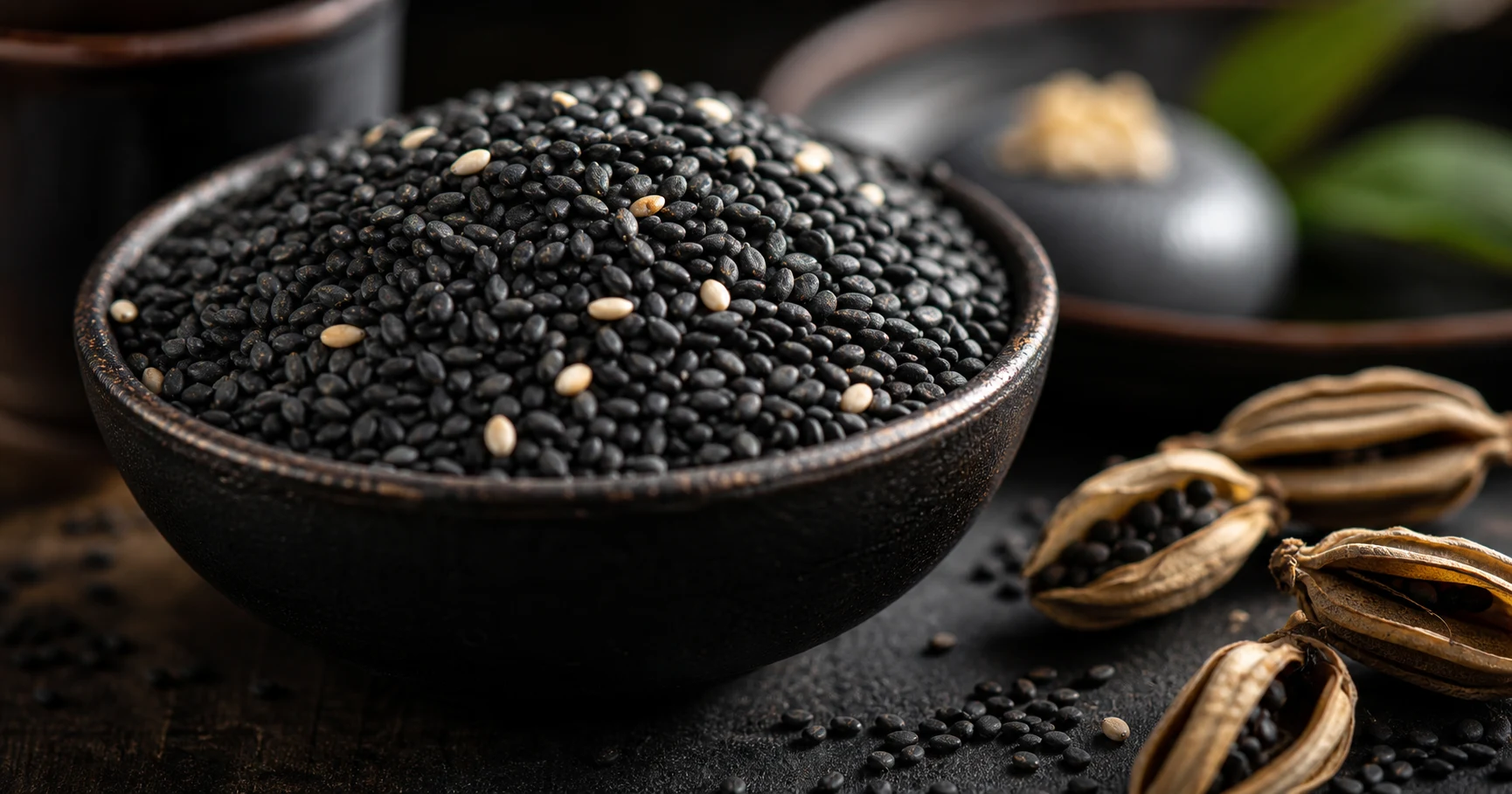
Black sesame refers to dark-seeded sesame used as a food, seasoning, oilseed, and visual ingredient. It belongs to the wider Sesamum history, especially Sesamum indicum and related cultivated diversity. The dark seed is not a separate civilization or a single invention. It is one expression of a crop whose colors, forms, oils, and culinary uses have been shaped by cultivation and regional preference.
That distinction matters because modern food media often introduces black sesame as an exotic new flavor. In China, Japan, Korea, and other East Asian food cultures, black sesame has older culinary lives: it is roasted, ground, mixed into pastes, sprinkled over rice and noodles, used in sweets, and incorporated into seasonings. The flavor is nutty and aromatic, while the dark color makes it instantly legible in a bowl or pastry.
A good black sesame history therefore connects seed biology to food culture. It asks how a crop traveled, how cooks processed it, and why one color became meaningful in particular cuisines.
Where Did Sesame Come From?
Sesame has a deep Afro-Asian history, but its exact domestication pathway remains debated. Scholarly reviews discuss possible centers in Africa, India, or connected regions, while genetic and archaeological research continues to refine the picture [1][2]. The safest claim is not that one country invented sesame, but that people in several connected cultivation zones selected, moved, and adapted an oil-rich crop over long periods.
Sesame is valuable because its seeds carry oil and can be stored, ground, pressed, roasted, or incorporated into foods. Those qualities help explain its spread across dry and semi-arid environments. The crop appears in the historical food systems of Africa, West Asia, South Asia, and East Asia, where local cuisines built different techniques around the same broad ingredient.
Kew's taxonomic and distribution records show how widely the Sesamum genus is represented across Africa, Asia, and other regions [2]. Distribution is not the same as domestication proof, but it reminds us that sesame history is a movement story rather than a single-line origin myth.
Seeds, Oil, Paste, and the Geography of Taste
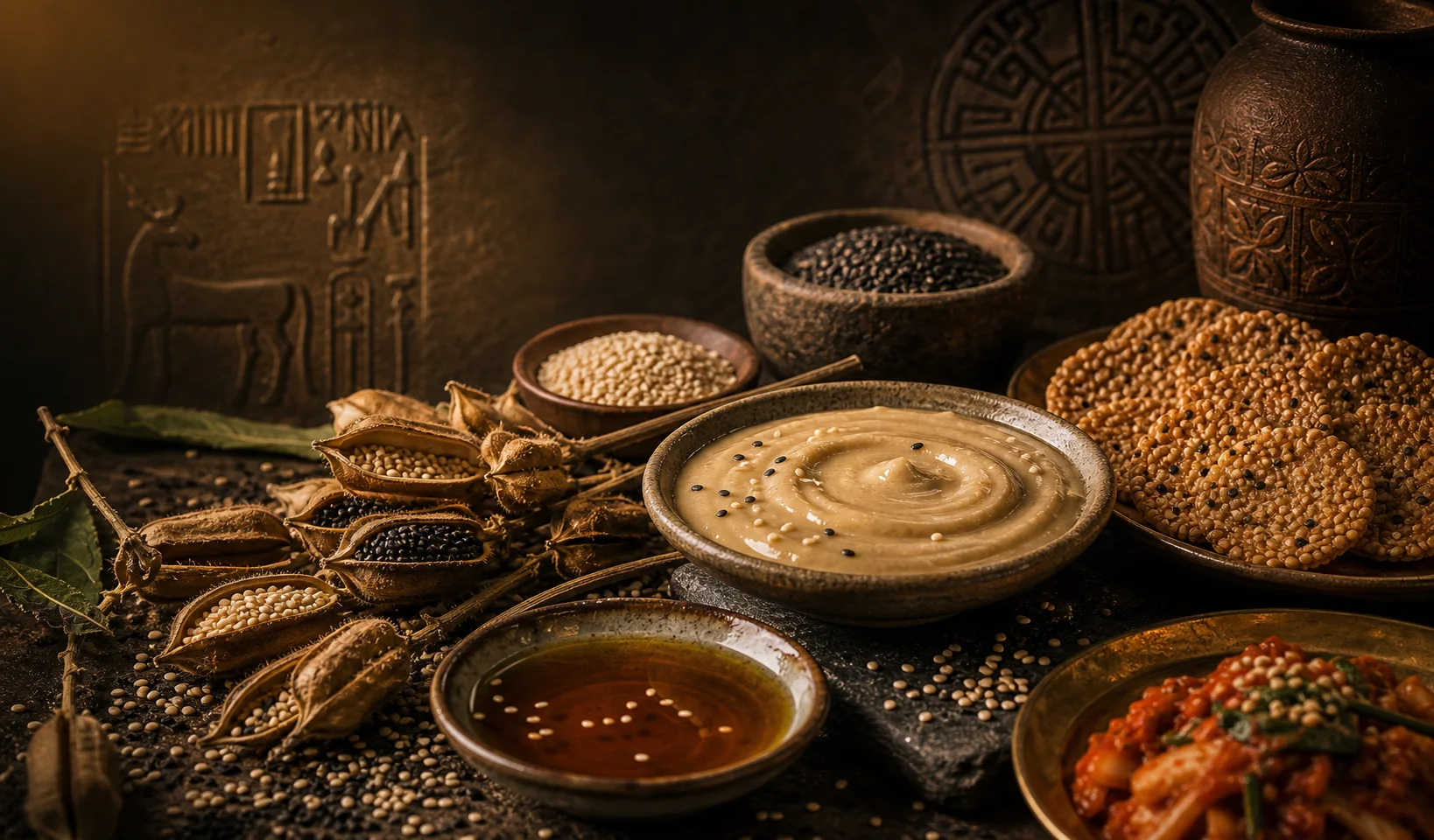
Sesame becomes culturally specific through processing. A whole seed has a different role from toasted seed, ground seed, sesame oil, or a dense paste. Research comparing sesame use across regions found that East Asian food cultures commonly use both white and black seeds whole, roughly ground, or as paste, while West Asian and Middle Eastern cuisines have strong traditions of sesame paste and oil [3]. These are not rigid boundaries, but they show how food culture shapes the same crop.
Roasting matters. Heat releases aroma and changes bitterness, color, and texture. Grinding matters too: a mortar, mill, blender, or stone changes the fineness and mouthfeel of the result. Black sesame may be toasted into a fragrant topping, ground into a sweet paste, mixed with rice, or used in a dark soup. White sesame may appear in breads, sauces, or tahini.
The history is therefore technological as well as botanical. Cooks did not merely receive sesame from trade routes; they made it meaningful through tools, heat, grinding, and the meal structures of their communities.
Black Sesame in China, Japan, and Korea
Black sesame has especially visible culinary lives in East Asia. Japanese goma preparations include whole and ground sesame, while black sesame is associated with kurogoma and appears in sweets, seasonings, rice dishes, and other foods. The Japanese Ministry of Agriculture describes sesame tofu, or gomadoufu, as part of Buddhist cuisine, where sesame supplied richness and substance in a food culture that excluded meat and fish [5].
In China, black sesame appears in sweets such as sesame paste desserts and tangyuan fillings, while also serving as a topping or seasoning. In Korea, black sesame is used in drinks, porridges, baked foods, and side dishes. These uses are not interchangeable, and the same ingredient can carry different associations depending on language, ritual, season, and preparation.
Modern writing sometimes compresses these traditions into a generic "Asian superfood" story. That framing is too shallow. Black sesame is better understood as a regional ingredient with multiple culinary identities, some everyday and some ceremonial, whose global visibility now exceeds the contexts that first made it meaningful.
Why Black Sesame Became a Modern Trend
The current black-sesame boom is partly visual. A dark paste or powder creates a strong contrast in ice cream, lattes, cakes, noodles, and plated desserts. It also fits modern cafe culture, where unusual colors and recognizable flavor names travel quickly through images and short videos. The trend does not create black sesame; it repackages an established ingredient for new audiences.
The same process has shaped matcha, ube, hojicha, yuzu, and pistachio. A regional flavor becomes a menu signal, a retail product, and a search phrase. That can support cultural exchange, but it can also erase the food's existing names and uses. A source-led page should use the trend as an entry point, then return to cultivation, processing, and regional food history.
Health language needs restraint. Sesame is a food and an allergen, not a universal treatment. Nutritional studies can describe composition, but a history page should not turn traditional food associations into medical promises. The strongest story is the one that survives without them.
How Black Sesame Is Used Today
Today black sesame appears in Japanese goma dishes, Chinese sweets, Korean drinks and porridges, bakery products, ice cream, sauces, noodles, snack bars, and global cafe menus. It may be used as a whole seed, a toasted powder, a paste, an oil, or a blended filling. Each form changes how the flavor reads: whole seeds provide crunch, paste provides body, and oil carries aroma.
The ingredient also demonstrates why food history should not reduce a crop to a trend label. Black sesame joins ancient cultivation, long-distance movement, East Asian grinding traditions, Buddhist food culture, modern retail, and social-media presentation. Its global popularity is new in some markets, but its food life is not.
Black sesame history is the story of a small seed becoming many things: oil, paste, garnish, ritual food, dessert flavor, and visual shorthand. The modern trend is one more chapter in a much older history of people making crops culturally legible through the ways they process and share them.
Historical Timeline
Sesame is cultivated as an oilseed in regions linked to Africa and Asia, though the exact domestication pathway remains debated
Sesame seeds and oil move through West Asian, South Asian, East Asian, and maritime food systems
Sesame appears in Japanese cooking, ritual, medicine, Buddhist foodways, and seasonings such as goma-based preparations
Black sesame becomes a globally visible flavor in sweets, drinks, cafes, and social-media food culture
Evidence Explorer
Review the Source Trail
Inspect the article sources, scoped review credits, and copyable citation details without leaving the page.
Reviewed for Stated Scope
Sources Listed
Comments
Community comments are coming soon. Check back later to join the discussion!