💡 Key Takeaways
- Viili is a Finnish cultured milk known for a thick or ropy texture.
- Its elasticity comes from culture-produced polysaccharides, not gelatin.
- Traditional surface-ripened forms can involve Geotrichum candidum.
- Industrial cups preserve the name while simplifying some household microbial diversity.
What Is Viili?
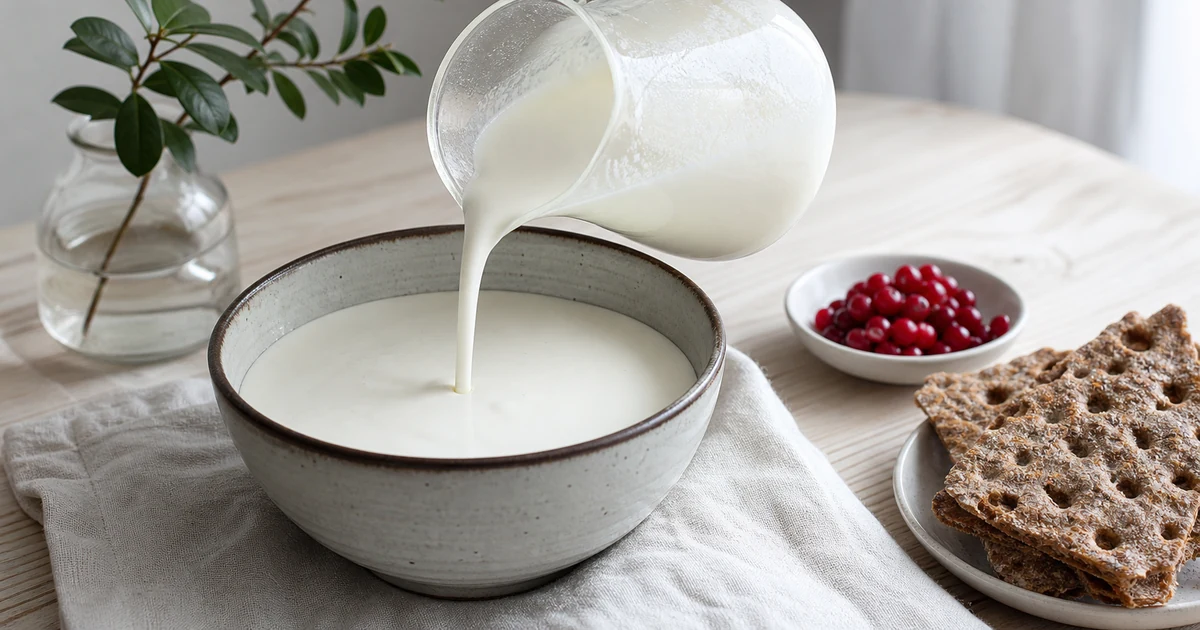
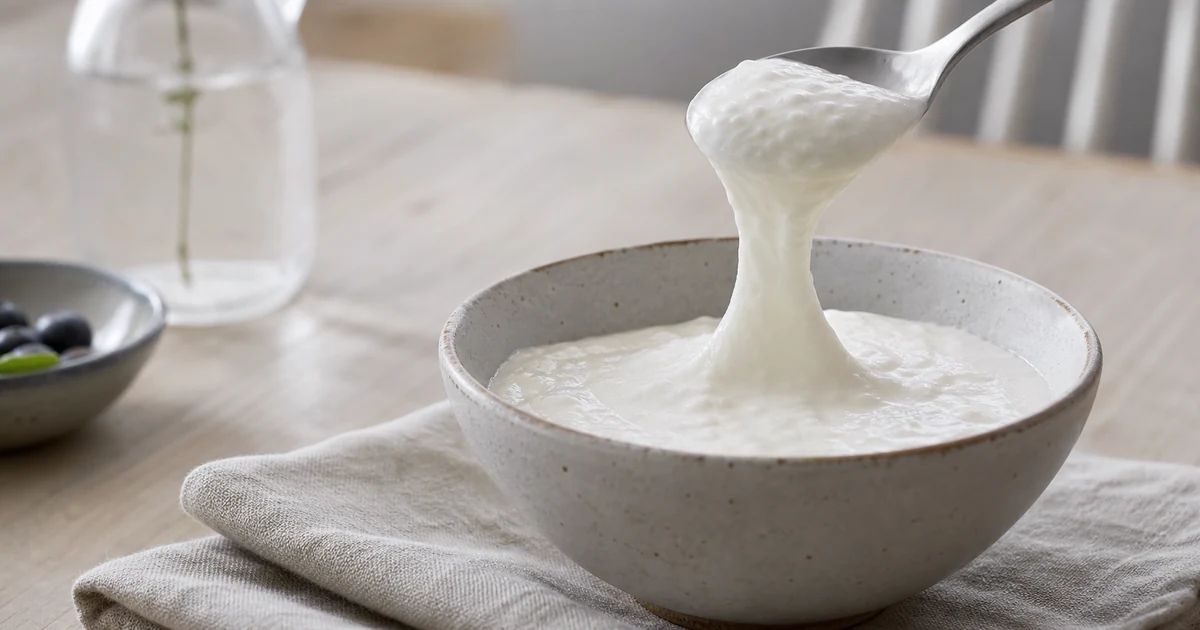
Viili is a Finnish cultured milk that may be spoonably thick or strikingly ropy. Particular lactic bacteria produce exopolysaccharides that create long strands, while traditional surface-ripened viili may also involve the yeast-like mold Geotrichum candidum [1][2].
The texture is not added gelatin. It is an outcome of the microbial culture, milk, temperature, and undisturbed incubation.
A Household Culture Passed Forward
Viili belonged to the Nordic practice of inoculating fresh milk with a portion of a successful previous batch. The starter moved through households and generations before microorganisms had scientific names [3].
That continuity was practical and social. A culture could be borrowed, shared, lost, or revived, making dairy knowledge a living household asset.
Why Viili Stretches
During fermentation, bacteria acidify milk and some strains release long carbohydrate molecules. These polysaccharides bind water and create the elastic body associated with ropy viili. Surface organisms can add a mild musty or mushroom-like aroma [1].
Industrial cultures select for predictable texture. Traditional batches can vary more, showing that “viili” historically described a relationship between culture and practice rather than one fixed viscosity.
Industrial Dairy and Finnish Identity
Finnish dairies packaged viili in single-serving cups, making a farm ferment part of urban refrigeration. Standardization improved safety and distribution but often reduced the dramatic stringiness unfamiliar consumers might reject.
The product still signals Finnish food culture because its name, serving style, and microbial heritage remain visible.
Viili Today
Viili is eaten plain, with sugar, cinnamon, fruit, or cereal. Starter cultures also circulate among home fermenters outside Finland. Comparisons with yogurt and filmjölk help explain it, but neither captures its ropy structure and surface-ripening tradition.
Its history is a lesson in microbial selection: generations of ordinary dairy practice preserved a texture that modern food manufacturing would rarely invent from scratch.
Historical Timeline
Households maintain sour-milk cultures by transferring a portion into fresh milk
Dairy science identifies organisms behind viili texture and aroma
Finnish dairies standardize retail viili
Home fermenters and Nordic-food interest spread viili cultures internationally
Evidence Explorer
Review the Source Trail
Inspect the article sources, scoped review credits, and copyable citation details without leaving the page.
Reviewed for Stated Scope
Sources Listed
Comments
Community comments are coming soon. Check back later to join the discussion!