💡 Key Takeaways
- Filmjölk is a pourable Swedish cultured milk, not simply thin yogurt.
- Its mesophilic cultures work at cooler temperatures than many yogurt cultures.
- Household souring traditions predate the standardized retail carton.
- Modern breakfast branding is one layer of a longer Nordic dairy history.
What Is Filmjölk?
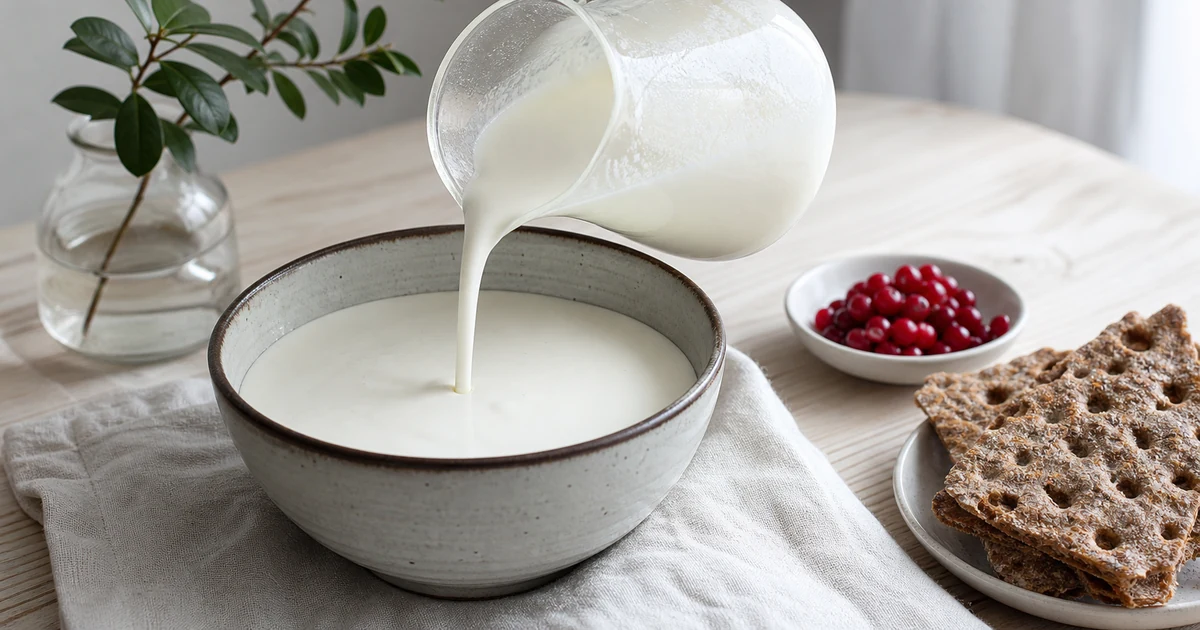
Filmjölk is a Swedish cultured milk with a clean sourness and pourable, lightly thickened texture. Unlike yogurt cultures that are commonly incubated warm, filmjölk uses mesophilic bacteria that work at moderate room temperatures [2]. It is eaten from a bowl with cereal, berries, jam, or crispbread, and it can also be drunk.
The English comparison with yogurt is useful but incomplete. Culture temperature, microbial community, texture, and breakfast role give filmjölk its own identity.
Cool-Climate Dairy Before Refrigeration
Nordic farm households managed milk through butter making, souring, cheese, whey, and seasonal storage. Naturally acidified milk lasted longer than fresh milk and fit a climate where cool rooms could support slower fermentation [1].
There was no single filmjölk invention day. The named retail product grew from a family of household sour milks whose microbes and textures varied by vessel, farm, and season.
How Mesophilic Cultures Shape the Drink
Selected lactic-acid bacteria consume lactose and create acidity, aroma, and a modest increase in viscosity. Temperature matters: too cold slows the culture, while excessive heat can favor different organisms or damage the intended texture.
Industrial dairies use defined starters, pasteurized milk, and cold chains. That consistency made filmjölk safe to transport and recognizable nationwide, while narrowing some household variation.
From Farm Food to Swedish Breakfast
Twentieth-century dairies positioned filmjölk as ordinary refrigerated food rather than preserved necessity. School meals, supermarkets, and advertising helped attach it to breakfast and healthful everyday life. Sweetened and flavored versions later expanded the audience.
The breakfast image is modern, but it rests on old dairy logic: acidify milk, make it keep longer, and pair it with grain.
Filmjölk Today
Filmjölk now sits beside yogurt, kefir, and plant-based alternatives. Those shelves encourage comparison, yet the historical category remains specifically Swedish and Nordic. It should not be marketed as a newly discovered probiotic cure.
Its durable appeal is simpler: a cool-fermented milk became a national everyday food by moving from household cultures into cooperative and industrial dairy systems.
Historical Timeline
Households sour milk in cool conditions to extend usefulness and create everyday dairy foods
Creameries and microbiology begin separating named cultured-milk styles
Swedish dairies standardize filmjölk for refrigerated retail
Regional cultures and flavored cartons coexist with renewed interest in home fermentation
Evidence Explorer
Review the Source Trail
Inspect the article sources, scoped review credits, and copyable citation details without leaving the page.
Reviewed for Stated Scope
Sources Listed
Comments
Community comments are coming soon. Check back later to join the discussion!