Use-case buying guide
Which Fish Sauce Should You Buy? Vietnamese, Thai and Filipino Styles Compared
Choose fish sauce by cuisine, ingredient simplicity, salt intensity, and how visible it will be. A clean anchovy-and-salt sauce suits dipping and finishing; a robust everyday bottle can disappear into curries, stir-fries, marinades, and soups.
The short answer
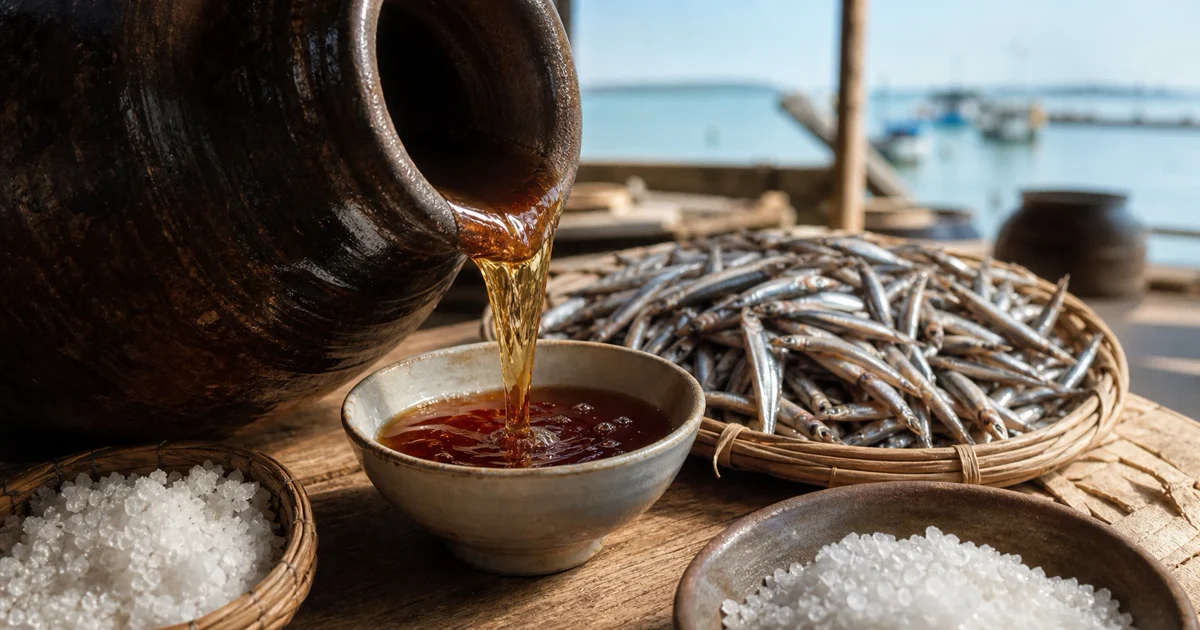
Buy a transparent anchovy-and-salt fish sauce for dipping sauces and finishing when nuance matters, and a dependable lower-cost bottle for curries and cooked dishes. Vietnamese nuoc mam, Thai nam pla, and Filipino patis overlap but are not culturally identical. Ingredient simplicity helps comparison, but salt level, fermentation, and intended cuisine still matter.
Choose this when...
Start with the dish, then verify the package. Format, ingredients, handling, and intended use matter more than a universal ranking.
Fish Sauce types compared
Cooking bottle vs finishing bottle
Heat and strong spices can hide delicate differences. Use a clean, aromatic bottle where fish sauce stays exposed and a reliable value bottle for larger cooked quantities. This two-bottle strategy is useful only if both turn over; otherwise buy one balanced sauce.
What first press and degree numbers can mean
Some producers describe an early extraction or display nitrogen-related degrees. Those systems can offer useful information within a producer or market, but they do not replace ingredients, origin, freshness, or the dish. Avoid turning one number into a universal ranking.
Why regional names matter
Vietnamese, Thai, and Filipino fish sauces developed within different cuisines and commercial standards. They share fermentation logic while differing in language, intensity, formulation, and use. Buy toward the recipe rather than flattening them into one exotic condiment.
Use it in context
Fish Sauce history
Explore fish sauce history through salt preservation, fermentation science, Southeast Asian coastal economies, regional names, and global pantry culture.
ExploreGarum history
Explore garum history, from Roman fermented fish sauce and Pompeii mosaics to salt, amphorae, Baetican trade, elite dining, and Mediterranean commerce.
ExploreSoy Sauce history
Explore soy sauce history, from Chinese jiang and fermented soybean pastes to Japanese shoyu, koji, wheat, salt, trade, migration, and global cuisine.
ExploreSalt history
Trace salt from Neolithic brine boiling and food preservation to Saharan trade, French salt taxes, Gandhi's Salt March, and modern industry.
Explore