💡 Key Takeaways
- Asafoetida is a dried plant resin rather than a seed, leaf, or powdered garlic.
- Its source plants are associated with Central and West Asia, while its best-known culinary life developed in South Asia.
- Heating a small amount in fat changes its sharp raw aroma into savory depth.
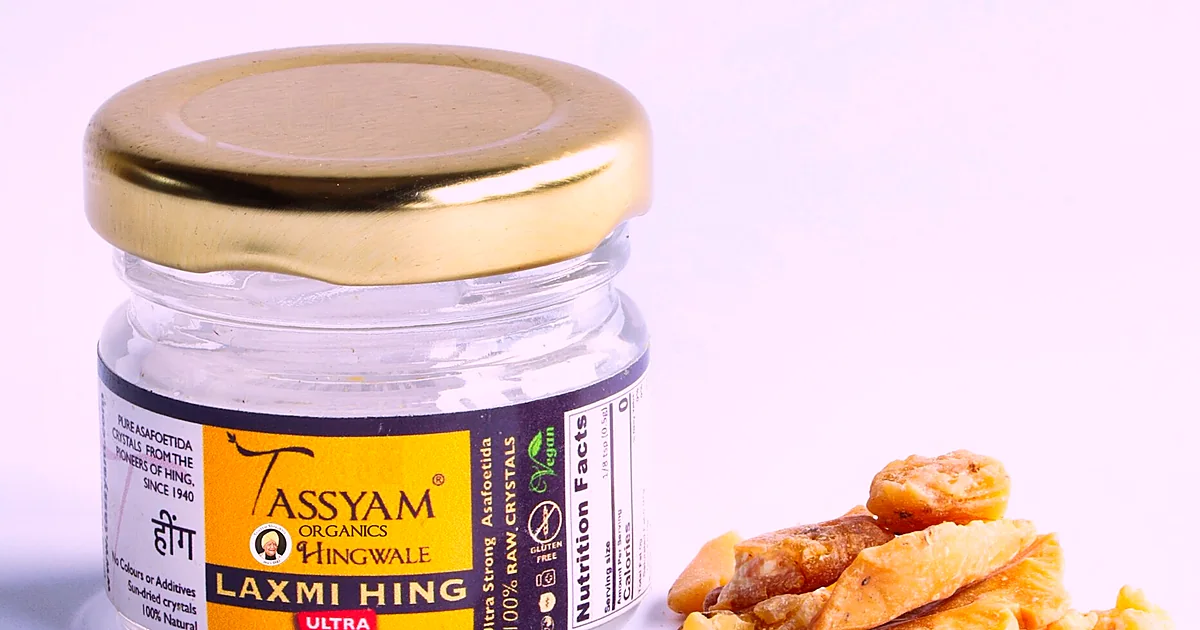
- Commercial hing may contain wheat flour or other starch, making ingredient labels important.
What Is Asafoetida?
Asafoetida is the dried gum resin tapped from the roots and stems of certain Ferula plants. In South Asian groceries it is commonly called hing and often arrives as a pale powder mixed with starch or flour because the raw resin is sticky, powerful, and difficult to measure [1][4]. It is not dried garlic, although its cooked aroma can recall onions and garlic.
That transformation is the point of the ingredient. A pinch warmed in ghee or oil changes quickly from sulfurous and medicinal to savory and rounded. Used carelessly it dominates; bloomed carefully it can disappear into the foundation of a dish.
Where Did Asafoetida Originate?
The source plants are associated with Iranian, Afghan, and Central Asian landscapes rather than the whole of India. Dried resin moved well across long routes because a small amount carried intense flavor. Traders brought it toward South Asian markets, where cooks gave it a much larger and more durable culinary role [2][3].
This geography matters. Asafoetida is often presented simply as an Indian spice, which accurately describes its culinary importance but not the ecology of the plant. Its history joins source landscapes, merchant networks, and local kitchen expertise.
Silphium, Rome, and the Resin-Spice Trade
Greek and Roman writers described aromatic Ferula resins in medicine and cooking. Asafoetida is sometimes said to have replaced extinct silphium after Roman demand exhausted the North African plant. The relationship is plausible at the level of similar resins, but tidy replacement stories go beyond the evidence [1][3].
The safer conclusion is that ancient consumers recognized a family of pungent plant gums. Names and identities shifted as merchants substituted sources, and later readers sometimes treated several botanical materials as one.
Why Hing Matters in South Asian Cooking
Hing appears in lentil dishes, pickles, vegetables, and spice tempering across several Indian regional traditions. It is especially important in some Jain and Hindu kitchens where onion and garlic may be avoided for religious or cultural reasons [2]. That does not mean every vegetarian dish or every community follows one rule.
Modern global interest often markets asafoetida as a secret substitute. Its real value is more specific: a traded resin became local through technique. The ingredient belongs beside cumin, coriander, lentils, and the hot fat that releases its flavor.
Historical Timeline
Greek and Roman writers describe Ferula resins used in medicine and food
Trade carries asafoetida through Iranian, Afghan, Central Asian, and South Asian markets
Hing becomes established in regional Indian spice systems and vegetarian cooking
Diaspora groceries and global pantry interest introduce asafoetida to new cooks
Evidence Explorer
Review the Source Trail
Inspect the article sources, scoped review credits, and copyable citation details without leaving the page.
Sources Listed
Comments
Community comments are coming soon. Check back later to join the discussion!