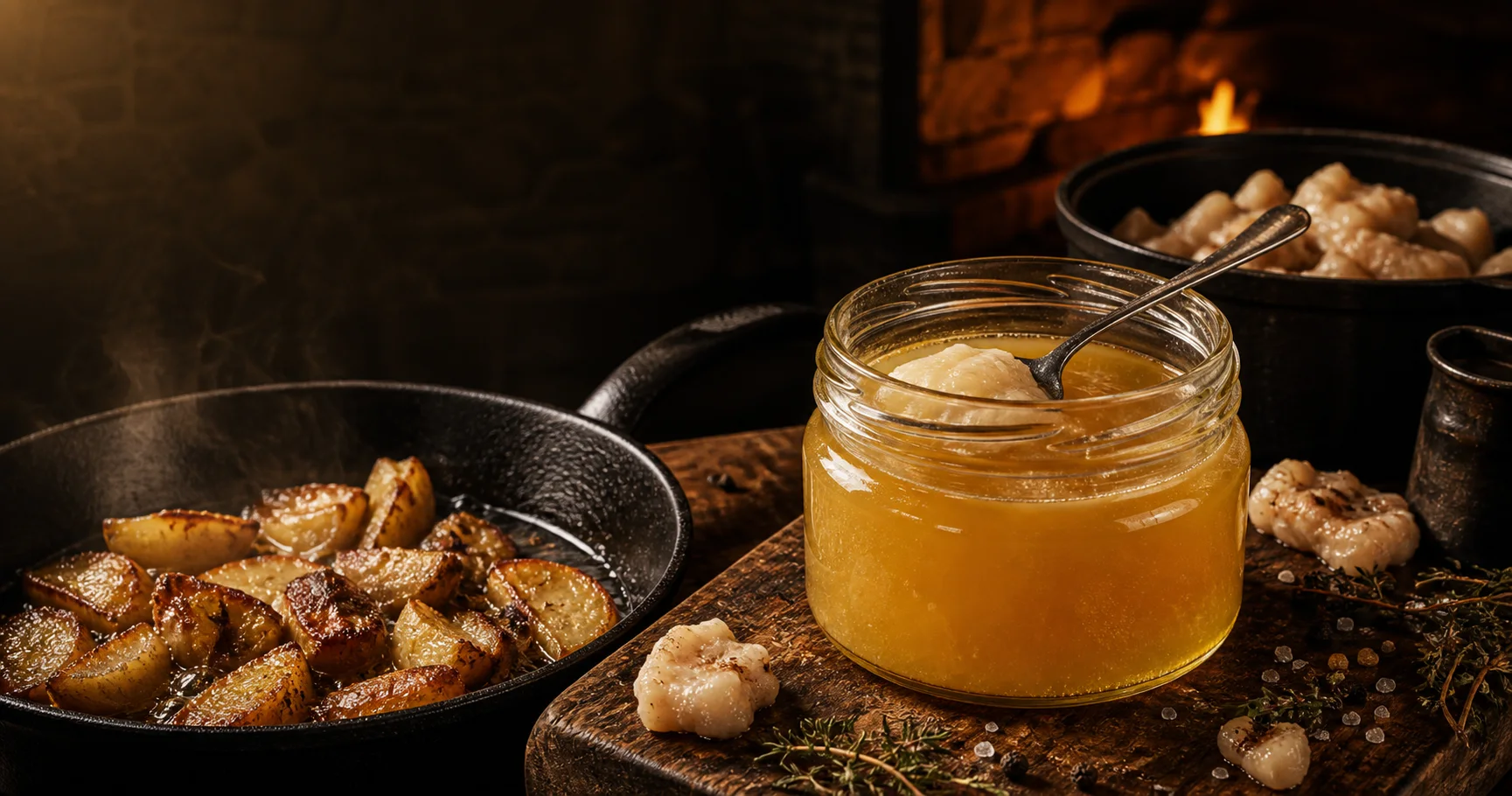
Jar of creamy white duck fat beside roasted potatoes and duck confit

Duck Fat History: Confits, Frites, and a Prestige Cooking Fat

How rendered duck fat moved from French farmhouse confit to bistro fries and modern fat revival

📍 French and wider European farmhouse poultry cooking📅 Long confit and farmhouse practice; modern restaurant prestige7 min read
Published: ·Updated: ·
#French Food#Confit#Poultry
Source and factual review: Mehdi IarabFrench confit terminology, rendered poultry fat, and non-medical prestige-fryer framing.
Duck fat is rendered poultry fat prized for confit, roasting, and frying. Image: The Foods That Shaped Us Research Desk. Image terms. Request permission.
Duck Fat Origin and History: Confit and Frites

💡 Key Takeaways

  • Duck fat is rendered fat from ducks, used to confit meat and to roast or fry foods.
  • Southwest French farmhouse traditions made duck fat a structural cooking medium.
  • Bistro fries and modern “duck fat everything” are restaurant prestige layers on older confit logic.
  • It is related to, but not identical with, chicken schmaltz or beef tallow.

What Is Duck Fat?

Duck fat is the rendered fat of ducks, scooped and saved for cooking. In classic French farmhouse practice it is inseparable from confit: meat gently cooked and stored under fat [1][2]. Searches for duck fat history should start there, not only at trendy fryer menus.

As a medium, it carries poultry savor into potatoes, beans, and sautéed vegetables without tasting like stick margarine or neutral oil.

Confit and Southwest French Kitchens

In parts of southwest France, ducks and geese were wealth on the hoof. Rendering fat and confiting legs made winter protein and cooking fat from one animal economy. Printed French cookery later exported that logic to professional kitchens worldwide [2][3].

Duck fat’s prestige abroad still borrows from that confit aura even when the jar only hits roasted potatoes.

Bistro Fries and Modern Prestige

Restaurants discovered that potato fries or roast potatoes cooked in duck fat tasted richer than neutral oil fries. The phrase “duck fat fries” became a menu signal of care and luxury — a late-modern prestige flip for an old farmhouse fat.

Compare beef tallow for the parallel American fryer nostalgia story.

Fat Revival Context

Today’s ancestral-fats shelves put duck fat beside tallow, ghee, and schmaltz. Food history keeps the claim modest: this is rendered poultry fat with a French confit backbone and a bistro afterlife — not a medical prescription.

Trend Desk

In the news

Recent 2026 food-culture notes that reference this article.

Historical Timeline

Farmhouse centuries

Confit preserves duck in its own fat for winter eating

19th-20th centuries

Regional French cuisines codify duck confit and fat cookery in print

Late 20th century

Bistros export duck-fat potatoes as luxury comfort food

2010s-2020s

Fat revival menus put duck fat jars back in retail

🎉 Fun Historical Facts

  • Confit means cooking and storing meat in fat.
  • Duck fat stays softish at cool room temperatures compared with some beef tallows.
  • Frites cooked in duck fat are a restaurant prestige move.

📚 Sources & References

  1. [1]Alan Davidson. The Oxford Companion to Food. Oxford University Press (2014).
    Find Book
  2. [2]Julia Child et al.. Mastering the Art of French Cooking. Knopf (1961).
    Find Book
  3. [3]Harold McGee. On Food and Cooking: The Science and Lore of the Kitchen. Scribner (2004).
    Find Book
  4. [4]Kenneth F. Kiple and Kriemhild Conee Ornelas, eds.. The Cambridge World History of Food. Cambridge University Press (2000).
    Find Book

Articles are reviewed internally for source quality, historical context, clarity, and relevance. Our references may include academic books, university-press publications, museum records, archaeological studies, peer-reviewed journals, historical archives, official cultural institutions, and established food-history works. Case file links point to supporting evidence.

Evidence Explorer

Review the Source Trail

Inspect the article sources, scoped review credits, and copyable citation details without leaving the page.

Reviewed for Stated Scope

Source and factual review: Mehdi IarabFrench confit terminology, rendered poultry fat, and non-medical prestige-fryer framing.

Sources Listed

[1] Alan Davidson. The Oxford Companion to FoodOxford University Press (2014)

[2] Julia Child et al.. Mastering the Art of French CookingKnopf (1961)

[3] Harold McGee. On Food and Cooking: The Science and Lore of the KitchenScribner (2004)

[4] Kenneth F. Kiple and Kriemhild Conee Ornelas, eds.. The Cambridge World History of FoodCambridge University Press (2000)

🏛️

Written by The Foods That Shaped Us Research Desk

The Foods That Shaped Us Research Desk is the publication byline for legacy and collaboratively maintained food-history articles. Articles are researched and edited through a publication-led process, grounded in cited sources, and reviewed for historical context, source quality, and clarity.

Source-led editorial process·Read our Editorial Standards

Comments

Community comments are coming soon. Check back later to join the discussion!
Related Foods