💡 Key Takeaways
- Pickled herring is a family of salted and acid-marinated fish preparations.
- It is not automatically fermented simply because it is preserved.
- Medieval herring fisheries and salt supply supported large northern trade networks.
- Scandinavian, Dutch, German, Polish, and Jewish traditions developed distinct marinades and rituals.
What Is Pickled Herring?
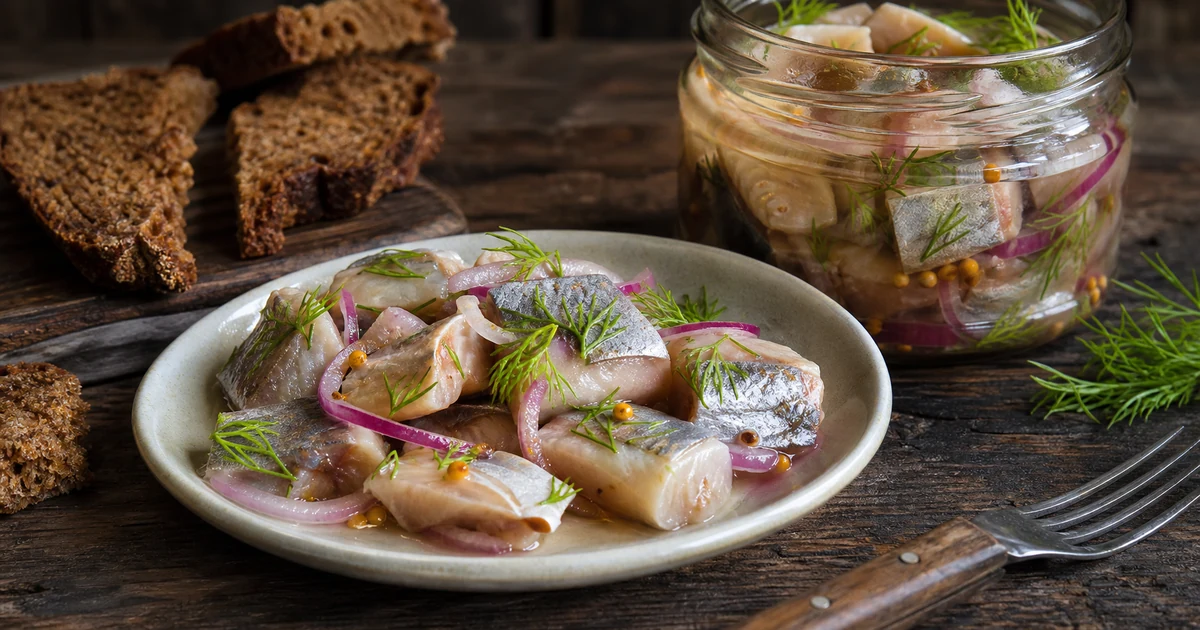
Pickled herring is not one recipe. Fish may be salted first, then soaked and placed in vinegar with onion, sugar, pepper, bay, mustard, dill, or other seasonings. Some products involve fermentation; many modern vinegar pickles rely mainly on salt, acid, and refrigeration [1][4].
Precision matters because “pickled” describes preservation and flavor, not one microbial mechanism.
Herring Built a Northern Trade
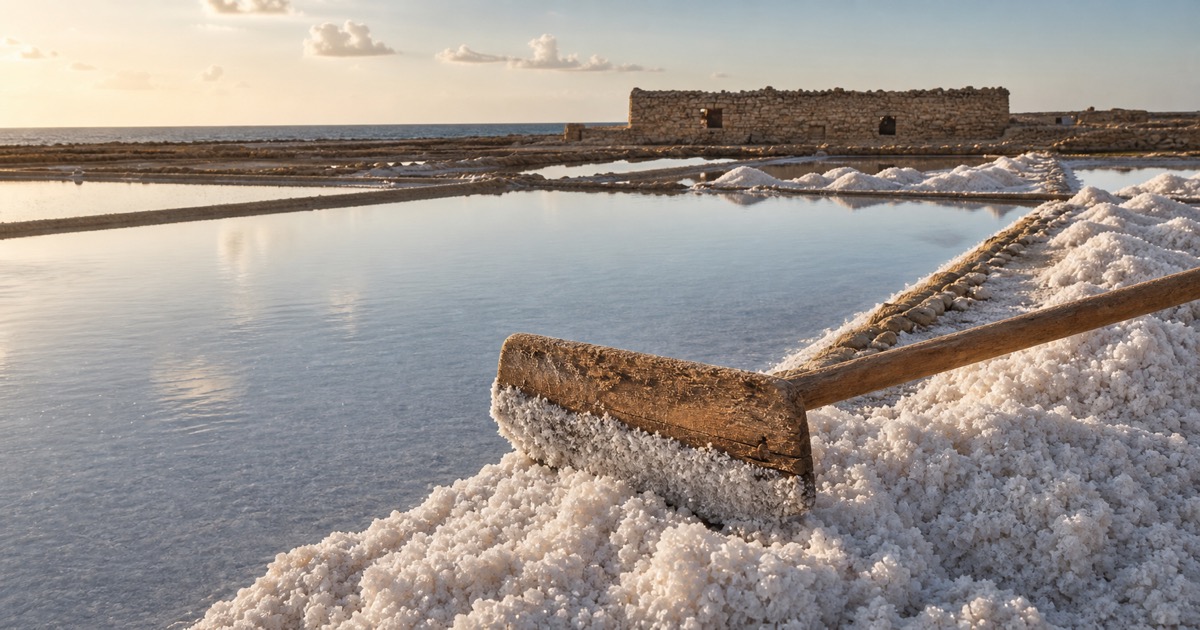
Herring gather in enormous seasonal shoals but deteriorate quickly after capture. Salting them near the fishery converted abundance into barrels that could move inland. Medieval fasting rules helped create demand, while ports, coopers, merchants, and salt suppliers formed an interdependent economy [1][2].
The fish’s importance was infrastructural, not merely culinary.
Salt, Vinegar, Sugar, and Spice
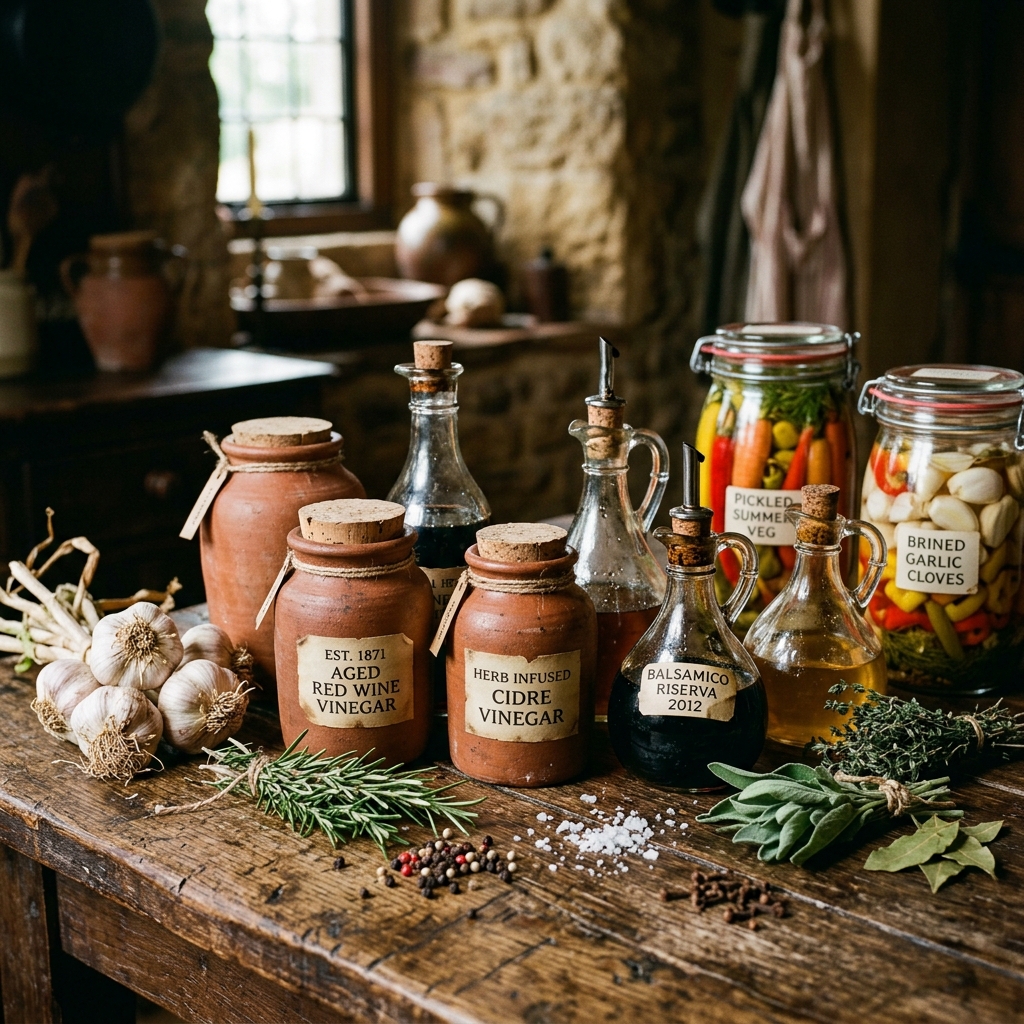
Barrel salting made transport possible. Later soaking and acid marinades moderated salinity and added a new preservation barrier. Sugar, onion, wine, mustard, and imported spices turned commercial fish into local styles.
Dutch maatjes, Scandinavian inlagd sill, German Bismarck herring, and Polish preparations share fish but not identical processing or historical meaning.
Jewish Migration and the Herring Table
Herring became important in Ashkenazi communities because it was affordable, portable, and compatible with dairy or pareve meals depending on preparation. Migration carried herring into British and North American delicatessens, where cream sauces, chopped mixtures, and rye-bread pairings developed [3].
These dishes belong to migration and urban food economies as much as to the Baltic shore.
Pickled Herring Today
Herring remains part of Christmas, Easter, Midsummer, New Year, buffet, and everyday traditions across northern Europe. Refrigerated jars made it convenient while standardizing sweetness and texture.
Its history ties ecology to commerce: a small oily fish helped organize salt routes, barrel making, fasting meals, holiday tables, and migrant businesses for centuries.
Historical Timeline
North Sea and Baltic herring fisheries support fasting diets and long-distance commerce
Hanseatic trade links fish, salt, barrels, ports, and inland consumers
Vinegar, sugar, onion, and spices diversify herring marinades
Migration and refrigeration carry jarred herring into urban delicatessens and supermarkets
Evidence Explorer
Review the Source Trail
Inspect the article sources, scoped review credits, and copyable citation details without leaving the page.
Reviewed for Stated Scope
Sources Listed
Comments
Community comments are coming soon. Check back later to join the discussion!