💡 Key Takeaways
- Poi is a Native Hawaiian staple made from cooked, pounded kalo and water.
- Fresh poi may sour through fermentation over time, but fermentation is not the only thing that defines it.
- Kalo cultivation depends on land, water, labor, genealogy, and political rights.
- Colonial land change and imported foods disrupted poi systems; revival is part of food sovereignty.
What Is Poi?
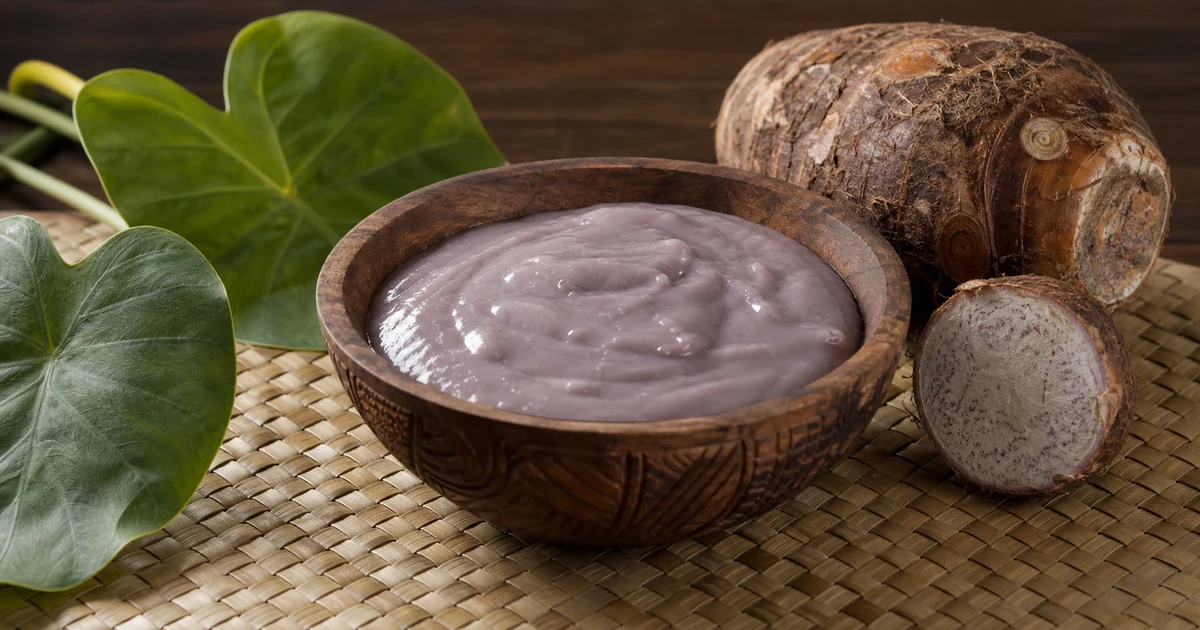
Poi is made by cooking the corm of kalo, pounding it into a smooth mass, and adding water until it reaches the desired texture. Fresh poi tastes mild; over time, lactic-acid bacteria can make it increasingly sour [1].
The English word taro identifies the plant broadly, while kalo carries Hawaiian cultural meaning. Poi is not simply taro puree. It is a food embedded in Native Hawaiian agriculture, genealogy, and shared eating.
Kalo, Hāloa, and Hawaiian Life
Hawaiian genealogy connects kalo with Hāloa, an elder sibling of the Hawaiian people. That relationship frames cultivation as kinship rather than extraction. Wetland loʻi systems manage water and soil to grow kalo in highly organized landscapes [1][2].
Poi therefore represents land, water, ancestry, labor, and obligation. Nutrient language alone cannot explain why its loss or revival matters.
Pounding and Fermentation
Traditional preparation uses a stone pounder on a board, repeatedly working cooked kalo while carefully adding water. The physical labor produces a texture industrial blending does not perfectly duplicate. Stored poi naturally acidifies and can remain culturally desirable at sour stages [4].
Fermentation extends the sensory life of the food, but the foundational transformation is cooking and pounding.
Colonial Disruption of the Poi System
Nineteenth- and twentieth-century disease, land privatization, water diversion, plantation agriculture, and imported staples reduced Native control over kalo landscapes. Poi was sometimes stigmatized while white rice, flour, and commercial foods expanded [3].
The decline was not a neutral change in taste. It reflected political power over land and water.
Poi and Food Sovereignty Today
Farmers, cultural practitioners, schools, and families have restored loʻi, taught pounding, and defended water access. Commercial poi remains important, while hand-pounded food carries distinct ceremonial and sensory value.
A responsible global article does not call poi a wellness trend. It recognizes a living Native Hawaiian food whose revival is tied to sovereignty, language, ecology, and family continuity.
Historical Timeline
Kalo cultivation and poi anchor household, ritual, and chiefly food systems
Disease, land privatization, water diversion, and imported foods disrupt Native food production
Commercial mills change poi production while traditional pounding continues
Kalo restoration and cultural education make poi central to Hawaiian food sovereignty
Evidence Explorer
Review the Source Trail
Inspect the article sources, scoped review credits, and copyable citation details without leaving the page.
Reviewed for Stated Scope
Sources Listed
Comments
Community comments are coming soon. Check back later to join the discussion!