💡 Key Takeaways
- Truffle oil is a flavored carrier oil, not oil pressed from truffles; products may use real truffle, recovered natural aroma, manufactured flavoring, or combinations.
- 2,4-dithiapentane is a potent sulfur compound associated with white-truffle aroma and can also be manufactured for flavoring.
- A peer-reviewed analysis of commercial truffle-flavored oils found widespread use of added aroma compounds and inconsistencies between composition and label suggestions.
- Calling every truffle oil fake is too broad; the defensible question is whether the ingredient list and marketing accurately describe the product.
What Is Truffle Oil?
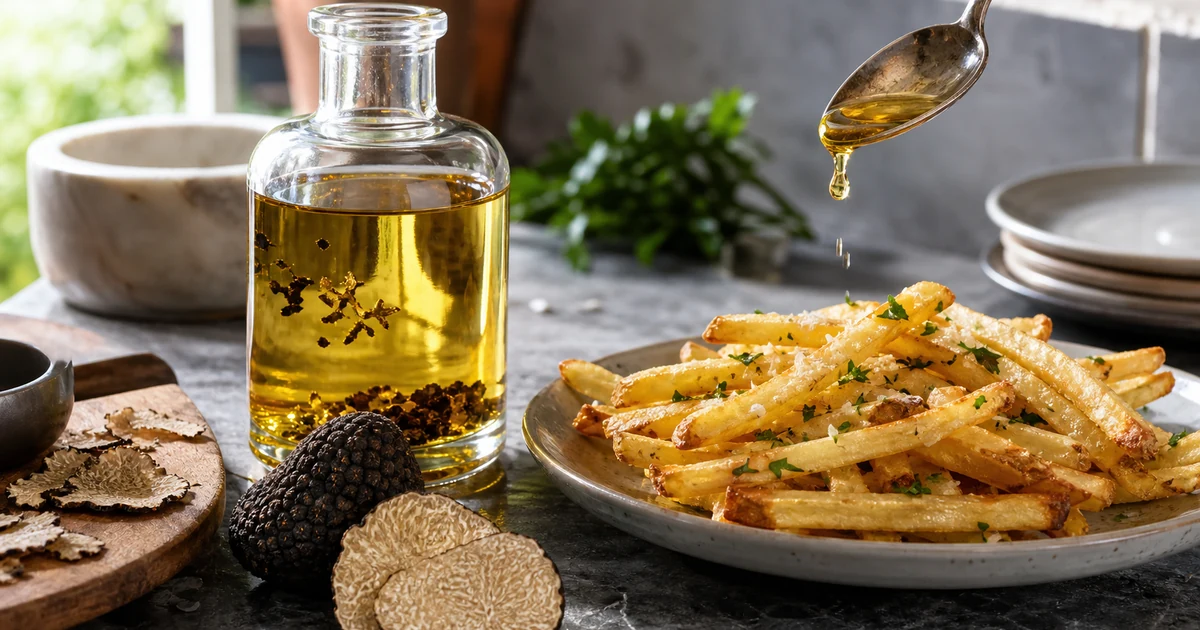
Truffle oil is a carrier oil flavored to evoke edible truffles. It is not oil pressed from the fungi, because truffles are not an oilseed. The carrier may be olive oil, sunflower oil, grapeseed oil, or another neutral fat. The aroma may come from pieces of real truffle, extracts or natural flavors, manufactured aroma compounds, or a mixture.
That range is why one blanket answer to "Is truffle oil fake?" fails. Some products openly identify themselves as truffle-flavored oil and list flavoring. Others use imagery and wording that encourage shoppers to imagine fresh fungi despite containing little or none. The chemistry is not automatically fraudulent. The relationship between composition, label, price, and expectation is the issue [1][2].
Historically, the product translated an exceptionally seasonal luxury into a stable pantry format. It allowed restaurants to add an immediate aromatic signal after cooking, when a volatile fragrance would be most noticeable.
Why Real Truffles Became Luxury Food
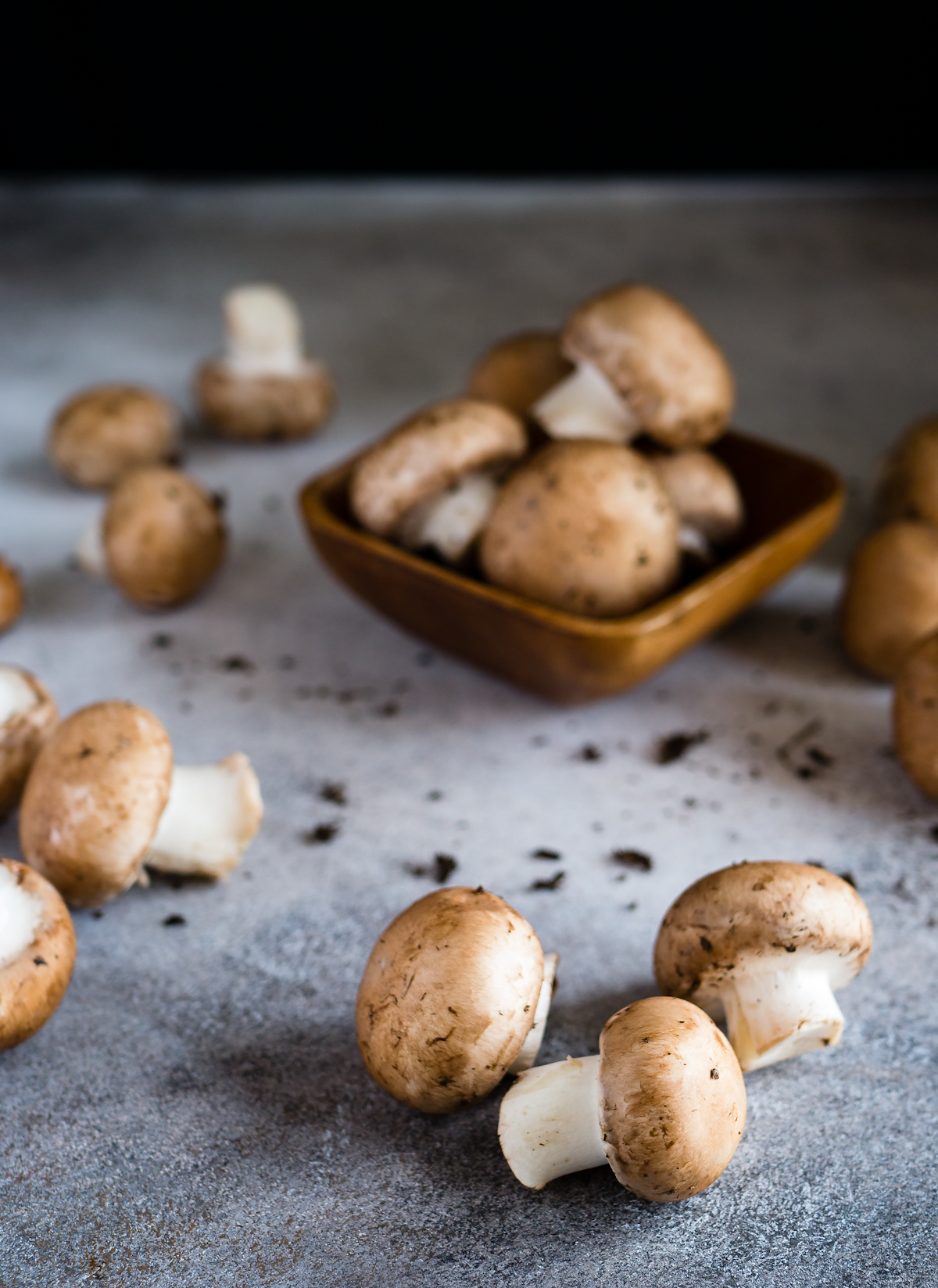
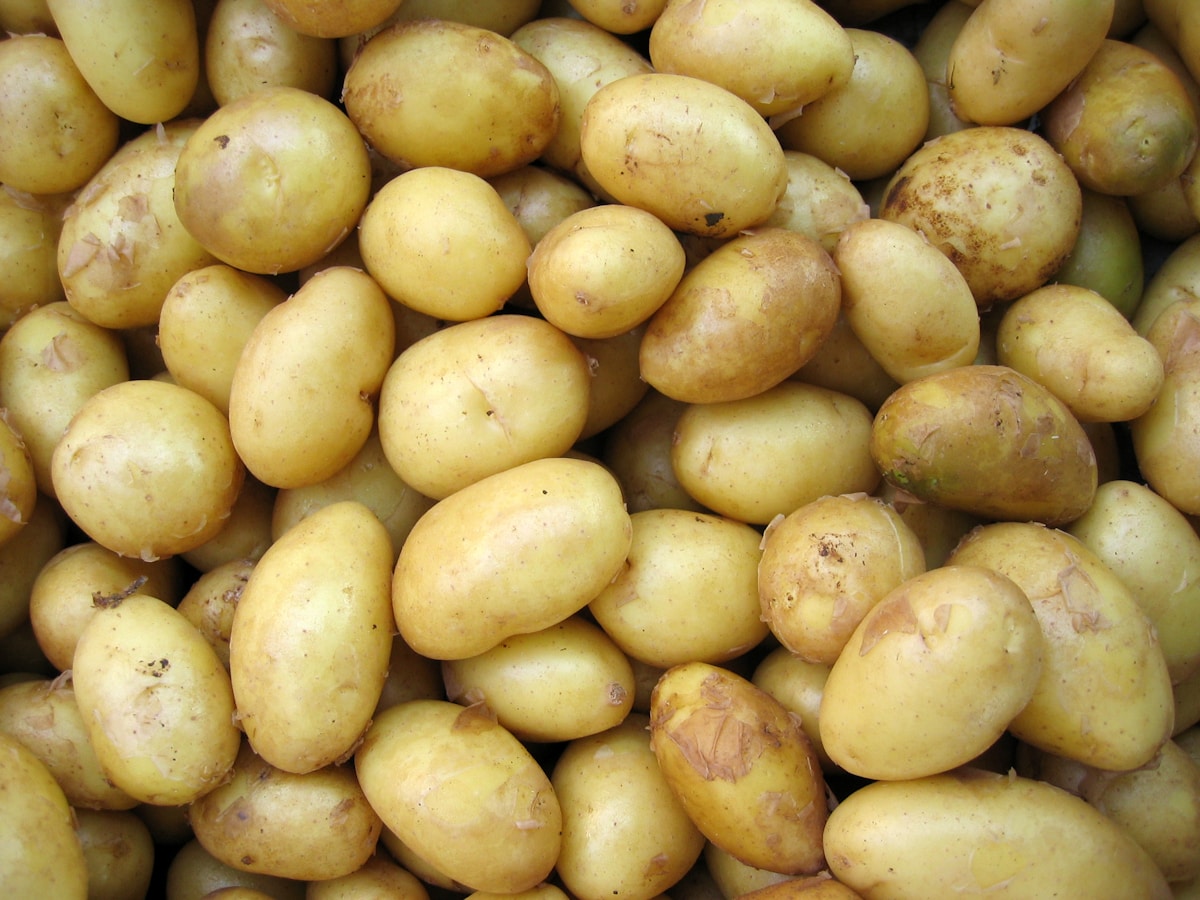
Edible truffles are fruiting bodies of fungi that grow underground in association with the roots of particular trees. They cannot simply be planted and harvested like potatoes. Orchards can encourage conditions for species such as *Tuber melanosporum*, but yields remain uncertain, seasons are limited, and trained dogs are commonly used to locate ripe specimens.
Fresh truffles also lose aroma after harvest. Scarcity, perishability, terroir, and the drama of the hunt support high prices. White truffles associated with Alba and black Périgord truffles occupy different aromatic and culinary traditions, so "truffle" is not one standardized flavor [4][5][6].
Those constraints created an obvious commercial opportunity. If a manufacturer could place a strong, recognizable truffle-like smell in stable oil, cooks could finish potatoes, pasta, eggs, and sauces year-round at a small fraction of the cost of fresh fungi.
What Makes Truffles Smell Like Truffles?
Truffle aroma is a changing mixture of volatile organic compounds rather than one universal molecule. Species, maturity, microbes, soil, storage, and handling can alter the profile. Sulfur compounds are especially important to the intense impression of some prized truffles, but alcohols, aldehydes, ketones, and other volatiles contribute as well [3][4].
One famous compound is 2,4-dithiapentane, also called bis(methylthio)methane. It is strongly associated with the aroma of Italian white truffles and is widely used in commercial flavoring [2]. The molecule can occur in nature and can also be manufactured. A chemical name on an ingredient explanation therefore does not mean the compound is poisonous or uniquely artificial.
What it does mean is that a single powerful note can trigger a convincing "truffle" association without reproducing the layered smell or taste of shaved fresh truffle. An oil dominated by that note is a flavor product, not a preserved fresh fungus in liquid form.
What Researchers Found in Commercial Oils
A peer-reviewed study published in *Food Control* analyzed the volatile profiles and labels of commercial truffle-flavored oils. The researchers found that added flavor compounds were widespread and that the relationship between products, truffle species, and label language could be inconsistent [1]. The study is more useful than the internet slogan "all truffle oil is fake" because it tests products rather than assuming their composition.
Its larger lesson is that visible truffle pieces do not by themselves prove that the aroma came principally from those pieces. A fragment may contribute appearance while added compounds supply most of the smell. Conversely, an accurately labeled flavored oil is not pretending to be a bottle of fresh truffles if the ingredient list clearly states aroma or flavoring.
Authenticity therefore requires reading more than the front label. Product name, ingredient list, named species, flavor terminology, and any percentage claim should make sense together.
Can Oil Preserve the Aroma of Real Truffle?
Putting truffle pieces into oil sounds like the most direct path to authenticity, but it does not automatically create a strong or stable product. Fresh-truffle aroma is volatile and changes after harvest. Different aroma compounds dissolve, degrade, or escape at different rates, while storage conditions alter what remains. The fungus also contains water, making safe commercial preservation a more technical problem than dropping a shaving into a bottle.
Manufacturers can use dried material, extracts, captured natural flavors, or added compounds to produce consistency. Each method creates a different relationship to the fresh ingredient. A naturally derived aroma may come from biological feedstocks without containing pieces of the named truffle; a bottle with pieces may still rely on added flavor for intensity. The words "natural," "infused," and "contains truffle" therefore answer different questions [1][3][4].
This complexity is another reason to avoid a visual authenticity test. A clear bottle, attractive fragments, and an earthy color reveal little about which compounds dominate. Reliable evaluation starts with specific ingredient and species claims, then asks whether the product's composition and provenance support them.
How Truffle Fries Made Aroma Mass-Market
Restaurants turned truffle oil into a finishing language. Fries were an ideal carrier: hot fat released volatile aroma, salt sharpened perception, and a familiar low-cost dish became a premium menu item through a few drops of oil, grated cheese, herbs, and the word "truffle."
This was not the first time luxury flavor moved into mass consumption. Vanilla, chocolate, and other once-scarce ingredients also became widely available through cultivation, extraction, substitution, and industrial flavor science. Truffle oil is unusual because fresh truffles remain visibly expensive while the aroma signal appears on casual menus everywhere.
The markup is part of the history but should not be described as fraud by default. Restaurants sell preparation, setting, and pleasure as well as raw ingredients. The legitimate criticism begins when the menu implies fresh truffle or a named species that the kitchen does not use.
Is Synthetic Truffle Flavor Unsafe?
The historical and labeling dispute is not evidence that approved truffle flavoring is inherently dangerous. Synthetic and natural describe origin, not toxicity. The same molecule can have the same chemical structure whether isolated from a natural source or manufactured under controlled conditions.
This article does not make a medical claim about individual products. Regulations, concentration, purity, allergens, and local labeling rules are separate questions. The American Chemical Society describes 2,4-dithiapentane as a compound used widely in truffle-flavored products and frames accurate labeling as the practical consumer issue [2].
Conflating "synthetic" with "poison" distracts from the better-supported criticism: shoppers should be able to distinguish fresh truffle, truffle-containing oil, natural truffle aroma, and an oil flavored with manufactured compounds.
How to Read a Truffle Oil Label
Start with the ingredient list rather than the photograph. Look for the carrier oil, a named truffle species if one is claimed, the amount of truffle where disclosed, and terms such as flavor, aroma, natural flavor, or artificial flavor. A bottle that transparently says "truffle-flavored olive oil" may be more honest than one covered in luxury language with no clear species or quantity.
Price cannot authenticate a product. Neither can a truffle shaving visible at the bottom. Direct claims, traceability, and coherent labeling carry more evidentiary weight. Fresh truffle and flavored oil are different products that can both be enjoyable when sold for what they are.
The precise verdict is that much commercial truffle oil derives its recognizable aroma from added flavor compounds, often including 2,4-dithiapentane, rather than from meaningful quantities of fresh truffle [1][2]. That distinction helps buyers compare products without turning an ingredient discussion into a fear campaign. Clear formulation can be ordinary flavor technology; vague or contradictory provenance is the part that deserves investigation. The focused Case File tests when "fake" is a fair description and when it is an imprecise insult.
Historical Timeline
European and Mediterranean elites prize edible truffles, whose seasonality and difficult harvest reinforce their luxury status
Chemists identify volatile sulfur compounds contributing to the aromas of different truffle species
Commercial flavored oils make a recognizable truffle note available to restaurants and specialty-food shoppers
Truffle fries, pasta, popcorn, and sauces spread the aroma beyond kitchens using fresh truffles
A Food Control study reports authenticity and labeling concerns across commercial truffle-flavored oils
Evidence Explorer
Review the Source Trail
Inspect the article sources, scoped review credits, and copyable citation details without leaving the page.
Reviewed for Stated Scope
Sources Listed
Comments
Community comments are coming soon. Check back later to join the discussion!