Use-case buying guide
Which Vinegar Should You Buy? A Guide for Sushi Rice, Pickling, Marinades and More
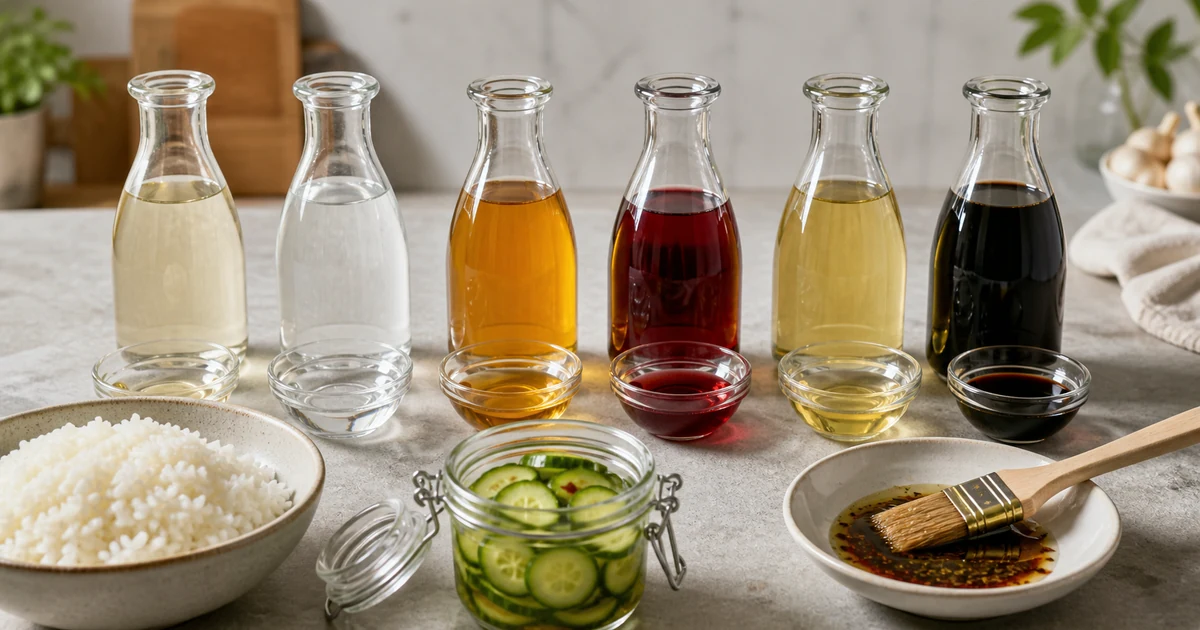
The right bottle depends on the job. Use unseasoned rice vinegar when you want control over sushi seasoning, commercial 5% white or cider vinegar when a tested canning recipe specifies it, wine vinegar for savory marinades, and balsamic when sweetness is part of the dish.
The short answer
Buy unseasoned rice vinegar for sushi rice and delicate East Asian dishes; distilled white vinegar for a neutral, sharp acid and for tested pickling recipes that specify 5% vinegar; apple cider vinegar for fruity pickles and slaws; wine vinegar for marinades and vinaigrettes; and balsamic for dishes that benefit from grape sweetness. Seasoned rice vinegar is convenient, but its sugar and salt reduce your control.
Choose this when...
Start with the dish, then verify the bottle. Acidity, seasoning, color, and sweetness matter more than a universal ranking.
Vinegar types compared
Which vinegar should you buy for sushi rice?
For sushi rice, buy unseasoned Japanese rice vinegar when you want the most control. You add sugar and salt separately, which lets you tune the seasoning to the rice quantity and to the style of sushi you are making. Rice vinegar is usually milder in aroma than distilled white vinegar, so it sharpens the rice without making the bowl smell like a generic pickle brine.
Seasoned rice vinegar is a legitimate convenience choice, not an inferior product. It already contains sweetener and salt: Marukan lists rice vinegar, sugar, salt, and water in its seasoned bottle, while Mizkan describes its seasoned rice vinegar as a combination of rice vinegar, sweetener, and salt [4][5]. The practical consequence is simple. If you use a seasoned bottle, reduce or omit the separate sugar and salt in the recipe and adjust by taste.
Distilled white vinegar can acidify rice, but it is sharper and less characteristic. Apple cider and wine vinegars add aromas that pull sushi rice toward another flavor profile. They may work in an improvised grain salad, but they are not the first bottle to buy for classic sushi seasoning.
Rice vinegar vs white vinegar for pickling
The answer changes depending on whether the pickles stay refrigerated or are processed for shelf storage. For a quick refrigerator pickle, rice vinegar produces a softer, less aggressive brine. Distilled white vinegar gives a sharper taste and keeps pale vegetables visually clear. Cider vinegar adds fruitiness but may darken onions, cauliflower, pears, and other light produce [1].
For shelf-stable home canning, do not choose vinegar by taste alone. The National Center for Home Food Preservation recommends tested proportions and commonly specifies white distilled or cider vinegar at 5% acidity. It warns against homemade vinegar, vinegar of unknown acidity, and dilution unless the recipe says to dilute [1][2]. A 4% or 4.2% rice vinegar is therefore not a casual substitute for a tested formula built around 5% vinegar.
This does not mean rice vinegar is unsafe as an ingredient in every pickle. It means a shelf-stable preservation process must be evaluated as a complete formula. Use a tested recipe written for that vinegar, acidity, food, jar size, and process. When you simply want crisp cucumbers for this week, label the jar, refrigerate it, and follow a refrigerator-pickle recipe.
Which vinegar should you buy for marinades?
Choose a marinade vinegar by the flavor you want left behind. Red wine vinegar suits beef, mushrooms, lentils, tomatoes, oregano, and robust herbs. White wine vinegar is brighter with chicken, fish, mustard, shallots, and pale vegetables. Apple cider vinegar works naturally with pork, barbecue profiles, cabbage, beans, and fruit. Rice vinegar is the quiet option for tofu, cucumbers, seafood, ginger, sesame, and soy-based mixtures.
Balsamic vinegar belongs in a marinade only when its sweetness and dark color support the dish. It can glaze roasted mushrooms, pork, onions, or eggplant, but it is rarely a neutral replacement. Distilled white vinegar is economical and direct, yet it can taste severe when it is the dominant flavor rather than one component of a balanced brine.
Food safety matters more than the bottle hierarchy. USDA guidance says to marinate meat and poultry in the refrigerator, not on the counter. If marinade will become a sauce, reserve a clean portion before adding raw meat or bring the used marinade to a boil before reuse [6]. Acid is not a substitute for refrigeration or proper cooking.
Apple cider vs wine vinegar vs balsamic
Apple cider vinegar is the flexible fruity middle ground. It is assertive enough for slaw, beans, braises, and barbecue sauce but generally less wine-like than red wine vinegar and less sweet than balsamic. Buy it when apple character makes sense with the food, not because broad wellness marketing makes it sound universally superior.
Wine vinegar is the savory cook's workhorse. White wine vinegar keeps sauces and pale vegetables bright; red wine vinegar brings more color and a bolder grape-derived profile. If your pantry leans Mediterranean, a wine vinegar is usually more useful than a sweet balsamic glaze.
Balsamic is best understood as a finishing and flavor-building category. Protected Aceto Balsamico di Modena PGI is made under a geographical specification involving grape must and wine vinegar, with production tied to Modena and Reggio Emilia [7]. A supermarket balsamic glaze may be thicker and sweeter by formulation. Read the product name and ingredients rather than treating every dark bottle as the same vinegar.
What vinegar acidity and labels actually tell you
Acidity is functional information. A bottle marked 4%, 4.2%, 5%, or 6% is stating an acid concentration, not a quality score. Higher acidity is not automatically better for flavor, and equal percentages do not make two vinegars taste alike. Raw material, fermentation, aging, sugar, salt, and concentration all shape the result.
FDA guidance says there is no federal standard of identity for vinegar, but it describes common vinegar names and requires diluted vinegar to state its acid strength, at no less than 4% under that policy [3]. That helps explain why a seasoned rice vinegar may be around 4%, a common pickling vinegar 5%, and protected balsamic specifications may use another threshold. Read the number in the context of the recipe and product category.
The front label is only the beginning. Check the ingredient list for sugar, salt, caramel color, flavorings, concentrates, and thickeners. Ingredients are generally listed by weight in descending order in the United States [8]. A sweetened balsamic glaze can be useful, but it should not be purchased under the mistaken belief that it is simply an aged vinegar.
A practical three-bottle vinegar pantry
Most home cooks do not need seven open bottles. A practical core is unseasoned rice vinegar for sushi rice and delicate dishes, a clearly labelled 5% distilled white or cider vinegar for tested pickling recipes and robust everyday acidity, and one wine vinegar for vinaigrettes and marinades. Choose red or white wine vinegar according to the foods you cook most often.
Add balsamic only if you regularly finish roasted vegetables, salads, fruit, or cheese with a sweet-tart grape flavor. Add seasoned rice vinegar if convenience matters more than controlling sugar and salt. The best pantry is not the largest one; it is the set of bottles whose labels and flavors match repeat uses before they fade at the back of the cupboard.
Before buying a large format, calculate whether your planned use justifies it. Pickling consumes cups; dressings consume tablespoons. A cheaper price per ounce does not create value when half the bottle sits unused. Store vinegar closed and away from heat and direct light, and follow the maker's quality guidance for flavored or infused products.
Use the bottle in context
Vinegar history
How alcohol, acetic acid bacteria, preservation, and sour flavor developed across food cultures.
ExploreSushi history
The preservation history behind vinegared rice and modern sushi.
ExploreRice history
The grain systems behind sushi rice, rice wine, and rice vinegar.
ExplorePickle history
Why salt, fermentation, and vinegar created different preservation traditions.
ExploreApple history
The fruit behind cider and apple cider vinegar.
ExploreWhich soy sauce should you buy?
Match soy sauce type to sushi, stir-fry, marinades, and everyday cooking.
Explore