💡 Key Takeaways
- Fortune cookies are an American restaurant food with close Japanese cracker antecedents, not a traditional dessert imported from China.
- Japanese confectioners and California tea gardens helped establish the folded U.S. form before Chinese-American restaurants made it a national ritual.
- Japanese-American incarceration during World War II disrupted businesses and forms part of the careful explanation for the cookie's postwar association with Chinese restaurants.
- No single inventor claim resolves the entire history; Japanese lineage, California adaptation, machinery, and restaurant distribution all mattered.
What Is the Real Origin of the Fortune Cookie?
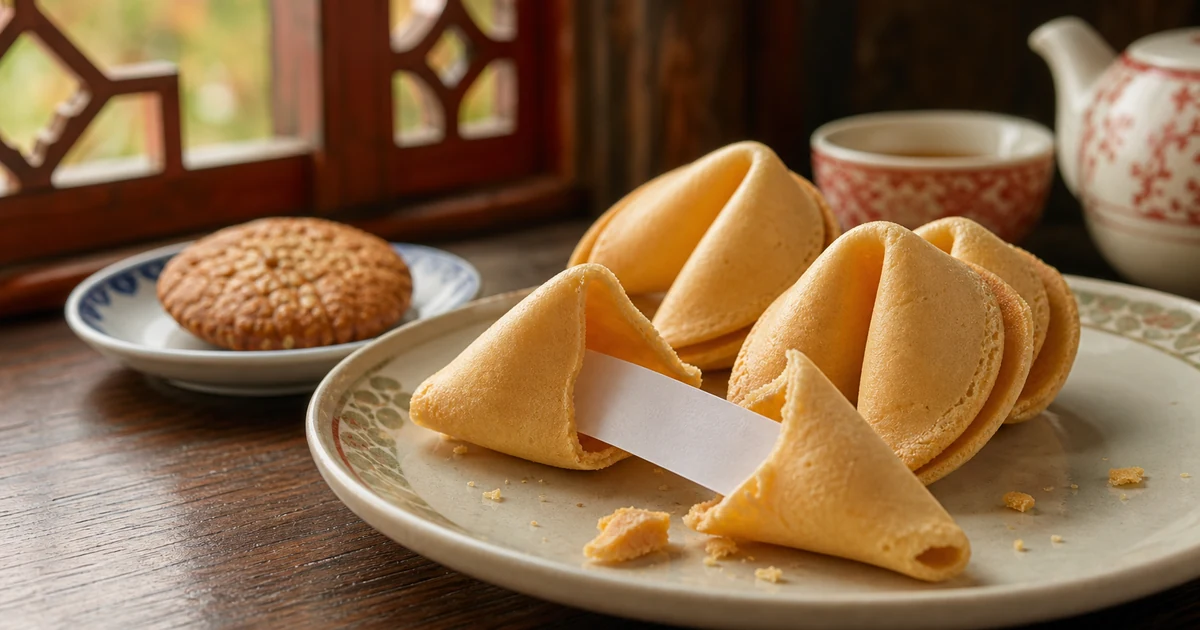
The fortune cookie is best understood as an American restaurant food with Japanese confectionery ancestry. It did not arrive in the United States as a traditional Chinese dessert. The folded wafer, printed message, and after-dinner ritual took shape through several stages: fortune-bearing crackers in Japan, Japanese tea gardens and bakeries in California, mechanized production, and adoption by Chinese-American restaurants [1][2].
That layered answer matters because the familiar shortcut - "fortune cookies are actually Japanese" - can be almost as flattening as the Chinese-origin myth. A Japanese cracker tradition supplied the closest documented form, but the thin, sweet, vanilla-scented cookie now opened after an American Chinese meal is also a California product and a Chinese-American restaurant custom. Its history belongs to migration, adaptation, and distribution rather than to one national ownership label.
The distinction also explains why the cookie can feel culturally Chinese in the United States while remaining unfamiliar as a traditional dessert in China. Diners learned its identity from the setting in which it was served. The restaurant encounter became more powerful than the earlier production history.
The Japanese Crackers That Came Before It
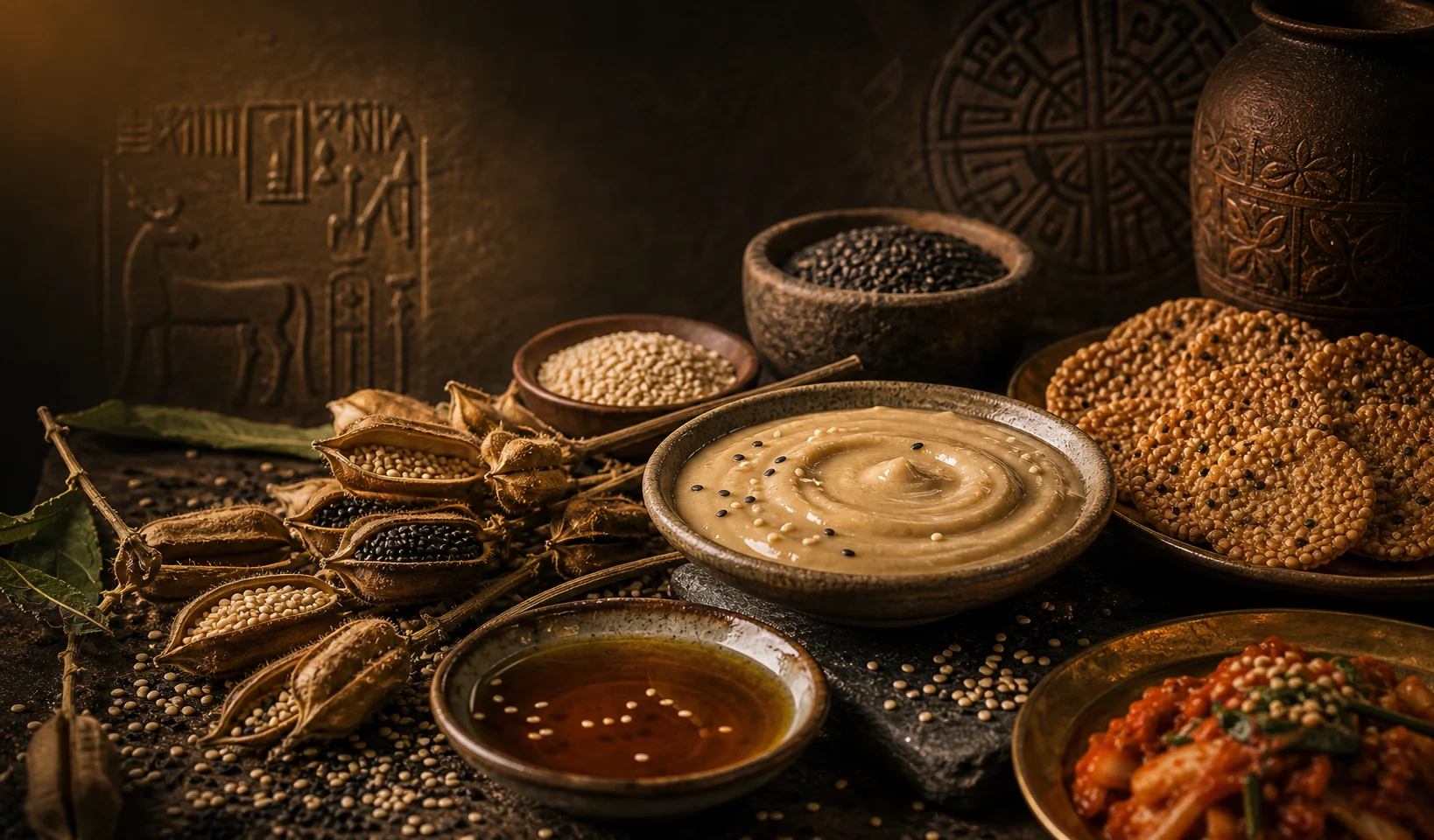
Researchers usually connect the fortune cookie to Japanese crackers discussed under names such as *tsujiura senbei*. These were not identical to the modern American cookie. They could be larger, darker, less sweet, and flavored with ingredients such as sesame or miso. What makes them important is their combination of a crisp folded form and a paper fortune.
The strongest visual evidence is an 1878 Japanese illustration showing a cracker maker producing a fortune-bearing sweet whose shape is recognizably related to the later cookie [1][3]. That image predates the famous California invention claims. It does not prove that every modern cookie descends through one unbroken recipe, but it makes an ancient Chinese origin unnecessary and places the clearest known antecedent in Japanese confectionery.
Fortune slips themselves belonged to broader practices of divination, shrine visits, and printed predictions. The edible wrapper made those messages portable and playful. When Japanese migrants and entrepreneurs carried confectionery knowledge to the American West, the format entered a new commercial environment shaped by tourism, tea gardens, restaurants, and industrial baking.
How California Remade the Cookie
Early-20th-century California is where the modern origin story becomes crowded. San Francisco accounts often center Makoto Hagiwara, associated with the Japanese Tea Garden in Golden Gate Park, and the Benkyodo confectionery that supplied cookies. Smithsonian research describes Benkyodo making the cookies for the garden by 1906 [1]. Los Angeles accounts point to confectioner Seiichi Kito and the Fugetsu-Do bakery. David Jung of the Hong Kong Noodle Company also became part of the city's competing folklore [2][3].
These stories do not need to be forced into a single winner. One business may have popularized service in a tea garden, another may have developed a regional version, and another may have helped supply restaurants. Records are incomplete, family memories differ, and the product itself evolved. The defensible conclusion is that Japanese-American confectioners and California food businesses were central to the American form.
The cookie also changed materially. Compared with some Japanese antecedents, the U.S. version became lighter, sweeter, and easier to mass-produce from flour, sugar, oil, and flavoring. It was engineered not only to taste pleasant but also to be folded quickly around a standardized paper strip before cooling.
War, Incarceration, and the Restaurant Handoff
World War II is an essential but easily overstated chapter. After Executive Order 9066, the United States forcibly removed and incarcerated roughly 120,000 people of Japanese ancestry. Japanese-American homes, farms, shops, restaurants, and bakeries were disrupted or lost. Fortune-cookie production associated with Japanese-American businesses was part of that damaged commercial world [1][2].
Chinese-American restaurants were expanding during and after the war, and the cookie increasingly became associated with their meals. It is reasonable to see incarceration and business disruption as part of that handoff, but the change was not caused by one event alone. Chinese restaurants had already adapted menus to American expectations, suppliers crossed community boundaries, and postwar producers could manufacture the cookies at a scale no tea garden could match [2][5].
The careful formulation is therefore not "Chinese restaurants stole the cookie." Chinese-American restaurateurs adopted and transformed an available regional product while building a national dining system under their own pressures of exclusion, adaptation, and customer demand.
Machines Turn a Regional Sweet Into Takeout Ritual
A fortune cookie must be folded while it is still hot and flexible. That constraint limited output when workers shaped every piece by hand. Mechanized folding and baking systems changed the economics, allowing producers to make vast quantities with standardized messages and predictable texture [2][6].
Scale turned the cookie into a restaurant amenity rather than a specialty pastry. A business could place one with every check, reinforcing the same sequence for millions of diners: finish the meal, crack the shell, read the paper aloud, compare fortunes. The value was partly edible and partly theatrical. The message made a cheap wafer memorable.
Its portability also helped. Wrapped cookies survived delivery bags and buffet counters better than delicate desserts. Their low cost, long shelf life, and built-in conversation made them unusually well suited to the expanding Chinese-American takeout industry. This is why production technology belongs in the origin story alongside bakers and restaurant owners.
Why the Inventor Debate Cannot Produce One Perfect Winner
Food inventions rarely leave the kind of evidence expected from a modern patent dispute. A family bakery may preserve testimony without surviving invoices; a tea garden may document service without documenting the first recipe; a machine may standardize a form that existed by hand. Fortune-cookie claims involve all three problems.
The Smithsonian evidence for Benkyodo is concrete because it links a business, a customer, and a period [1]. The 1878 Japanese illustration is concrete because it shows the earlier form [1][3]. Family accounts from San Francisco and Los Angeles remain valuable but do not all describe the same act of invention. One may concern supplying a garden, another naming or selling a Los Angeles product, and another producing messages for Chinese restaurants.
Responsible history ranks those evidence types instead of forcing them into a dramatic trial. The modern cookie is a chain of contributions: inherited cracker form, revised batter, folded paper message, restaurant placement, folding machinery, and national distribution. A single winner would make the story easier to market but less accurate.
Why Americans Read the Cookie as Chinese
Food identity often follows the place of encounter. Most Americans did not meet fortune cookies in Japanese confectioneries or museum archives. They met them beside the bill at a Chinese restaurant. Repetition made that association feel ancient even when it was comparatively recent.
The fortunes reinforced a generalized idea of "Eastern wisdom" marketed for American amusement. Messages shifted from predictions toward aphorisms, jokes, lucky numbers, and advertising. That imagery says more about American expectations of Chinese dining than it does about Chinese dessert traditions. Similar processes shaped other Chinese-American foods, including General Tso's chicken: a dish or ritual can become a powerful expression of diaspora life without being an old recipe from the ancestral country.
Recognizing that distinction does not reduce the cookie to a fraud. It identifies Chinese-American cuisine as a historical cuisine in its own right, built through migration, exclusion, entrepreneurship, and repeated negotiation with local tastes [5].
Who Invented the Fortune Cookie?
No surviving document gives one person uncontested ownership of everything now called a fortune cookie. Japanese evidence establishes an older family of fortune crackers. California businesses establish early American service and production. Mechanization establishes mass distribution. Chinese-American restaurants establish the social ritual most diners recognize.
That is a stronger conclusion than selecting a winner from local legend. Makoto Hagiwara, Benkyodo, Seiichi Kito, David Jung, later machinery makers, and restaurant operators belong to different stages of the story [1][2][3]. A history can credit their contributions without pretending they all invented the same object at the same moment.
The concise answer is: the fortune cookie has Japanese cracker roots, a Californian commercial form, and a Chinese-American restaurant identity. The accompanying Case File examines the narrower question "Are fortune cookies Chinese?" and separates the evidence from the most repeated myth.
Historical Timeline
A Japanese illustrated work depicts a cracker maker producing a folded fortune-bearing sweet recognizably related to later fortune cookies
Japanese tea gardens and confectioners in California serve fortune crackers to American customers
Smithsonian research links Benkyodo confectionery to cookies made for San Francisco's Japanese Tea Garden
The U.S. incarceration of Japanese Americans closes or disrupts many Japanese-American businesses
Chinese-American restaurants and mechanized producers turn the cookie into a nationwide takeout custom
Evidence Explorer
Review the Source Trail
Inspect the article sources, scoped review credits, and copyable citation details without leaving the page.
Reviewed for Stated Scope
Sources Listed
Comments
Community comments are coming soon. Check back later to join the discussion!