Dinner recipe
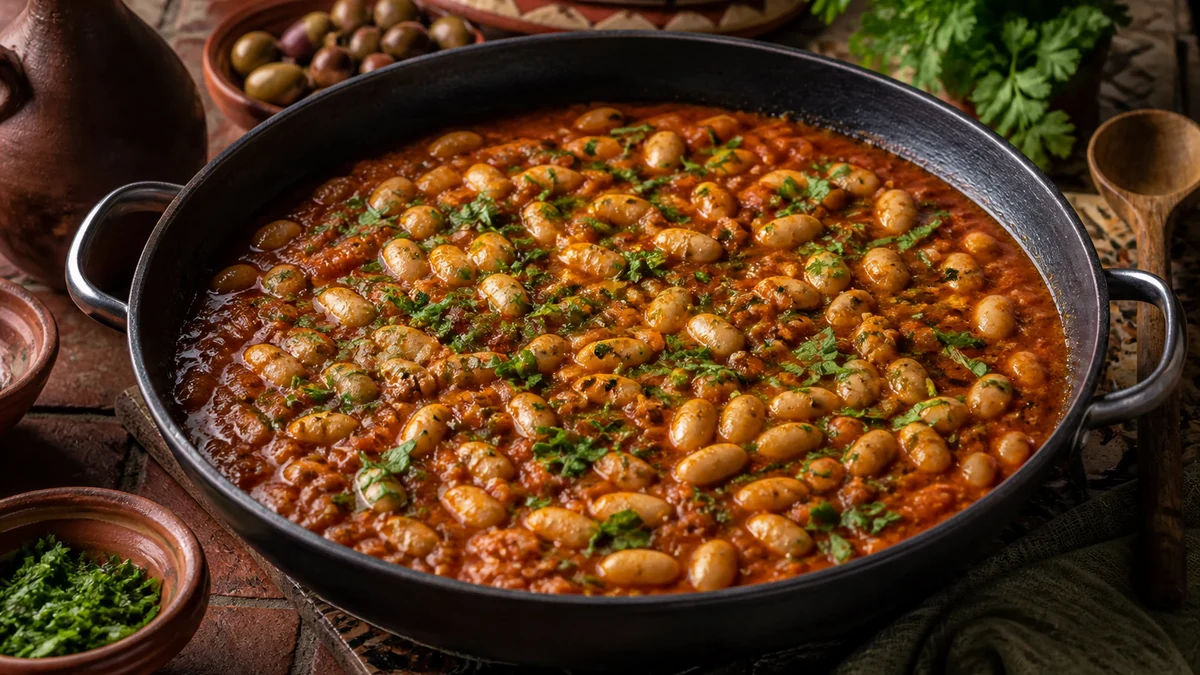
Creamy Moroccan White Beans
One skillet of white beans in a tomato-and-spice sauce; creaminess from the beans and olive oil — a short-cut take on Moroccan loubia.
Jump to recipeDeveloped by the Recipe Desk. This original editorial recipe uses measured ingredients, explicit timing and yield, allergen notes, storage guidance, and step-by-step visual cues. Use the stated doneness and texture cues because ingredients, ovens, and kitchen equipment vary.
Ingredients
- 3 tbsp olive oil
- 1 medium onion, finely chopped
- 3 garlic cloves, minced
- 2 tbsp tomato paste
- 1 tsp ground cumin
- 1 tsp sweet paprika
- 2 x 400 g cans white beans, drained, 120 ml liquid reserved
- 120 ml water, plus more as needed
- Fine salt
- Chopped cilantro or parsley, to serve
Method
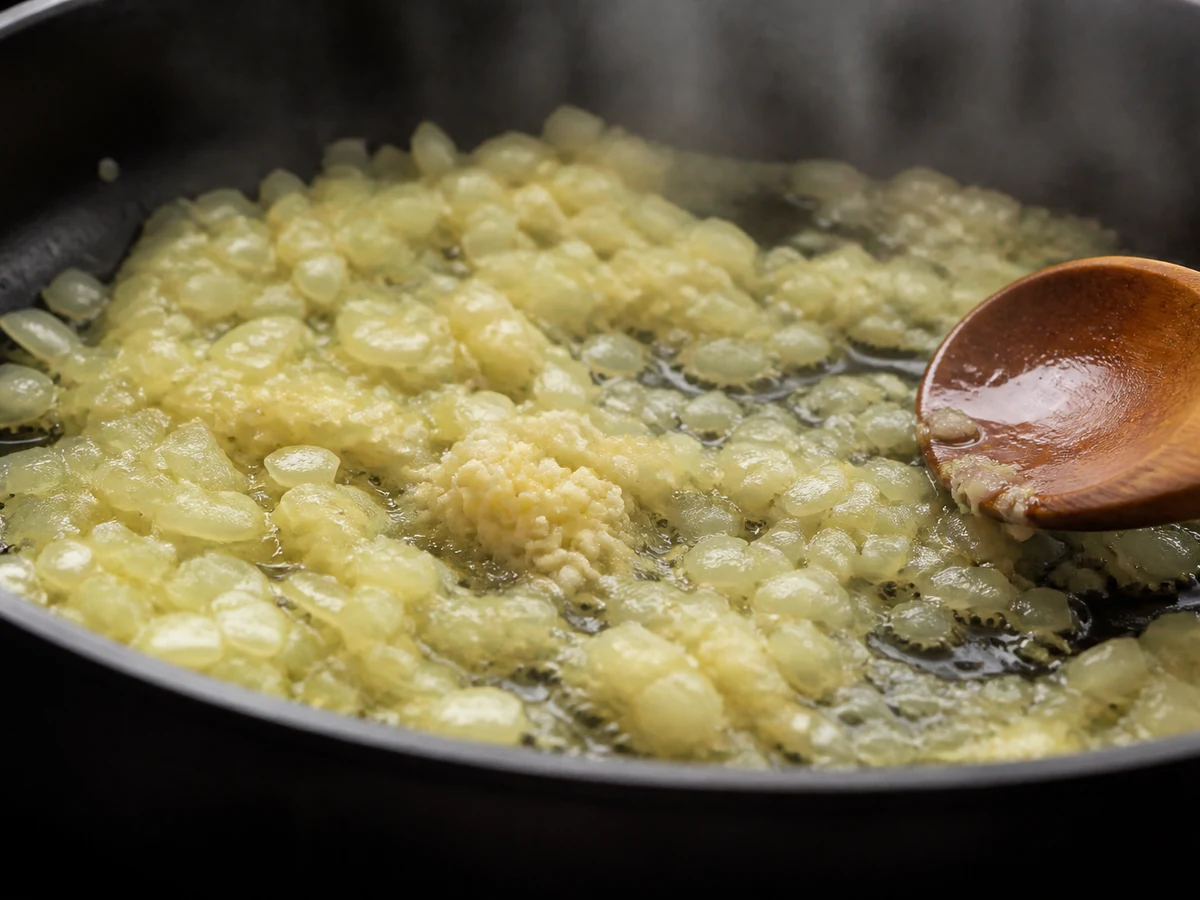
Step 1: Soften onion and garlic in olive oil. 1Warm the aromatics
Heat the olive oil in a wide skillet over medium heat. Add the onion and a pinch of salt; cook until translucent, about 6 minutes. Stir in the garlic for 1 minute.
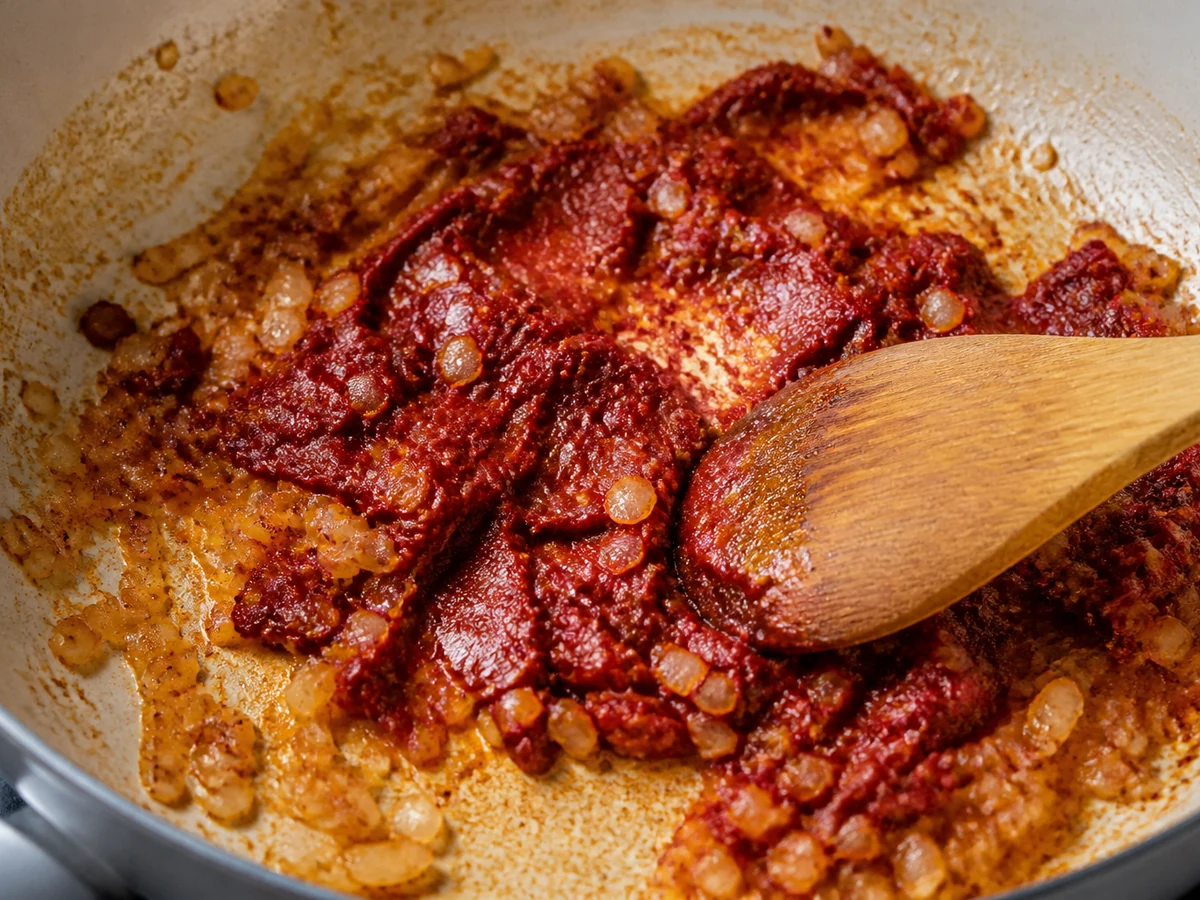
Step 2: Cook the paste with paprika until it darkens. 2Toast the paste and spices
Add the tomato paste, cumin, and paprika. Cook, stirring, until the paste darkens and smells toasted, 2 to 3 minutes.
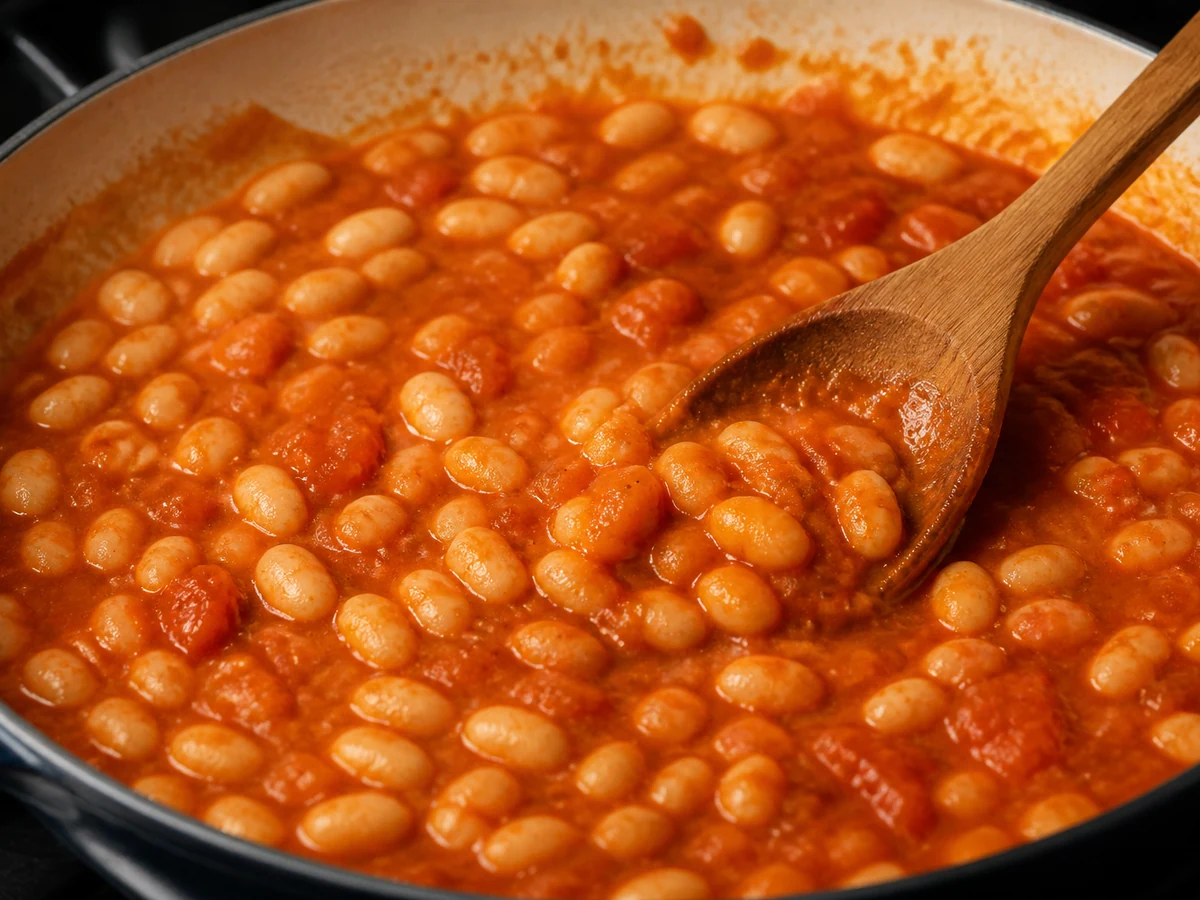
Step 3: Simmer until the sauce clings to the beans. 3Simmer the beans
Add the white beans and 120 ml reserved liquid or water. Simmer gently, stirring now and then, until the sauce thickens, 8 to 10 minutes.
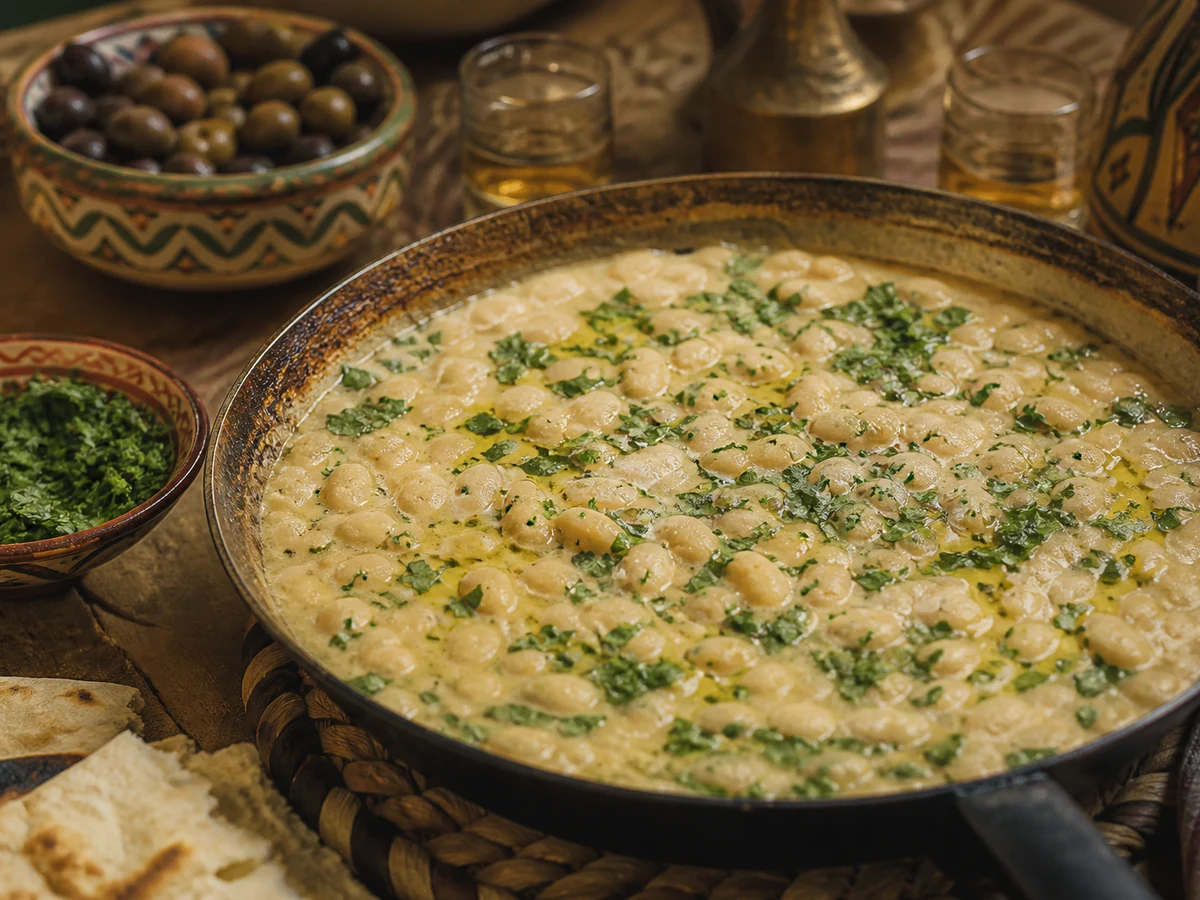
Step 4: Mash some beans until the sauce is creamy. 4Finish until creamy
Mash a spoonful of beans against the pan so the sauce turns creamy. Taste for salt, rest 2 minutes off the heat, and finish with herbs. Serve with bread or couscous.
Why this dish belongs here
The history behind the method
Loubia is the name many Moroccan kitchens give a tomato-and-spice pot of white beans: onion and garlic softened in olive oil, then warm spices, then the legumes simmered until they slump. The method is Maghrebi home cooking, not a restaurant invention. The seeds in the can are usually Phaseolus — navy, cannellini, or similar New World pulses that entered North African pantries after the Columbian Exchange, cooked in a tomato sauce that is itself post-Columbian. Cooks in this tradition did not need a cream carton to make the pot feel rich; starch from the legumes, olive oil, and a little of the cooking liquid do that work. A Friday couscous platter or a weeknight loaf of bread can sit beside the same stew. This Recipe Desk skillet keeps that flavor architecture in a shorter pan: tomato paste for a concentrated sauce, cumin for the seed note associated with Maghrebi pots, paprika for color, and white beans that break just enough to look creamy. Serve it with bread or couscous the way a Maghrebi table often finishes a pulse dish — as ordinary food, not a trend bowl. The one-pan timing is contemporary convenience; the spice-and-legume logic is older than the skillet. What changes in a home kitchen is the clock, not the idea that dried legumes, oil, and a red sauce can feed people from one pot. The Recipe Desk version is measured for a wide skillet and canned pulses so the sauce reduces in minutes rather than in a long clay pot, while the onion-garlic-oil base stays the same.