💡 Key Takeaways
- Dietary fiber is the part of plant foods — cell walls, gums, mucilages, oligosaccharides — that human enzymes cannot break down, so it reaches the large intestine largely intact.
- The main practical split is soluble (beta-glucan in oats, mucilage in psyllium, inulin in chicory) versus insoluble (cellulose in bran, wheat), though many foods carry both, and "fermentable" cuts across both categories.
- Fiber was not a named nutrient until the 20th century; Denis Burkitt and others in the 1970s proposed that Western low-fiber diets contributed to chronic disease, reframing old staple foods as a measurable, dashboarded target — the direct ancestor of 2026 fibermaxxing.
What Is Dietary Fiber?
Dietary fiber is the part of plant foods that human digestive enzymes cannot break down. It includes plant cell-wall materials such as cellulose, hemicellulose, and lignin, plus the gums, mucilages, oligosaccharides, and resistant starches inside and around plant cells [1][3]. Because we cannot digest it, fiber travels through the small intestine largely intact and arrives in the large intestine, where it either passes out as bulk or is fermented by gut bacteria.
That definition is deceptively simple. "Fiber" is a bucket term for many different carbohydrates and carbohydrate-like substances, each with different effects. Lumping them together is useful for daily-intake targets but hides the fact that the fiber in wheat bran, the fiber in oats, the fiber in psyllium, and the fiber in chicory root behave quite differently in the body. The next sections separate them.
Soluble, Insoluble, and Fermentable
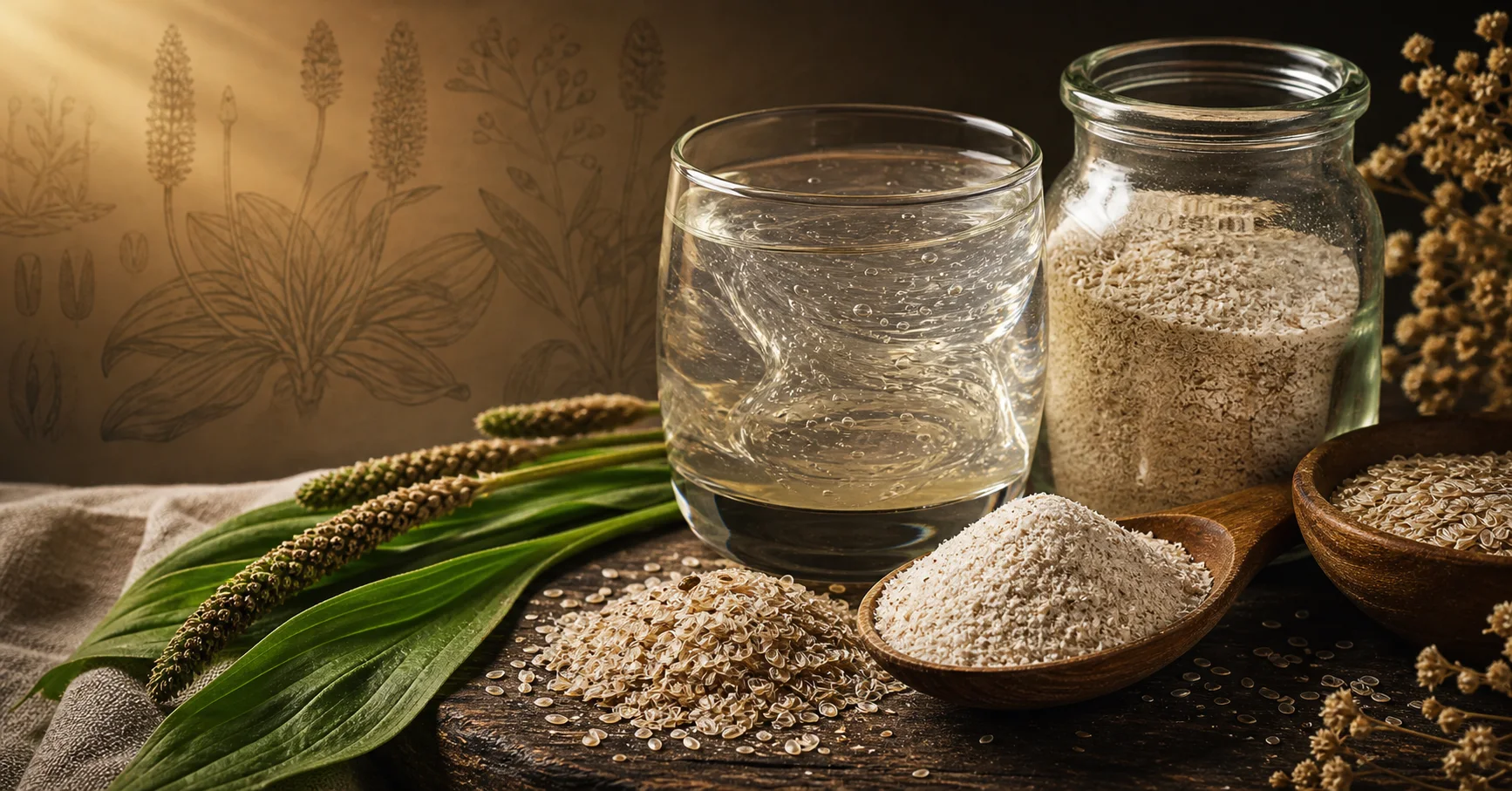
The oldest practical split is soluble versus insoluble. **Soluble fiber** dissolves or gels in water — beta-glucan in oats and barley, the mucilage in psyllium, pectin in fruit, and inulin in chicory. **Insoluble fiber** does not — cellulose in wheat bran, the structural fiber in vegetables and whole grains. Most high-fiber foods carry both [4][6].
But the cleaner functional distinction today is **fermentability**: how much of the fiber your gut bacteria can eat. Inulin, oligofructose, and resistant starch are highly fermentable — bacteria turn them into short-chain fatty acids such as butyrate, which is why they are marketed as "prebiotics" [3]. Wheat bran is mostly non-fermentable bulk. This is why a fibermaxxing routine that swaps bran for psyllium or inulin can change how the gut feels and behaves in ways a simple gram count cannot capture.
How Fiber Became a Named Nutrient
For most of food history, fiber was invisible — it was simply part of plants. Nineteenth-century chemists measured "crude fibre" mainly as the indigestible residue left over after they had extracted everything useful, and it was treated as a nuisance in both human food and animal feed [2][4].
That changed in the mid-20th century. Physicians working in Africa — most famously the Irish surgeon Denis Burkitt — noticed that rural populations eating traditional diets very high in whole-plant foods rarely showed the constipation, diverticular disease, colon cancer, and other disorders that were common in Western populations eating refined, low-fiber diets [1][2]. Burkitt and colleagues proposed the "fiber hypothesis": that Western chronic disease was linked, in part, to a fiber deficit. The hypothesis was debated and partly revised, but it permanently reframed fiber from waste into a measurable, recommended nutrient [1].
In 2001 the U.S. Institute of Medicine gave fiber its first formal modern definition, distinguishing **dietary fiber** (intrinsic, intact in plants) from **functional fiber** (isolated or synthetic fibers added to foods), and setting the 25–35g-per-day intake targets still cited today [3].
Prebiotics and the Gut-Health Era
The 2010s reframed certain fibers as **prebiotics** — substances selectively fermented by gut bacteria in ways claimed to benefit health. Inulin and oligofructose (from chicory and Jerusalem artichoke), fructooligosaccharides, galactooligosaccharides, and resistant starch became the building blocks of a functional-foods category: prebiotic yogurts, fiber bars, and most recently prebiotic sodas built on inulin [3].
This is where food history and marketing meet. The fibers are real and measurable; the gut-health claims around them vary widely in evidence. A source-led food-history page should not issue medical verdicts. The honest point is that the same chicory-root inulin once used to adulterate and extend coffee in wartime Europe is now sold as a premium prebiotic — a useful reminder that "fiber" carries a long commodity story underneath its wellness framing.
Fibermaxxing and How Fiber Is Used Today
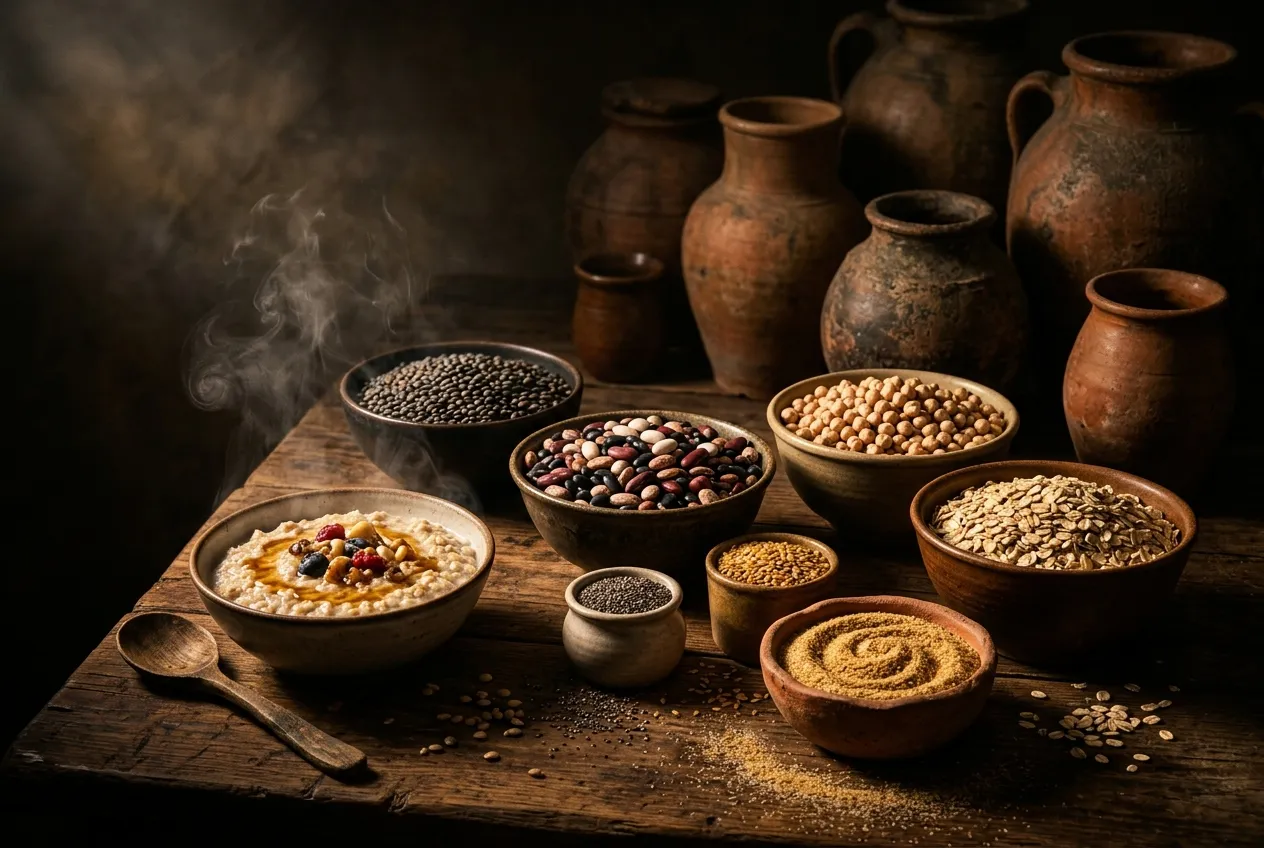
Fibermaxxing is the 2026 social and search term for intentionally maximizing dietary fiber intake, and Google's U.S. Summergeist data recorded a sharp rise in related searches over the preceding months [7]. The visible tools of the trend are familiar: psyllium husk as a concentrated scoopable fiber, high-fiber smoothies built on beans and oats, inulin-fortified sodas, and packaged fiber bars. The word is new; the foods are not — beans, lentils, chickpeas, barley, and millet have carried fiber through human diets for thousands of years.
The food-history lesson inside fibermaxxing is twofold. First, a 2026 trend framed as optimization is partly a return to the fiber intakes industrial diets stripped out when refining grain and processing food [2]. Second, not all fiber is interchangeable: swapping bran for inulin or psyllium changes the gut effects, not just the gram count. For the deeper histories of the individual fibers — the Plantago husk, the oat beta-glucan, the chicory inulin, the konjac glucomannan — follow the linked pages and the fiber-and-ancient-grains collection below.
In the news
Recent 2026 food-culture notes that reference this article.
Historical Timeline
Plant cell walls (cellulose, hemicellulose) are part of every plant humans have ever eaten; fiber is as old as plant food itself.
Nutritional science treats "crude fibre" mainly as a nuisance — the indigestible residue measured in animal feed.
Physicians note that African populations on traditional high-fiber diets rarely showed the chronic diseases common in Western low-fiber populations.
Denis Burkitt and colleagues publish the "fiber hypothesis": that low Western fiber intake contributes to constipation, diverticular disease, and other disorders.
The Institute of Medicine gives the first formal "dietary fiber" definition distinguishing intrinsic plant fiber from added isolated fibers.
Prebiotic and fermentable fiber become gut-health marketing categories; inulin, oligofructose, and resistant starch enter functional foods.
Fibermaxxing — intentionally maximizing fiber intake — becomes a search and social trend, with psyllium, inulin sodas, and high-fiber packaged foods as its visible tools.
Evidence Explorer
Review the Source Trail
Inspect the article sources, scoped review credits, and copyable citation details without leaving the page.
Sources Listed
Comments
Community comments are coming soon. Check back later to join the discussion!